
Tragic Train Collision Leaves One Fatality and 89 Injured Near Bedford
One person killed and 89 injured – A collision between two passenger trains near Bedford has claimed one life and left 89 people injured, disrupting services along the railway line. The incident occurred between Bedford and Luton, prompting an immediate emergency response as authorities scrambled to address the aftermath.
Emergency Response and On-Site Activity
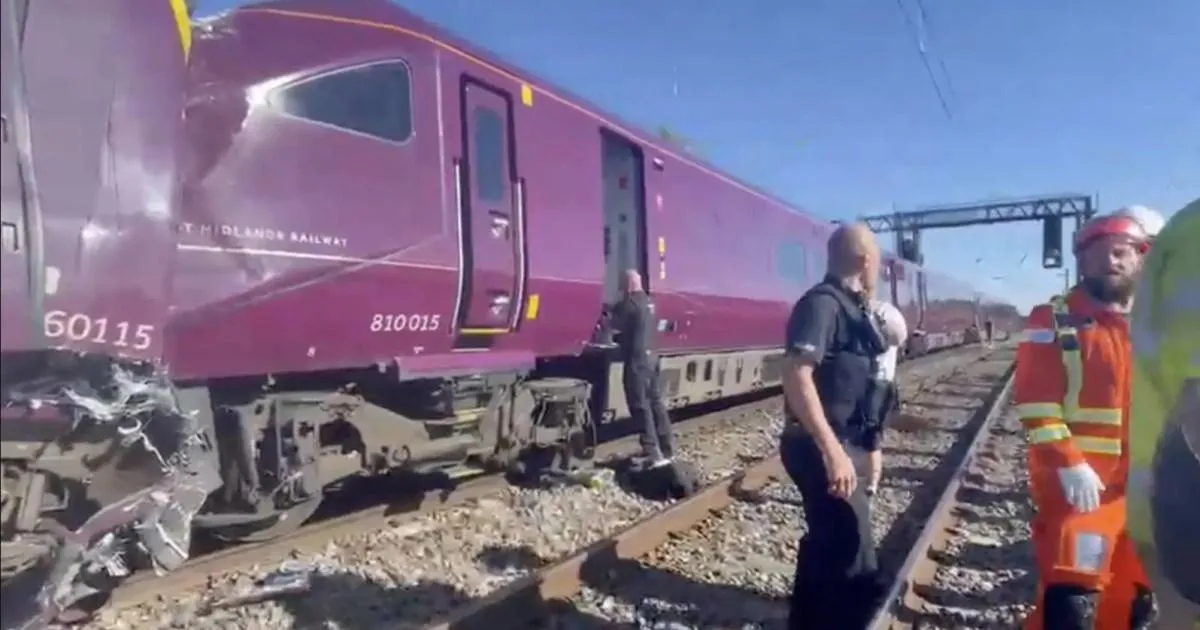
Over 30 emergency vehicles, including ambulances and police units, were dispatched to the crash site near Elstow, Bedford. The collision involved two East Midlands Railway (EMR) trains, with some carriages reported as derailed. The scene was described as chaotic, with medical teams working swiftly to stabilize the injured.
British Transport Police confirmed that one person died at the scene, while 89 others were treated for injuries. Among the victims, 11 sustained critical injuries, 22 were assessed as seriously hurt, and 56 had minor wounds. The rail line remains closed, and all EMR services to and from London St Pancras are suspended for the remainder of the day.
Operator’s Statement and Public Updates
East Midlands Railway reported that a 4:40 pm service from Corby to London St Pancras collided with a 3:50 pm train traveling from Nottingham to St Pancras. The operator shared a statement on X: “A number of people have been injured, and we extend our gratitude to first responders for their efforts in assisting those affected.”
Local hospitals, including Bedford Hospital and Luton and Dunstable University Hospital, have asked the public to avoid visiting emergency departments unless it’s a critical medical need. The facilities are supporting the influx of patients from the crash, highlighting the scale of the incident.
Graphic Evidence and Evacuation Efforts
Footage captured inside one of the derailed carriages shows passengers covered in blood, struggling to stay upright. Some individuals were seen with bandages on their heads, sitting on the tracks after being evacuated by emergency crews. The visual documentation underscores the severity of the collision and the immediate danger faced by those on board.
“There was a moment of being flung into the chair in front, then I saw smoke. People were crying, screaming, and deeply scared. I got up and saw many unable to speak, with broken legs,” said Dr. Pete Knapp, a passenger who shared his experience with the Press Association.
Dr. Knapp added: “Because I’m quite thin, I managed to squeeze out through the gap in the doors. The situation was overwhelming, and everyone was trying to stay calm amid the chaos.”
Support from Ambulance Services
An air ambulance was deployed to the scene, alongside the East of England Ambulance Service, which mobilized additional resources to handle the casualties. The ambulance teams worked in coordination with other emergency responders to transport the injured to hospitals for treatment.
Police have urged families of those involved not to rush to the site without waiting for updates, as commuters were being picked up from nearby roads. This precaution aims to prevent overcrowding at the scene and ensure efficient triage for the most critical cases.
Union Concerns and Community Impact
The Rail, Maritime and Transport Union (RMT) expressed deep concern over the crash, emphasizing the serious injuries suffered by train staff and passengers. A spokesperson for the union stated: “We are deeply troubled by the collision and the impact on those on board. Our thoughts are with all affected, and we commend the emergency services for their rapid response.”
ASLEF, the train drivers’ union, echoed similar sentiments, noting: “We are concerned about the collision near Bedford and the injuries sustained. We thank the emergency services for their ongoing efforts to manage the situation.”
Official Comments and Ongoing Investigations
Prime Minister Sir Keir Starmer expressed his condolences, stating: “My thoughts are first with the family of the person who has lost their life, and with those who have been seriously injured. This is a tragic event, and we are doing everything to support those involved.”
Transport Secretary Heidi Alexander remarked: “Deeply saddened by the train collision near Bedford, where one person has died and many have been injured. Our thoughts are with their loved ones and all those affected. Emergency services are still on site, and a full investigation is underway.”
Investigators from the Rail Accident Investigation Branch (RAIB) are examining the crash to determine its cause. The union and emergency services are working closely to ensure a thorough analysis of the incident, which could lead to improved safety measures for future rail operations.
Disruption to Travel and Passenger Support
Following the collision, National Rail advised passengers not to travel through St Pancras for the rest of the evening, citing the rail line’s closure. Buses have been arranged to transport affected travelers, with footage showing a long queue of people waiting for transportation. This logistical effort aims to minimize further delays and provide immediate relief to those impacted.
While the situation remains tense, officials are coordinating to restore services as soon as possible. The incident has drawn attention to the importance of emergency preparedness and the resilience of both responders and the community in dealing with such disasters.
The collision has not only caused immediate harm but also disrupted the daily commute for thousands. As the investigation continues, the focus remains on supporting the injured and preventing similar incidents in the future. The Rail Accident Investigation Branch will likely provide more insights in the coming days, shedding light on the factors that led to this tragic event.