

Drivers Told to Avoid M25 After Coach Fire Causes 12-Mile Queues
UK’s Most Congested Highway Faces Major Disruption as Fire Emerges During Rush Hour
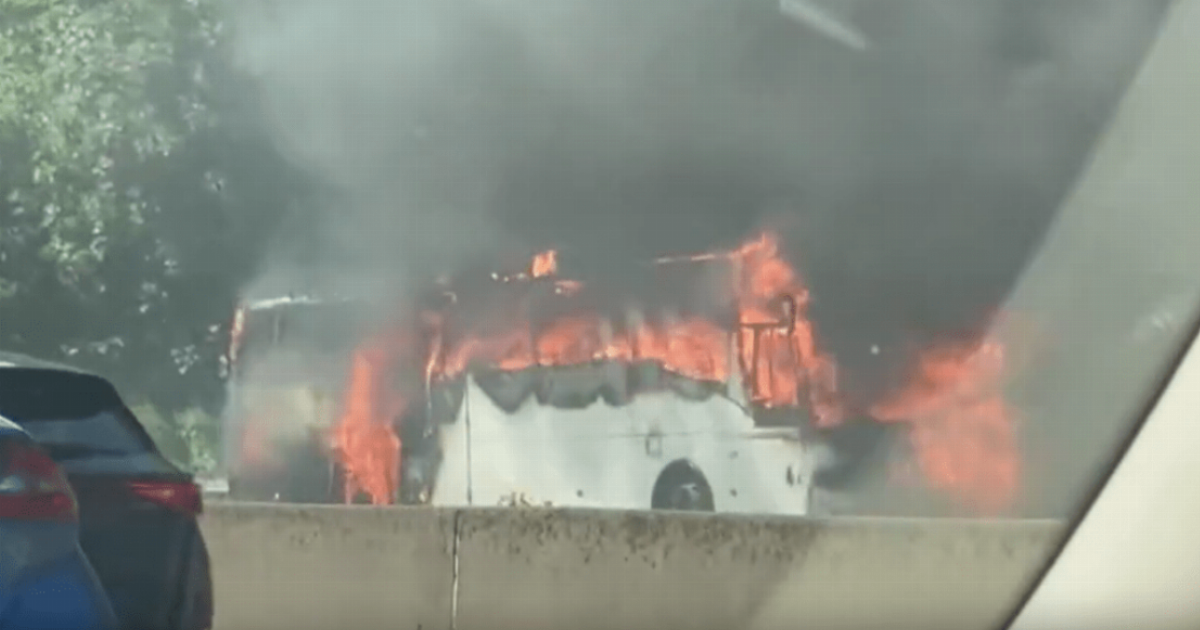
Drivers told to avoid M25 after – Motorists experienced severe traffic congestion on the M25 following a fire involving a coach traveling with passengers, according to reports from the National Highways. The incident, which occurred on a sweltering day in Surrey, created a backlog stretching over 12 miles in both directions, prompting warnings to avoid the area to prevent further delays.
The blaze broke out between junctions J9 and J8 on the M25, a critical artery for commuters across the south of England. Video footage from the scene shows thick black smoke rising from the vehicle, with cars barely inches away from the flames as they navigated through the affected stretch. The coach, which was on the move during peak rush hour, became a focal point for traffic chaos, disrupting travel for thousands.
“We are dealing with a coach fire on the M25, junction 9 to 8, Leatherhead,” said a spokesperson for Surrey Fire and Rescue Service. “Currently, four fire engines and a water carrier are stationed at the scene, and the area is shrouded in dense smoke. Everyone on board is accounted for, and the road is closed in the anticlockwise direction for recovery and cleanup operations.”
The fire service emphasized that the road closure was necessary to ensure the safety of both emergency personnel and drivers. With temperatures in the region hovering near 30 degrees Celsius, the heat likely exacerbated the situation, making it harder for crews to manage the flames and for traffic to flow smoothly. The National Highways issued an alert stating that delays of up to two hours were expected on the approach to the incident, as the fire and its aftermath caused significant bottlenecks.
While the immediate cause of the fire remains under investigation, the incident highlights the vulnerability of the M25 during high-traffic periods. The closure of lanes 1 and 2 in the anticlockwise direction in Greater London, between J9 (Leatherhead) and J8 (Redhill), has forced drivers to take alternative routes, increasing the strain on nearby roads. Lane 3 and 4 are now open, but congestion continues to build as vehicles circle around the affected section.
Residents and travelers in Surrey, Greater London, and the South East of England were also placed under an amber heat health alert as a second wave of intense heat swept through the region. This has raised concerns about the combined impact of the fire and the rising temperatures, with officials advising people to stay hydrated and monitor air quality conditions. The event has sparked discussions about the need for better emergency response strategies on high-speed motorways, particularly during extreme weather events.
The fire’s location on the M25, which carries over 100,000 vehicles daily, underscores its role as a key transport link. With the incident occurring during rush hour, the disruption has affected not only private drivers but also commercial traffic, including freight vehicles and public transport. The National Highways reported that the congestion peaked at 90 minutes, with delays persisting even after the fire was extinguished and the road reopened.
Emergency services were quick to respond, arriving at the scene within minutes of the fire breaking out. The use of a water carrier suggests that the flames were particularly challenging to control, possibly due to the type of fuel or materials in the coach. Crews worked tirelessly to contain the fire and secure the area, ensuring that no passengers were harmed. However, the lingering smoke has continued to impact visibility, leading to further caution for drivers navigating the region.
As the sun set over the Surrey countryside, the smoke from the fire began to dissipate, but the aftermath left a lasting impression. Local authorities have since urged drivers to remain vigilant and avoid the area for the next few hours, as the cleanup process is expected to take additional time. The incident has also prompted a review of safety protocols for vehicles carrying passengers, especially in high-traffic zones.
The M25 fire has become a talking point in the media, with reports highlighting the scale of the disruption and the coordination required to manage such large-scale incidents. Social media platforms have been flooded with updates from drivers sharing their experiences, while local news outlets have emphasized the importance of preparedness for emergencies on the motorway. The road closure has also affected nearby businesses, as commuters seek alternate routes, leading to temporary parking issues and increased travel times.
In the wake of the fire, officials have called for public patience, acknowledging the challenges faced by drivers and the emergency teams. The National Highways has pledged to monitor the situation closely and provide real-time updates to help commuters plan their journeys. Meanwhile, Surrey Fire and Rescue Service has reiterated that the area is safe, with all passengers from the coach accounted for and no injuries reported.
The event serves as a reminder of the risks associated with high-speed travel and the need for robust contingency plans. With the region already experiencing a heatwave, the combination of extreme weather and mechanical failures has created a perfect storm for commuters. Experts suggest that future incidents on the M25 may require more advanced fire suppression systems and improved signage to minimize the impact on traffic flow.
As the situation evolves, drivers are being advised to check for updates on road conditions and adjust their travel plans accordingly. The M25 remains a vital route for many, and the disruption caused by the fire has drawn attention to its role in the UK’s transportation network. With the ongoing heatwave and the potential for more incidents, the focus is now on ensuring the motorway can handle such crises without major long-term disruptions.
For those affected, the experience has been one of frustration and inconvenience. Commuters have shared their stories online, describing the anxiety of waiting in line for hours and the challenges of navigating unfamiliar routes. The incident has also sparked a debate about the environmental impact of such fires, with some calling for greener transportation solutions to reduce the risk of similar events.
Ultimately, the M25 fire has demonstrated the resilience of emergency services and the adaptability of drivers in the face of unexpected disruptions. While the immediate crisis has been resolved, the long-term effects on the region’s transportation infrastructure and public safety remain under scrutiny. As the days pass, officials will continue to assess the situation and implement measures to prevent future occurrences on the nation’s busiest motorway.
Got a story? Reach out to the Metro news team by emailing webnews@metro.co.uk. Share your videos and pictures with us to keep the conversation going.
Follow Metro.co.uk on Twitter and Facebook for the latest updates. Sign up for daily push alerts to stay informed on your mobile device.
ArcaneMORE:Rail workers cowered against tunnel walls to evade being crushed by a derailed train ArcaneMORE:Hundreds of parcels destroyed after a lorry caught fire and closed a stretch of the M25
This site is protected by reCAPTCHA, and the Google Privacy Policy and Terms of Service apply. Your information will be used in accordance with our Privacy Policy.