
US air defenses may not be able to intercept many of Iran’s one-way drones
US air defenses may not be able to intercept many of Iran’s one-way drones
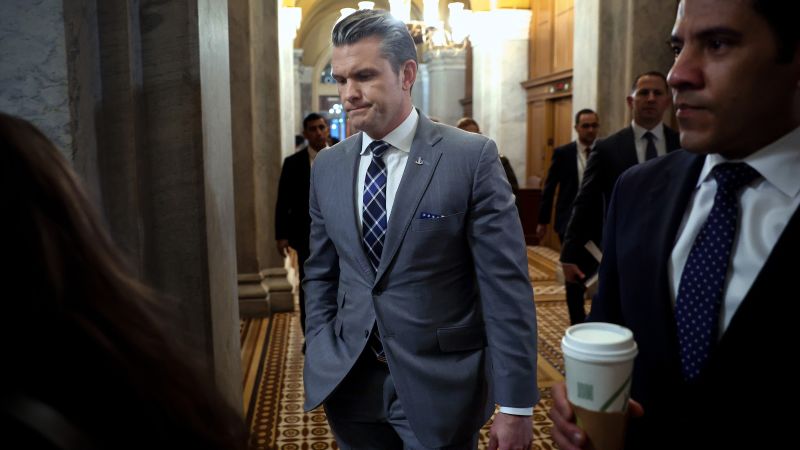
During a confidential meeting with legislators on Capitol Hill, officials from the Trump administration disclosed that Iran’s Shahed attack drones present a significant challenge to U.S. air defense systems. A participant in the session shared with CNN that the drones, which are designed to fly at low altitudes and slow speeds, are harder to track than traditional ballistic missiles. Defense Secretary Pete Hegseth and Joint Chiefs Chairman Gen. Dan Caine confirmed this during the briefing, indicating that the threat has grown beyond initial projections.
The gathering took place as tensions with Iran escalated, raising fears of a broader regional conflict. Officials assured lawmakers that Gulf allies had been accumulating interceptors, though they refrained from emphasizing the urgency of the situation. This approach was noted by a source in the briefing, who stated that the administration aimed to reduce concerns about the drones’ impact on U.S. security.
“Most of Iran’s military installations have been ‘knocked out,’ and new strikes have targeted its leadership,” President Donald Trump remarked during the session, highlighting the administration’s strategic objectives.
Strategic Goals and Uncertainty
Officials reiterated Trump’s goals, which include dismantling Iran’s missile infrastructure, weakening its naval presence, halting nuclear advancements, and curbing its support for militant groups. However, they avoided specifying who might lead Iran in the future, despite the recent assassination of former Supreme Leader Ayatollah Ali Khamenei. The U.S. and Israel are believed to have eliminated several potential successors in the operation, though the process of selecting a new leader remains unclear.
Lawmakers left the meeting with conflicting assessments of the conflict’s duration. Republican Sen. Tommy Tuberville claimed the briefers outlined a plan to conclude the campaign within three to five weeks, aligning with Trump’s public remarks. In contrast, GOP Sen. Josh Hawley described the timeline as vague, stating, “It sounded very open-ended to me.” House Minority Leader Hakeem Jeffries echoed this sentiment, noting that the briefers provided no clarity on the justification for the military action.
Political Debate Over Congressional Authority
Congress has not formally approved the conflict, sparking criticism from Democrats and some Republicans. The situation is likened to the Afghanistan and Iraq wars, where lawmakers gave prior authorization. Critics argue that the current approach mirrors President Barack Obama’s intervention in Libya, which also lacked congressional approval.
House Speaker Mike Johnson, when asked if the military action constituted a war, described it as “an operation.” He emphasized the need for immediate action due to an imminent threat, but acknowledged the absence of a formal declaration. Meanwhile, Democratic Sen. Mark Kelly warned that the U.S. faces logistical challenges in maintaining its air defense capabilities, citing the limited supply of munitions and the potential for a prolonged conflict.
