
Iceland to hold referendum on resuming EU membership bid
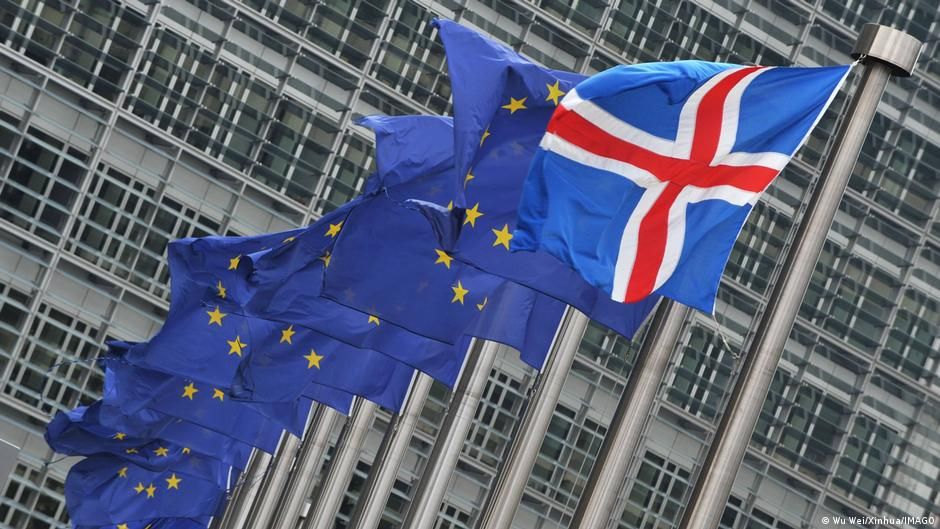
Iceland to Hold Referendum on Resuming EU Membership Bid
The Icelandic government has confirmed that a referendum will occur in August concerning the revival of discussions to join the European Union. This decision follows a shift in priorities, with rising living costs, the Ukraine conflict, and US geopolitical influence encouraging a new approach. The vote, scheduled for August 29, has been endorsed by the Cabinet, according to the country’s foreign ministry. However, the proposal must still gain approval from the parliament, the Althingi, before the referendum can proceed.
Public Support and Geopolitical Factors
According to RUV, a recent Gallup survey indicates 57% of Icelanders favor restarting EU accession talks, while 30% remain against it. The report highlights concerns about economic pressures and Arctic political instability, fueled by Russia’s prolonged invasion of Ukraine and the US’s potential claim over Greenland. Prime Minister Kristrun Frostadottir’s center-left coalition government has positioned Iceland as a reliable partner for Brussels, asserting that its negotiation stance is strong.
“The geopolitical context is fundamentally different today than when Iceland first applied for membership,” stated EU Enlargement Commissioner Marta Kos. “In a world of competing spheres of influence, EU membership offers an anchor into a bloc grounded in values, prosperity, and security.”
Historical Context and Challenges
Iceland had paused EU membership negotiations in 2013, but recent developments have reignited interest. The nation’s close ties to Europe have long been a cornerstone of its foreign policy, yet opposition persists, notably among farmers fearing disruptions to the fishing industry if EU rules mandate shared access to North Atlantic waters.
With a population of roughly 400,000, Iceland collaborates with the EU through the European Economic Area (EEA) and is part of the Schengen visa-free travel network. It also serves as NATO’s smallest member, relying on the military alliance for security. EU accession is a lengthy process managed by the European Commission, requiring evaluation across 35 criteria, including financial systems, fisheries, and freedom of speech. All 27 current members must agree unanimously to admit a new applicant.
Iceland’s initial pursuit of EU membership began in 2009, after the 2008 financial crisis crippled its investment-driven economy. A euroskeptic government later suspended talks in 2013. Frostadottir’s administration, elected in 2024, initially aimed for a 2027 referendum, but Trump’s 2024 threats to annex Greenland from Denmark and his mix-up between Iceland and Greenland at the World Economic Forum in Davos intensified the urgency for action.
