
Hungary’s $82 million bank transit swoop deepens spat with Ukraine
Hungary’s $82 million bank transit swoop deepens spat with Ukraine
On March 5, 2026, Hungary’s National Tax and Customs Administration (NAV) detained seven Ukrainian nationals along with two armored vehicles carrying a total of $40 million, 35 million euros, and nine kilograms of gold. The operation, conducted with counter-terrorism units, was linked to suspicions of money laundering. This action has intensified the standoff between Budapest and Kyiv, which already includes accusations of Hungary holding bank staff hostage over oil transport delays.
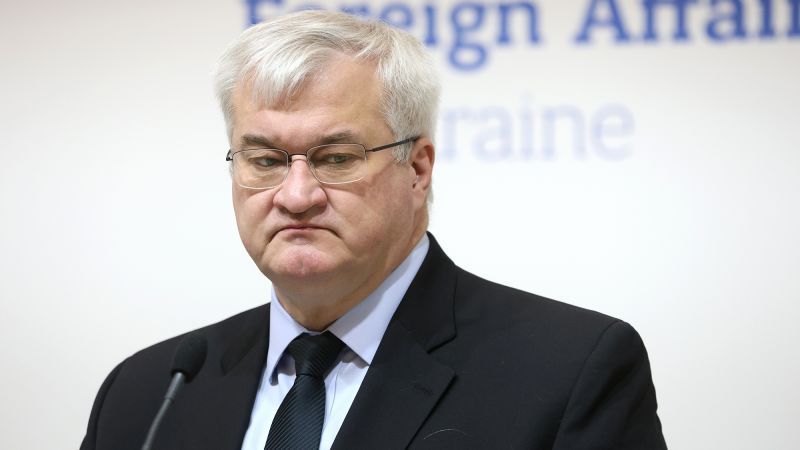
According to a NAV statement, the detained individuals included a former general from Ukraine’s intelligence service. The agency emphasized its pursuit of criminal investigations, highlighting the involvement of Hungarian counter-terrorism forces. Meanwhile, Ukrainian Foreign Minister Andrii Sybiha labeled the move as “state terrorism and racketeering,” arguing that Hungary had seized hostages and siphoned funds without justification.
“In fact, we are talking about Hungary taking hostages and stealing money,” Sybiha wrote on X.
Hungarian Foreign Minister Peter Szijjarto called for Kyiv to clarify the purpose of cash movements through Hungary, while government spokesperson Zoltan Kovacs confirmed the detainees would be expelled. The fate of the transported funds remains uncertain. Ukraine’s ambassador to Hungary, Sandor Fegyir, attempted to visit the Counter-Terrorism Centre in Budapest to meet the detained individuals, as reported by Reuters witnesses.
The Ukrainian savings bank claimed the detained employees were part of a routine operation under an international agreement with Raiffeisen Bank, Austria. “Since the full-scale invasion began, foreign currency and bank metals have been transported by land,” the bank stated. However, Raiffeisen International remained silent, citing banking secrecy rules.
Hungary and Slovakia accuse Ukraine of intentionally slowing down oil deliveries through the damaged Druzhba pipeline, framing it as a political maneuver. Kyiv disputes this, attributing the delay to necessary repairs after a Russian drone strike on January 27 caused infrastructure damage. The controversy has become a key issue in Hungarian Prime Minister Viktor Orban’s election campaign, where he faces a major challenge on April 12.
Orban, who has vetoed EU sanctions on Moscow and a large loan for Ukraine, stated that Hungary would suspend critical transit shipments until Kyiv approves the resumption of oil flows. “We have stopped diesel exports to Ukraine, maintain power exports, and will halt key transit operations until Ukraine agrees to the oil shipments,” he declared via state radio. Despite the diplomatic friction, the EU has indefinitely frozen Russian assets, enabling Hungary and Slovakia to redirect them to support Kyiv’s war efforts.
