
US not ready to seek deal to end war with Iran, Donald Trump says
US not ready to seek deal to end war with Iran, Donald Trump says
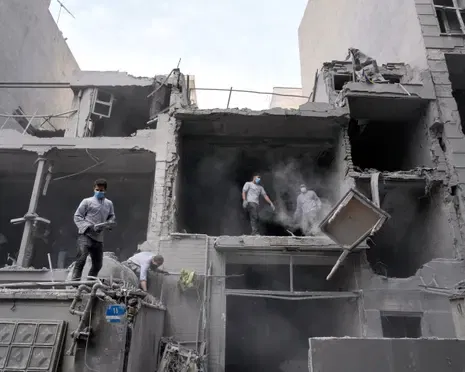
Donald Trump has indicated the United States is not prepared to pursue a ceasefire agreement with Iran, asserting that while he believed Tehran was open to negotiations, the US would continue its military actions for improved terms. His remarks follow Iran’s latest missile and drone assaults on Gulf nations and Israel, alongside intensified Israeli and US airstrikes on Iranian territory.
The ongoing conflict has intensified chaos in the Middle East, destabilized international air travel, and interfered with oil shipments from the region, driving global fuel prices higher. Both Tehran and Washington have maintained their hardline positions, with no signs of softened rhetoric despite the human toll and economic strain caused by the closure of the Strait of Hormuz.
“Iran wants to make a deal, and I don’t want to make it because the terms aren’t good enough yet,” Trump stated during an interview with NBC News. He also hinted at potential renewed attacks on Kharg Island, home to Iran’s primary oil export hub, suggesting further strikes could be launched “just for fun” after recent US air raids.
Trump emphasized the need to bolster oil trade by escalating assaults on Iranian coastal areas near the strait. However, experts argue that isolating the strait through military force alone remains a formidable challenge as long as Iran retains the capacity to disrupt maritime traffic with missiles, drones, or small vessels.
Iran’s foreign minister, Abbas Araghchi, sought to temper the situation during a discussion with French counterpart Jean-Noël Barrot, urging global actors to avoid actions that might expand the conflict. He also mentioned Iran’s openness to proposals guaranteeing an end to hostilities, though mediation efforts between Iran and its neighbors have yet to yield confirmed results.
In Tehran, daily life continued with a semblance of normalcy five days before Nowruz, the Persian new year. While some cafes and restaurants reopened, the Tajrish bazaar in the city’s northern district saw over a third of its stalls active. Shoppers queued at ATMs, but online banking at Bank Melli faced operational setbacks in recent days.
Meanwhile, the International Committee of the Red Cross reported more than 1,300 deaths from US and Israeli strikes on Iran, including 223 women and 202 children. The UN refugee agency noted that up to 3.2 million people have been displaced, largely fleeing urban centers for safety.
Iran acknowledged that its new supreme leader, Mojtaba Khamenei, was injured in the initial strike on February 28 that killed his predecessor, the late Ayatollah Ali Khamenei. However, the country described the injuries as minor. Israeli forces retaliated with strikes on western Iran after Iran’s Revolutionary Guards labeled Prime Minister Benjamin Netanyahu a criminal, vowing to eliminate him.
Violence persisted beyond Iran, with the US advising citizens to leave Iraq amid pro-Iranian attacks on embassies and military bases. Kurdish factions in the north also faced fresh strikes, potentially targeting US-aligned forces. Over 600 ships remain stranded in the Red Sea, highlighting the disruption to global shipping routes.
