
Is Iran’s regime at a breaking point?
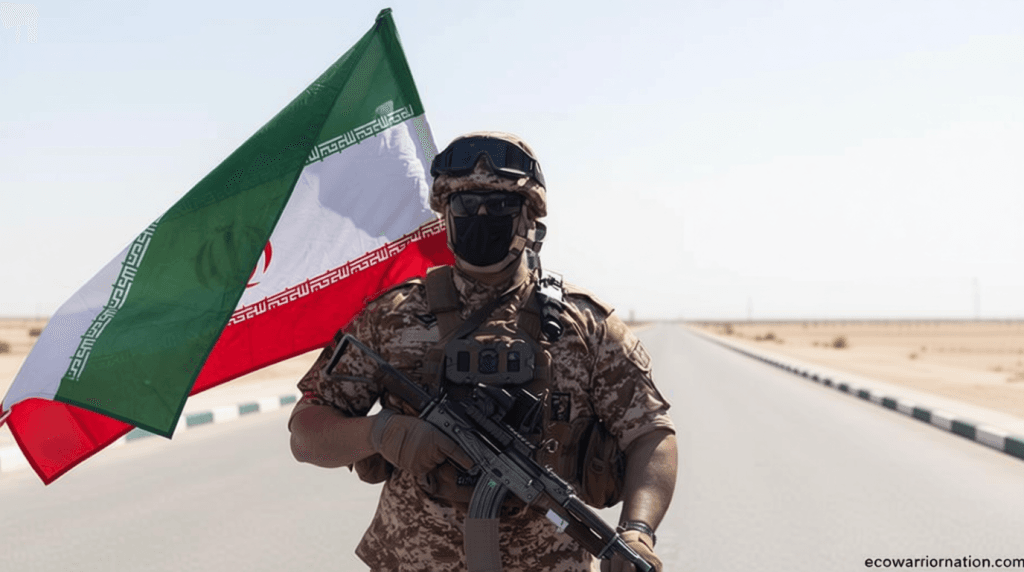
Is Iran’s Regime at a Breaking Point?
As the conflict enters its eighteenth day, Iran’s Revolutionary Guards continue to operate despite significant challenges. Analysts note that while the initial strikes by the US and Israel dealt a severe blow, the Guard’s adaptable command system has allowed it to persist. The Islamic Republic’s core leadership, including Supreme Leader Ali Khamenei, was targeted early in the conflict, raising concerns about the stability of its power structure. However, the situation has not yet reached a critical threshold.
Israel’s recent strikes have eliminated key figures such as Ali Larijani, secretary of the Supreme National Security Council, and Gholamreza Soleimani, head of the Basij militia. These actions were reported on Tuesday and Monday respectively, underscoring the intensity of the engagement. The US Central Command (CENTCOM) confirmed over 300 attacks launched by Iran against multiple nations in the last fortnight, including Oman, Saudi Arabia, Israel, Jordan, Cyprus, Turkey, Azerbaijan, the United Arab Emirates, Qatar, Iraq, Kuwait, and Bahrain.
Iran’s Strategic Resilience
Despite these losses, Iran’s military apparatus remains intact. The Revolutionary Guard Corps (IRGC), originally formed post-1979 Islamic Revolution to safeguard the regime’s ideology, continues to lead operations. Its decentralized command structure enables rapid responses and independent action at regional levels. This adaptability has allowed the IRGC to maintain offensive capabilities, even as the US and Israel claim to have targeted thousands of Iranian assets.
“The idea that Iran’s leadership has been irreparably weakened is misleading,” said Middle East expert Habib Hosseinifard. “The Guard’s provincial commands now operate with considerable autonomy, ensuring sustained activity despite losses.”
The United Arab Emirates reported casualties in Abu Dhabi, with one death and one injury attributed to debris from Iranian projectiles. Saudi Arabia intercepted over 60 drones in its airspace since midnight, highlighting the scale of the ongoing confrontation. Meanwhile, the US embassy in Baghdad faced drone and rocket attacks early Tuesday, illustrating the persistent threat to regional infrastructure.
Iran’s Foreign Minister Abbas Araghchi has dismissed the possibility of negotiations, asserting no pause in hostilities will occur as long as the US and Israel persist in strikes. The IRGC’s ability to adapt to evolving conditions underscores its role as a central pillar of Iran’s military strength. With an estimated personnel strength of up to 200,000, the Guard is positioned to continue its campaigns across multiple fronts.
“The concept of a ‘failed state’ emerging from this conflict is an oversimplification,” remarked political analyst Reza Talebi. “Iran’s military and ideological frameworks are deeply interconnected, ensuring cohesion even in moments of external pressure.”
Analysts emphasize that the IRGC functions not only as a military force but also as a key player in Iran’s economic and political systems. The Quds Force, a specialized unit within the Guard, operates beyond national borders, supporting militant groups across the Middle East. This layered structure reinforces the regime’s resilience, making it difficult to dismantle quickly.
