
Why a delayed Xi-Trump summit could give China a stronger hand
Why a delayed Xi-Trump summit could give China a stronger hand
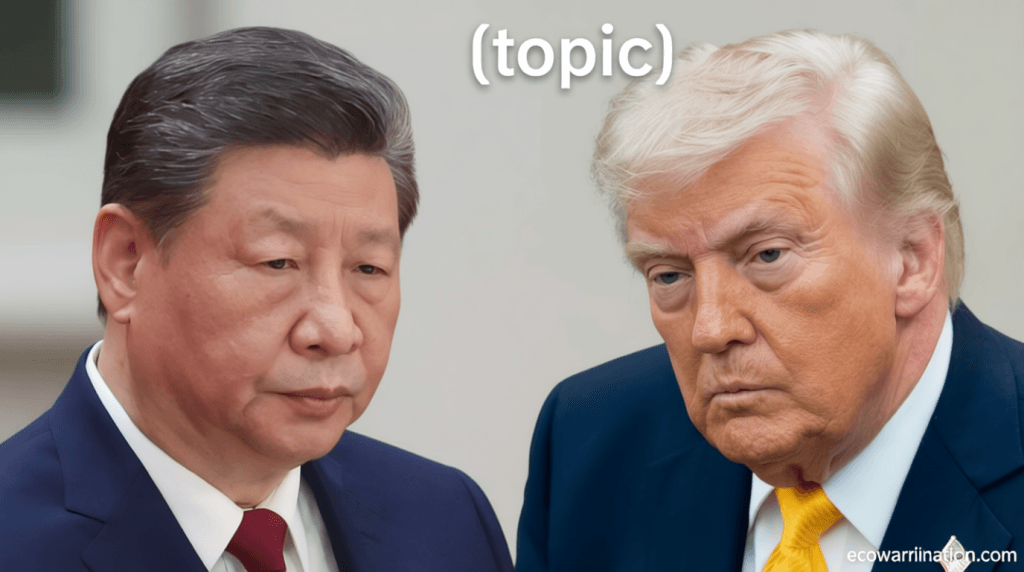
China’s strategic advantage may be amplified by the postponement of the high-stakes summit between U.S. President Donald Trump and Chinese leader Xi Jinping, as noted by Chinese analysts. This delay could allow both nations to bypass the complications tied to the U.S.-led conflict with Iran, a region where China holds significant influence. If Trump’s administration struggles to manage the war’s impact on oil markets and economic stability, it could weaken his position during future negotiations, according to experts.
Beijing has not officially confirmed the summit’s rescheduling, and its stance on the proposed “5-to-6 week” delay remains ambiguous. While the White House had initially set the meeting for March 31 to April 2, Trump recently stated that China is “fine with” the postponement. Chinese Foreign Ministry spokesperson Lin Jian emphasized the importance of such meetings, calling them “irreplaceable” for shaping U.S.-China relations. However, behind the scenes, Beijing’s confidence is tempered by uncertainty.
“The longer the war drags on, the greater Trump’s sense of frustration becomes, and his weakness would become even more apparent. Consequently, when dealing with China, he would find himself in yet another disadvantageous position,” said Wu Xinbo, director at Fudan University’s Center for American Studies.
Wu, also a member of China’s Foreign Ministry’s advisory committee, suggested that waiting for a more favorable moment might be strategically better. “We will see if Trump has many cards left by then, so it’s better for us to wait a bit rather than act too soon,” he added. Some analysts argue that the U.S. president’s weakened position stems from the Supreme Court’s February ruling that invalidated his broad emergency tariffs, further complicating his ability to negotiate effectively.
China, alongside global partners, faces economic challenges from the Iran war, but the situation also presents political opportunities. The conflict has allowed Beijing to present itself as a stable and peaceful alternative to the U.S., which has seen its credibility in the region wane. “A lot of countries around the world are now rating China as a more reliable partner than the US. Now that doesn’t mean that China necessarily is a more reliable partner, but rather that changes in the US have made people perceive (it as) so,” stated Rana Mitter, a specialist in U.S.-Asia relations at Harvard Kennedy School.
Experts suggest the delay reflects Trump’s administration’s timing strategy, possibly signaling how long the war might persist. For Chinese diplomats, the summit remains a pivotal moment to recalibrate the relationship between the world’s two leading economic and military powers, even as the outcome hinges on the evolving dynamics of the conflict.
