
Von der Leyen clinches Australia trade deal
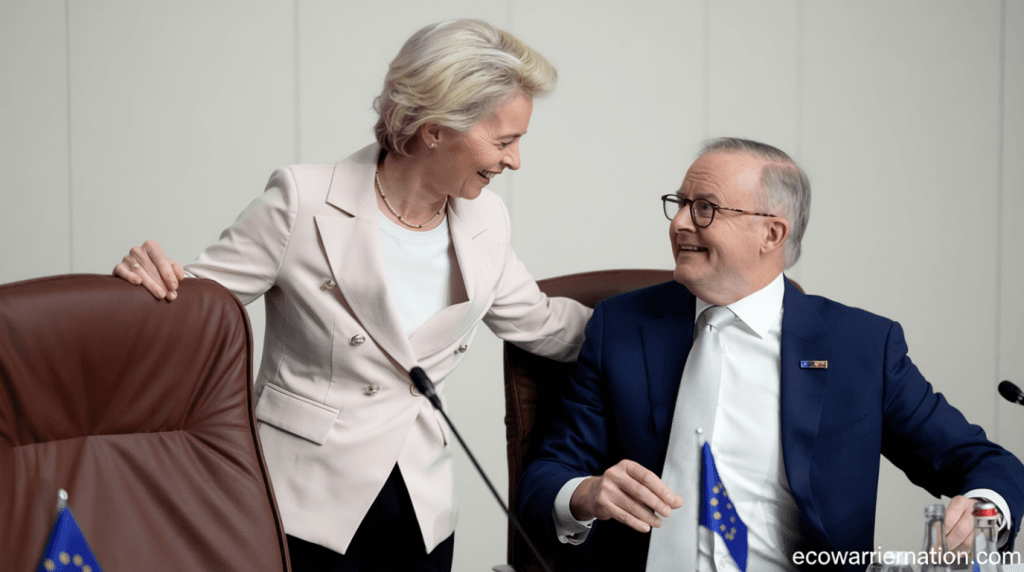
Von der Leyen clinches Australia trade deal
European Commission President Ursula von der Leyen finalized a free-trade agreement with Australian Prime Minister Anthony Albanese on Tuesday, significantly lowering tariffs on EU products and agricultural exports. This agreement is part of Brussels’ efforts to expand trade partnerships and reduce dependency on major markets amid escalating international challenges.
The deal is projected to save the EU €1 billion annually in tariffs, with export growth anticipated in sectors such as dairy, motor vehicles, and chemicals over the next decade. While the pact includes provisions to gradually eliminate duties on items like cheese, wine, and processed foods, it also introduces controlled import quotas for beef and sheep, which had previously stalled negotiations.
Agriculture emerged as a central issue, with EU farmers expressing concerns over the Mercosur trade deal. A legal challenge from Members of the European Parliament threatened to delay ratification, highlighting tensions between trade liberalization and domestic interests. The safeguard mechanism will allow the EU to protect vulnerable industries if Australian imports cause market disruptions.
Alongside trade, Brussels secured a security and defence collaboration with Canberra. “The EU and Australia may be geographically far apart, but we couldn’t be closer in how we perceive global challenges,” von der Leyen remarked. The partnership underscores a broader strategy to strengthen alliances in the Indo-Pacific, where China’s influence has grown substantially.
“With these dynamic new partnerships on security and defence, as well as trade, we are moving even closer together.” — Ursula von der Leyen
Since Donald Trump’s return to power in 2025, the EU has prioritized trade agreements as tools for geopolitical influence. In 2025, Brussels signed pacts with Mexico, Switzerland, and Indonesia, while the Mercosur deal was provisionally applied from May 1 despite parliamentary objections. Additional talks are underway with the Philippines, Thailand, Malaysia, the United Arab Emirates, and several African nations.
Brussels also failed to eliminate Australia’s luxury car tax. Instead, 75% of EU electric vehicles will be exempt from the levy. The agreement opens access to Australia’s critical resources, including aluminium, lithium, and manganese, while offering export boosts in key industries. These measures reflect a strategic push to diversify economic ties and counterbalance shifting global dynamics.
