
Netanyahu vows further strikes on Iran and Lebanon as missile hits Tel Aviv
Netanyahu vows further strikes on Iran and Lebanon as missile hits Tel Aviv
An Iranian missile struck central Tel Aviv, intensifying the Middle East conflict and prompting Israeli Prime Minister Benjamin Netanyahu to reaffirm plans for additional attacks on Tehran and Lebanon. The incident, occurring on Tuesday, followed Trump’s recent optimism about a potential peace deal, which now appears less likely.
“There’s more to come,” Netanyahu stated, aligning with Israeli officials who indicated the probability of Iran rejecting U.S. demands in ongoing negotiations.
Iran’s Islamic Revolutionary Guard Corps issued a statement declaring it would launch “unrestrained” missile and drone assaults on Israeli forces in northern Israel and near Gaza, provided the country persisted in targeting Lebanon and Palestinian territories.
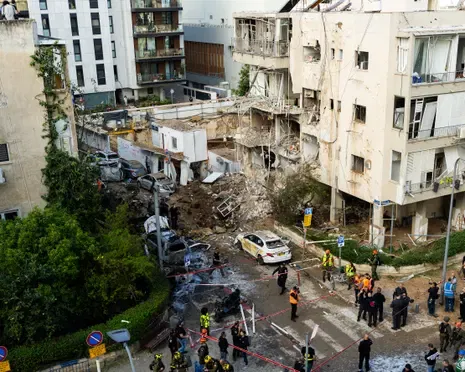
A thick plume of smoke rose over Tel Aviv’s skyline, underscoring the persistence of hostilities. Police confirmed that a missile, packed with a considerable explosive payload, struck the city’s heart, leading to extensive damage to structures and vehicles. At least six individuals were lightly injured, with several buildings sustaining harm and emergency crews reporting casualties at one site. One structure and the adjacent road suffered severe damage, with cars catching fire in the aftermath. Fragments from intercepted missiles also landed in Rosh Ha’ayin, causing minor damage but no reported injuries.
Israel’s health ministry reported 4,829 people injured since the conflict began, with 111 still hospitalized and 12 in critical condition. The strikes marked a new phase of retaliation following Israeli military operations announced the previous day. Approximately 40 minutes after Trump announced a delay in targeting Iran’s power infrastructure, Israel claimed it had initiated another round of strikes against the Iranian regime’s facilities in Tehran.
The Israel Defense Forces stated that energy installations would remain untouched, hinting at a strategic alignment with Washington in preserving Iranian power plants. In the preceding 24 hours, the U.S.-based Human Rights Activists’ News Agency documented at least 206 attacks across 15 Iranian provinces, resulting in four casualties—civilian and military.
Iran’s Fars news agency noted that six fatalities occurred in Tabriz due to strikes on residential areas. Since the conflict began, estimates of total casualties, including military and civilian, have surpassed 1,500, with some rights groups citing figures as high as 3,230 by March 21.
The Israeli military, via Telegram, claimed to have targeted multiple military sites and weapon depots in Iran, noting the destruction of additional missile launchers and key regime headquarters. Despite these efforts, Iran has continued to breach Israeli defenses. Recent reports suggest Israel has eliminated over 70% of Iran’s ballistic missile systems and achieved near-complete control of Iranian airspace.
The crisis extended beyond Israel, with Iranian strikes reaching Gulf nations. Bahrain’s interior ministry reported a fire at a commercial site following an Iranian attack, with no immediate casualties. In Kuwait, power lines were damaged by air defense shrapnel, causing brief outages. Saudi Arabia’s defense ministry confirmed the interception and destruction of 19 Iranian drones aimed at its oil-rich eastern region. Meanwhile, missile alerts echoed in Bahrain, highlighting the regional reach of the conflict.
