
Sadiq Khan’s Response to Trump’s Latest Remarks Sparks Debate
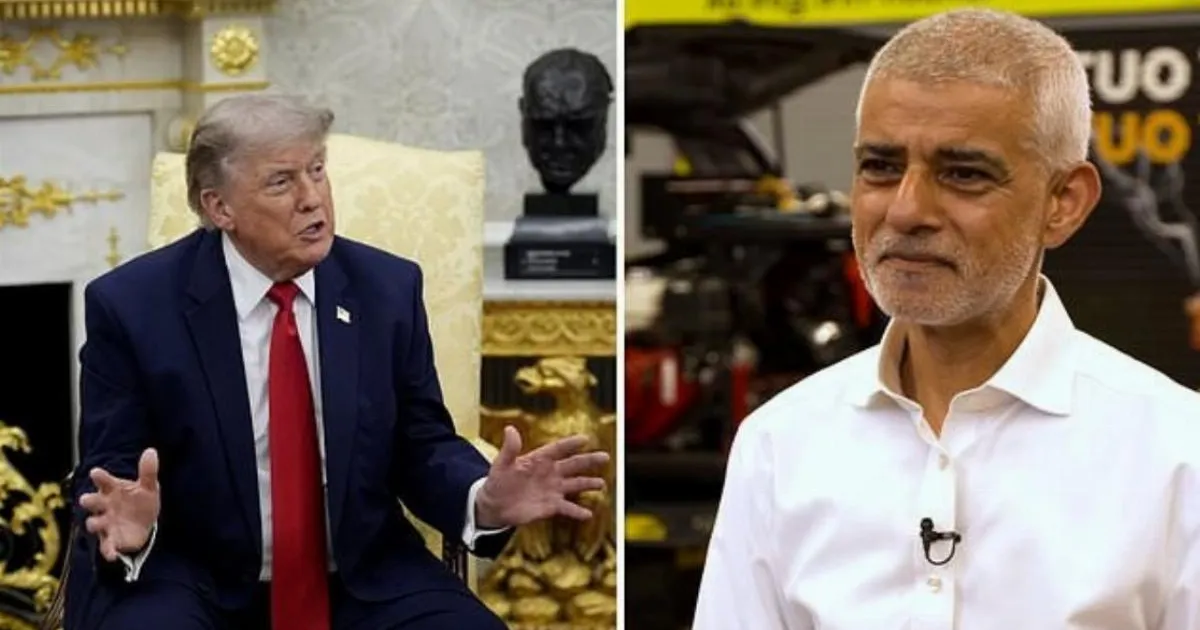
Sadiq Khan asks why is Trump – London’s mayor, Sadiq Khan, recently remarked on living “rent-free in Donald Trump’s mind” following the US president’s latest critique, labeling him as “grossly incompetent” and “a bad person.” The comment came after Trump’s recent outburst, which included harsh words about Khan’s leadership. Despite the criticism, Khan has consistently maintained a composed demeanor, turning the spotlight back on the former president’s fixation.
“I don’t want to cause any problems, but your Mayor of London is grossly incompetent,” Trump declared during a press briefing in the Oval Office, continuing his pattern of attacking Khan’s governance. This latest remark, part of Trump’s recurring diatribes against the mayor, has once again fueled the public perception of a deep-seated rivalry between the two figures.
Khan, however, brushed off the remarks with a light-hearted quip, calling it a “silly crush” on his part. He told Metro, “Another day, another example of President Trump’s obsession with me. He’s clearly got a man crush on me.” The mayor’s response highlights his ability to deflect personal attacks while maintaining a focus on broader issues affecting the city.
The context for Trump’s remarks was London’s recent recognition with the Lee Kuan Yew Prize, an esteemed accolade in urban planning awarded in Singapore. This achievement, which celebrated London’s status as the world’s leading city in sustainable development, added a layer of irony to Trump’s critique. The timing of the comments suggests a deliberate effort to undermine Khan’s success, even as the mayor prepares to unveil new initiatives aimed at climate resilience.
A Longstanding Rivalry with Trump
The feud between Khan and Trump predates the current exchange, with tensions dating back to 2015. At that time, Khan criticized the then-presidential candidate’s proposal to ban Muslim travelers from entering the United States. This initial clash marked the beginning of a public spat that has since evolved into a series of confrontations. After Khan’s election as London’s mayor in 2016, he further emphasized the disparity in their approaches, calling Trump’s views on Islam “ignorant.” In response, Trump challenged Khan to an IQ test, a move that underscored the personal nature of their rivalry.
The dispute intensified after the 2017 London Bridge terror attack, during which Trump claimed, “At least seven dead and 48 wounded in the terror attack, yet the mayor insists there’s ‘no reason to be alarmed!’” This statement contrasted sharply with Khan’s own remarks, which urged the public to remain calm in the face of increased security measures. The former president’s accusation of insensitivity has since become a recurring theme in his critiques of Khan’s leadership.
Introducing London’s Heat Strategy
Yesterday, Khan unveiled London’s first-ever heat plan during a public event in Islington, using the opportunity to address Trump’s persistent focus on him. The initiative, titled “Heat Ready London,” outlines a comprehensive set of goals designed to combat the health impacts of rising temperatures. It prioritizes measures to protect the most vulnerable populations, particularly those in high-risk areas such as elderly communities and low-income neighborhoods.
“Rising temperatures are no longer a distant threat but an immediate reality for Londoners. These changes are impacting our communities, spanning homes, high streets, schools, hospitals, and care services,” Khan stated. His remarks emphasize the urgency of the situation, highlighting how extreme weather conditions are already disrupting daily life and threatening public health.
Khan’s plan also includes strategies to enhance infrastructure resilience and adapt to the growing frequency of heatwaves. By addressing the crisis through a collaborative framework, he aims to unite local authorities, businesses, and community organizations in a shared effort. “No single entity can tackle this challenge independently,” he explained, “so this is a call to action for our partners to use this framework to drive collective delivery and protect lives.” The plan reflects a proactive approach to climate change, positioning London as a model for urban adaptation.
The mayor’s comments on Trump’s fixation serve as a reminder of the broader implications of political rhetoric. While the former president’s attacks often focus on personal traits, Khan’s response underscores the importance of addressing climate challenges with strategic clarity. His ability to navigate both personal and policy-related criticisms demonstrates a resilience that has defined his tenure.
A Call for Unity in the Face of Climate Threats
Heat Ready London represents a significant step in the city’s efforts to combat the effects of global warming. As temperatures continue to rise, the plan’s objectives are intended to mitigate risks to public health, reduce economic strain on vulnerable sectors, and ensure equitable access to resources during extreme weather events. Khan’s emphasis on collective action aligns with the city’s commitment to fostering partnerships that address complex issues beyond the scope of any single organization.
The plan also includes investments in green infrastructure, such as urban cooling zones and improved public transportation systems, to reduce the impact of heat on residents. By integrating these measures into the city’s long-term strategy, Khan aims to create a framework that supports both immediate relief and long-term adaptation. The initiative has been met with cautious optimism, with experts noting its potential to serve as a blueprint for other urban centers facing similar challenges.
Broader Implications for Political Discourse
While the heat plan is a tangible response to climate concerns, Khan’s remarks on Trump’s obsession also highlight the role of political discourse in shaping public perception. Trump’s tendency to personalize criticism has often overshadowed policy discussions, but Khan’s ability to frame his own experiences within a larger context demonstrates his deftness in handling the media spotlight. His comments remind viewers that even in the midst of political tension, cities must remain focused on their priorities.
The mayor’s engagement with the issue reflects a balance between addressing personal attacks and advancing critical initiatives. By juxtaposing Trump’s focus on his individual qualities with the pressing need for climate action, Khan has positioned himself as a leader who remains grounded in practical solutions. This approach not only strengthens his credibility but also reinforces the importance of maintaining a clear vision in the face of political distractions.
As London moves forward with its heat strategy, the conversation around climate resilience will likely continue to evolve. Khan’s ability to navigate both personal and policy-related challenges underscores his leadership style, one that blends humor with determination. The mayor’s words, though lighthearted, carry a serious message about the need to address climate change with urgency and collaboration.
With the city’s first heat plan now in motion, the focus will shift toward implementation and measurable outcomes. Khan’s team has already begun engaging with stakeholders to ensure the plan’s effectiveness, signaling a commitment to long-term sustainability. This initiative, paired with his ongoing efforts to counter Trump’s rhetoric, illustrates a multifaceted approach to governance that prioritizes both public well-being and political strategy.