
She spent 20 months battling to die under a euthanasia law. On Thursday, Spain let her
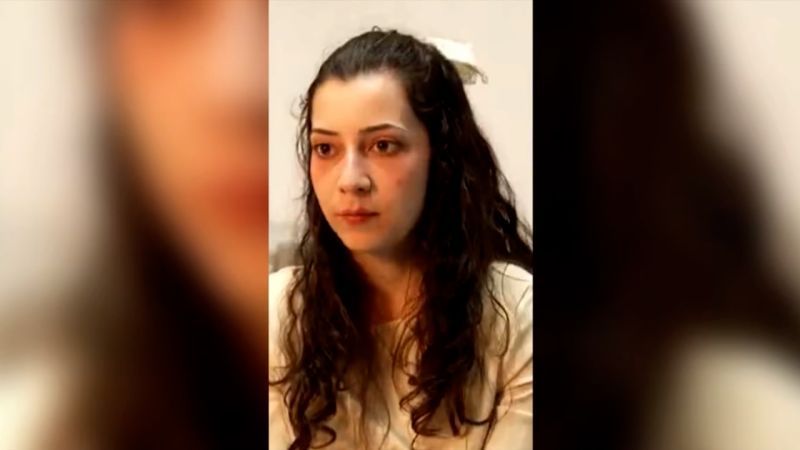
Spain Grants Euthanasia Request to 25-Year-Old Noelia Castillo After 20-Month Legal Battle
Spain’s euthanasia law, enacted in June 2021, allowed assisted suicide. Noelia Castillo, a 25-year-old woman, finally saw her wish realized on Thursday. Her journey to this moment lasted 20 months, marked by persistent pain and emotional turmoil.
Castillo’s decision to end her life was deeply personal. She described her suffering as both physical and psychological, stating, “I want to leave in peace already and stop suffering, period,” in an interview with the Spanish news channel Antena 3. Her story ignited widespread discussion, with supporters and critics alike reacting strongly to her choice.
A Turbulent Past and Chronic Suffering
Castillo’s struggles began at 13 when her parents separated, leading to a difficult childhood. She was admitted to a supervised care center and later diagnosed with Obsessive-Compulsive Disorder and Borderline Personality Disorder. These conditions compounded her emotional pain, which she linked to three instances of sexual abuse.
In one incident, an ex-partner allegedly assaulted her. Another occurred in a nightclub, where two men raped her. A third episode took place in a bar, involving three young men. She never reported any of these events. The second abuse, in October 2022, prompted a suicide attempt. Though she survived, the injury left her paraplegic and reliant on a wheelchair.
Castillo’s physical suffering was intense. “Sleeping is very difficult for me, and besides that, I have back and leg pain,” she said. Yet, she emphasized that her pain extended beyond the body. “My world was very dark … I had no goals, no objectives, nothing,” she described, highlighting her emotional despair before seeking euthanasia.
Legal Challenges and Family Opposition
Despite Spain’s legal framework, Castillo’s path was not straightforward. Her family, particularly her father, opposed the decision. Advised by the Christian Lawyers group, he launched a legal campaign to halt the process, claiming she was unfit to choose her own fate.
Castillo’s request was approved by the Catalonia Guarantee and Evaluation Commission on July 18, 2024. The commission determined she met all legal criteria, including a “nonrecoverable clinical situation” that caused severe dependence, pain, and chronic suffering. However, her father’s challenge delayed the process for 20 months, navigating five judicial levels: a Barcelona court, the High Court of Justice of Catalonia, the Supreme Court, the Constitutional Court, and the European Court of Human Rights.
“He has not respected my decision and he never will,” Castillo said of her father. She explained her confusion over his opposition, noting their distant relationship. “He ignores me. So why does he want me alive? To keep me in a hospital?” she questioned, reflecting on her family’s role in her suffering.
Ultimately, Castillo’s determination prevailed. She told Antena 3, “I finally did it, and now maybe I can finally rest.” In her final moments, she requested privacy, saying, “I don’t want anyone inside” her room. “I don’t want them to see me close my eyes,” she added, encapsulating her desire for quiet dignity in death.
