
Palestine is now the conscience of the world. No deal will change that
Palestine is now the conscience of the world. No deal will change that
Weeks after his arrival in Washington, US President Donald Trump unveiled a scheme that masquerades as peace, yet strips Palestinians of all agency. The agreement, touted as a milestone, was crafted by an American ally and an Israeli architect of conflict, with the people it aims to liberate absent from the narrative entirely.
Netanyahu stood radiant beside Trump, extolling his own handiwork, while Palestinians were left unseen. No Hamas representatives, no Palestinian Authority delegates—only a hollow façade designed to lend the arrangement a veneer of legitimacy.
A Colonial Blueprint
This is the continuation of a familiar pattern: peace agreements forged without the consent of the occupied. It mirrors the logic behind the Abraham Accords, where Israeli interests were prioritized over Palestinian sovereignty. The language of reconciliation is used to mask the reality of occupation, siege, and systematic erasure of Palestinian identity.
“Who could believe it?”
Netanyahu’s triumphal cry captures the essence of the deal—a victory he couldn’t secure through military might. Despite two years of bombings and mass killings, Israel failed to conquer Gaza, or to secure the return of hostages, or to crush Palestinian resistance. Trump’s plan is an attempt to transform this failure into a symbolic triumph, with diplomacy as its weapon.
Despite the grandstanding, the proposal is little more than a hollow gesture. Its sole tangible promise is the release of captives. All other claims are rhetoric, while Israeli forces remain in control. The deal is not a negotiation—it is an imposition, a surrender cloaked in statesmanship.
A Global Backlash
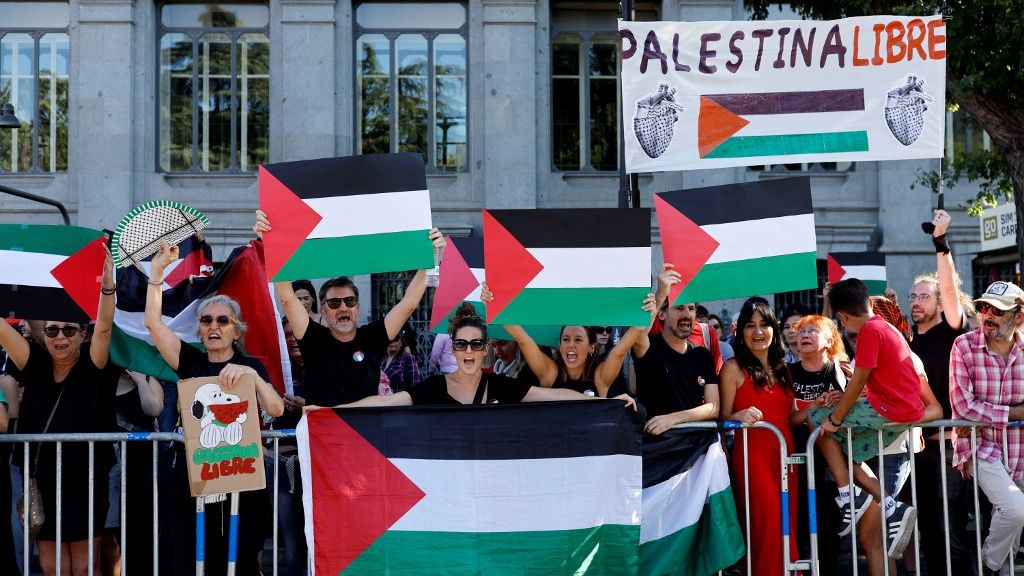
Yet the plan’s failure is evident in the growing global resistance. At the UN, Netanyahu faced 77 nations exiting the room, leaving him to speak to empty seats. Public sentiment in Europe and the US shifts against Israel, with younger generations leading the charge. The world’s solidarity with Palestine is rising, and this deal is a desperate attempt to stifle that momentum.
Arab and Muslim leaders, once seen as potential allies, are now complicit in this effort. They are not there to defend Palestine, but to push it toward capitulation. Their presence serves as a cover for Trump and Netanyahu’s agenda, their role reduced to facilitating subjugation.
A History of Occupation
The deal echoes historical precedents of colonial domination. From the Balfour Declaration’s promise of land to the Jewish people without Palestinian consent, to modern-day mandates and protectorates, the language of control has been reinvented. This is not peace—it is the continuation of a system that silences the occupied and installs a new regime of external governance.
As Egypt’s former UN delegate Motaz Khalil noted, the arrangement is nothing more than a “surrender plan.” It denies Palestinians representation, erases their voice, and hands Netanyahu the victory he once claimed but never achieved. History will judge this moment harshly—a ceasefire without the occupied is not peace, but a colonial dictate, dressed in humanitarian terms.
