
‘Shooting gallery’: How a US invasion of Iranian islands might unfold
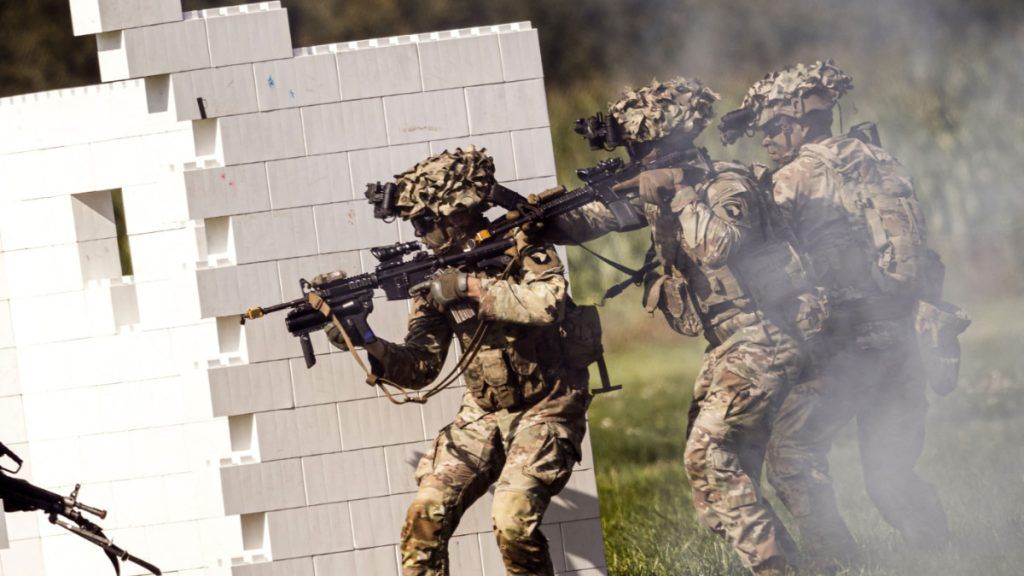
Shooting gallery’: How a US invasion of Iranian islands might unfold
Former US military experts and analysts warn that a potential deployment of Marines and paratroopers to capture an Iranian island in the Gulf would place forces in a high-risk “shooting gallery” environment, characterized by exposed supply routes and unclear strategic goals. This scenario, outlined to Middle East Eye, highlights the complexities of such an operation.
Electronic Warfare and Bombing Campaign
The initial phase of a US invasion would involve disabling Iran’s radar systems and electronic infrastructure in the region. This would be followed by a concentrated aerial bombardment to weaken defensive capabilities, according to Seth Krummrich, a former head of US special operations in the Middle East.
“The US must first conduct preparation and isolation operations,” Krummrich explained to MEE. “Electronic warfare will precede preparatory strikes aimed at dismantling Iran’s defenses.”
Strategic Targets and Geographic Importance
While the US might consider multiple islands, three stand out as primary targets. Kharg, located near Kuwait, serves as a critical hub for Iran’s oil exports, handling approximately 90% of its crude shipments. Abu Musa and adjacent smaller islands, claimed by the UAE—a US and Israel ally—lie at the heart of the Gulf. Qeshm, the largest of the islands, presents the greatest challenge due to its extensive tunnel network, which Iran uses to store drones and missiles. The island is also close to Bandar Abbas, home to around 150,000 residents.
Iran has recently shifted naval traffic through the Strait of Hormuz, rerouting vessels between Qeshm and Larak, an island nearby. This strategic positioning underscores the importance of controlling such islands to influence regional maritime routes.
Historical Precedents and Airborne Operations
Historical campaigns like the WWII battles for Okinawa and Iwo Jima often serve as reference points for US island warfare strategies. However, Daniel Davis, a senior fellow at Defense Priorities, suggested that air insertion would be more viable than amphibious landings given Iran’s dominance of the Strait of Hormuz.
“I don’t see any way to get the USS Boxer or USS Tripoli past the Strait of Hormuz,” Davis remarked. “They’ll rely on air support to bypass Iran’s defenses.”
The US is likely to use V-22 Osprey tilt-rotor aircraft, along with Chinook and Black Hawk helicopters, to transport troops. These assets would enable rapid deployment without exposing large naval vessels to Iranian threats.
Support from Gulf States
Kalev Sepp, a former US special forces officer and professor at the Naval Postgraduate School, emphasized that the US invasion force would depend on bases in Gulf nations like Saudi Arabia, the UAE, or Kuwait. “They can’t execute this without regional allies providing logistical support,” Sepp stated.
MEE noted that Saudi Arabia and the UAE are increasingly aligning with US and Israeli efforts against Iran. The UAE has explicitly opposed ceasefires that leave Iran in control of the Strait of Hormuz, while Saudi Arabia has granted the US broader access to its airspace and military installations.
Vulnerabilities and Defensive Capabilities
Despite the US’s claim that Iran’s air force and navy have been significantly weakened, the country still possesses ballistic missiles and drones to counter an invasion. Iran’s islands, being geographically closer to the mainland, are more easily defended using traditional artillery compared to the Falklands, which were contested in 1982.
“The Falklands were difficult for Britain, but these islands are even more defensible,” Davis added. “Iran can anticipate the US’s moves and prepare accordingly.”
