

World’s Largest Kids Play Park in the UK
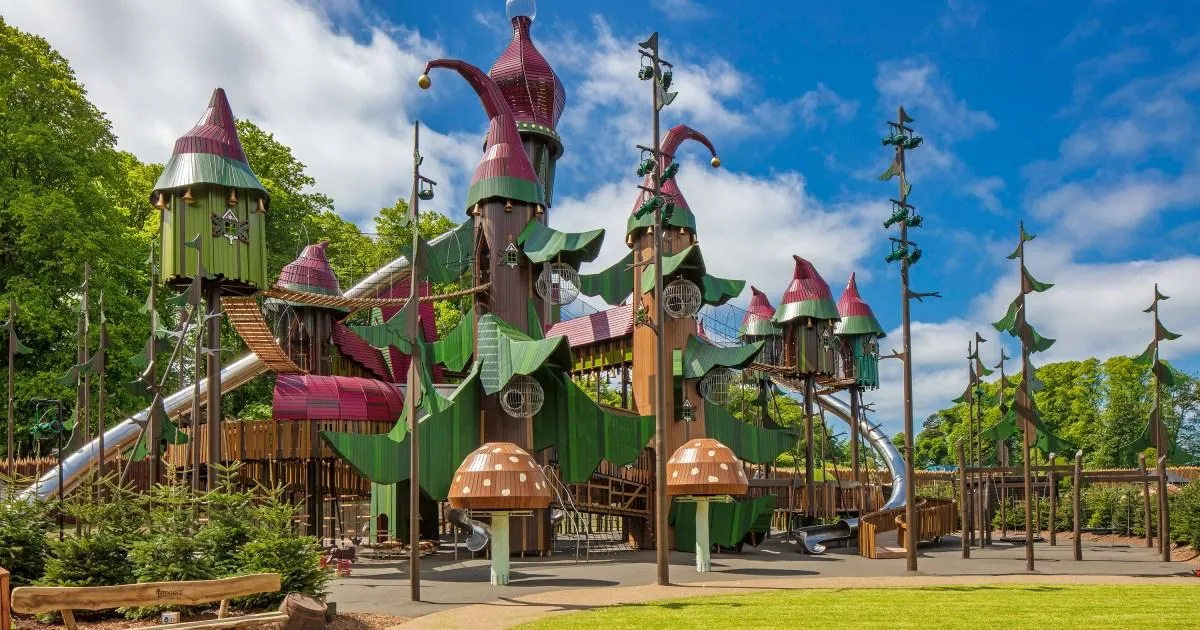
World s largest kids play park – The world’s largest kids play park is now a hit in the UK, capturing the hearts of both children and adults. Tucked away in Northumberland, this remarkable attraction is located within the Alnwick Garden, a historic site that has previously served as the backdrop for the Harry Potter films. Known as Lilidorei, it’s a whimsical world designed for young adventurers but has unexpectedly become a hotspot for adults who are eager to rekindle their childhood imagination. With its enchanting design and immersive experiences, the park has sparked a unique trend where adults are saying, “I want to go!”
Immersive Playgrounds and Fantasy Elements
Lilidorei isn’t just a playground—it’s a fully realized magical realm inspired by folklore and fairy tales. The park features a vibrant village filled with mythical creatures like fairies, elves, and hobgoblins, offering an escape into a fantastical world. Activities range from navigating 170 meters of rope bridges to exploring a castle that towers 26 meters high. The standout attraction is the 24-meter slide, which has become a symbol of the park’s bold design and appeal. For kids under 11, it’s a place of boundless fun, while adults are drawn by its nostalgic charm.
Staff members, playfully called “secret keepers,” help guide children through the park’s narrative, ensuring safety and enhancing the experience. These guides bring the stories to life, making the park feel like a living fairy tale. The combination of storytelling and physical play has created a space where kids can lose themselves for hours, with some visits lasting up to three hours. The atmosphere is so captivating that even adults find themselves wanting to join in the adventure.
Why Adults Are Falling in Love with the Park
Despite being built for children, the park’s charm extends beyond its intended audience. Social media has been flooded with adult reactions, many of whom are reminiscing about their own childhoods. A popular TikTok video has amassed over 227,000 likes, with comments like “Sod the kids, I want to go!” showing the widespread appeal. The park’s design invites people of all ages to embrace the magic, creating a sense of wonder that adults often seek.
One visitor, who brought her grandsons, described the park as “an enchanting place that feels like a fairytale come to life.” She praised the staff for fully immersing guests in the theme, blurring the lines between reality and fantasy. Parents also note that the park’s creative elements engage children’s imaginations, offering a unique blend of physical activity and storytelling. This appeal has made Lilidorei a must-visit for families and fans of the Harry Potter series alike.
The park’s design, shaped in collaboration with the Duchess of Northumberland, adds a royal touch to its setting. Surrounded by the historic Alnwick Castle, the attraction blends natural beauty with imaginative play. While the castle’s exterior has long been associated with Hogwarts, Lilidorei brings a new dimension to the area, making it a destination for those who love fantasy and fun. Its location and design have contributed to its growing popularity as a family-friendly retreat.
Seasonal Changes and Accessibility
Visitors should be aware that the park’s hours change with the seasons. Opening in February 2026, the world’s largest kids play park is open from 10 a.m. to 4 p.m. during the early months, then extends to 5 p.m. in the spring. During Easter holidays, it operates daily from 10 a.m. to 6 p.m., providing extra time for families. The half-term period also sees extended hours, ensuring maximum accessibility for all ages.
For those interested in visiting, the park’s layout is easily navigable, with clear pathways and interactive zones that cater to diverse interests. The inclusion of food and drink lodges, along with a gift shop, ensures visitors can refuel or take home a memento. Whether it’s the magical village, the towering castle, or the adrenaline-fueled slide, the world’s largest kids play park delivers an experience that’s both thrilling and timeless. Adults, too, are finding joy in its imaginative world, proving that the magic of play never fades.