
Has Artemis II shown we can land on the Moon again?
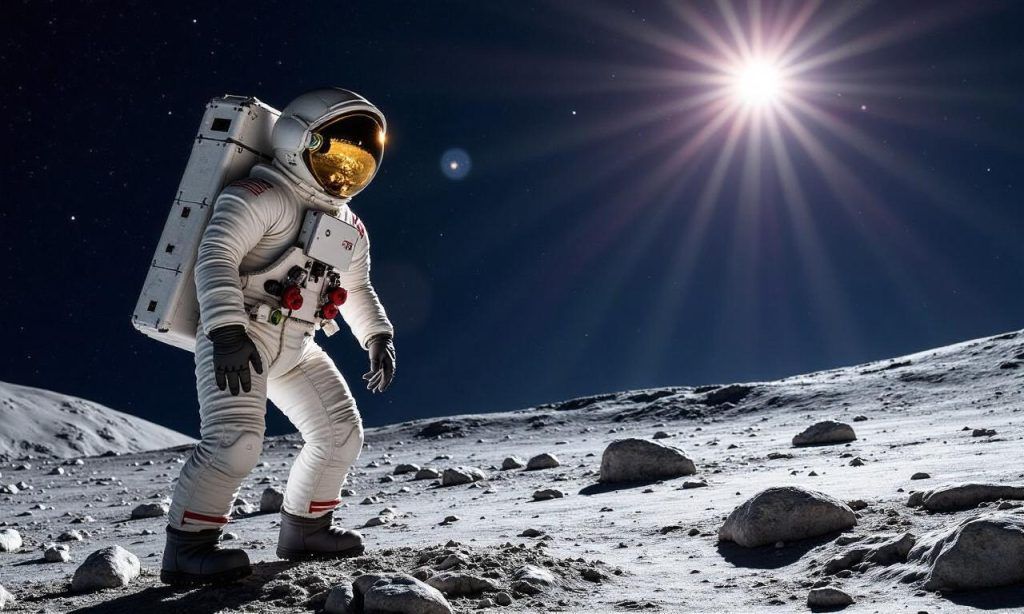
Has Artemis II shown we can land on the Moon again?
Mission Performance and Technical Success
Since its April 1st launch, NASA’s Artemis II mission has successfully navigated all critical milestones. The SLS rocket, Orion capsule, and crew have exceeded expectations, operating with precision that even engineers found surprising. For the first time, humans have occupied the Orion spacecraft during a mission, validating its design through real-world conditions that simulations could not replicate.
A Shift in Approach and Strategic Goals
Following two delayed launches in February and March due to technical setbacks, NASA Administrator Jared Isaacman emphasized the need for a more pragmatic timeline. He argued that launching the SLS every three years was insufficient for progress, calling for a frequency that reflects genuine commitment. The uncrewed Artemis I mission in November 2022 served as a stepping stone, but the agency now aims to prioritize consistency over perfection.
Critical Moment: Translunar Injection Burn
Approximately 36 hours post-launch, Orion executed its translunar injection burn—a pivotal maneuver that set the spacecraft on a direct path to the Moon. The engine’s performance was described as “flawless” by Dr. Lori Glaze, the Artemis programme head. This phase marked a significant milestone, as the trajectory required no further adjustments, proving the system’s reliability.
Crew Experiences and System Integration
During the six-day journey, the crew encountered minor challenges, such as a water dispenser malfunction and a temporary helium system redundancy. These issues highlighted the complexity of integrating human needs with spacecraft systems. As Dr. Simeon Barber, a space scientist at the Open University, noted:
“This is all about putting humans in the loop—these pesky humans that press buttons and breathe carbon dioxide and want air conditioning and want to use the toilet. It was all about how the system works with those guys on board.”
Scientific Observations and Their Impact
While the mission’s primary focus was on crew safety, it also yielded valuable data. The crew documented over 35 geological features, analyzed color variations for mineral insights, and observed a solar eclipse from deep space. Pilot Victor Glover described the event as “just looks unreal,” underscoring its visual impact. One standout moment was the first direct view of the Orientale basin, a vast crater on the Moon’s far side, captured by human eyes.
Despite these achievements, the scientific value of the mission remains a topic of debate. Professor Chris Lintott of Oxford, co-host of The Sky at Night, stated:
“The artistic value of the images returned from Artemis and its crew is significant, but their scientific value is limited.”
As the programme moves toward its 2028 lunar landing goal, the focus remains on proving Orion’s capability to carry astronauts to the Moon’s surface. The success of Artemis II has already laid a foundation for this ambition, with engineers gathering confidence that the system is ready for the next phase.
