
Erdogan’s political fate may be determined by Turkey’s Kurds
Erdogan’s political fate may be determined by Turkey’s Kurds
Editor’s Note
A version of this story first appeared in CNN’s Meanwhile in the Middle East newsletter, a three-times-a-week look inside the region’s biggest stories. Sign up here.
Kurdish Party Shifts Election Dynamics
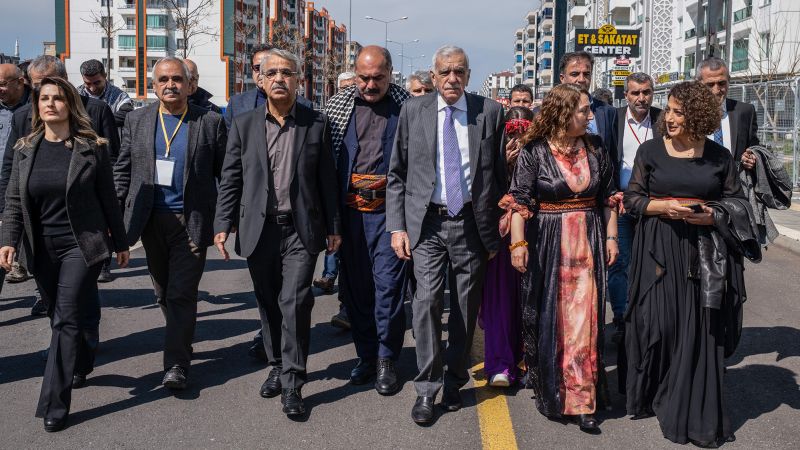
Turkey’s pro-Kurdish party, which has faced sustained repression, is now a key player in the nation’s upcoming elections. Analysts suggest its decision to withdraw from the presidential race could significantly impact the outcome, potentially challenging the 20-year rule of Recep Tayyip Erdogan.
On March 23, the party declared it would not present its own candidate, a strategy analysts claim allows its backers to concentrate their votes on Erdogan’s main opponent. This move marks a pivotal moment for the Turkish leader, who has long targeted the group after it began eroding his support base.
“We are facing a turning point that will shape the future of Turkey and (its) society,” stated the party in a March 23 announcement. “To fulfill our historical responsibility against the one-man rule, we will not field a presidential candidate in (the) May 14 elections.”
Following years of crackdowns, the HDP’s former leader, Selahattin Demirtas, has been imprisoned for nearly seven years. The party also faces the risk of closure by a court for alleged links to the militant Kurdistan Workers’ Party (PKK). Yet, its influence remains critical in shaping the political landscape.
Strategic Alliance and Electoral Tipping Point
Just three days prior, the Republican People’s Party (CHP) head Kemal Kilicdaroglu, Erdogan’s primary rival, met with the HDP’s co-chairs. In a statement, he claimed that resolving Turkey’s issues, including the Kurdish issue, depends on parliamentary action, according to Turkish media.
Kilicdaroglu, representing the six-party Nation Alliance opposition, is the most viable contender against Erdogan in years. Though the HDP has not yet confirmed backing for him, experts argue the party holds the power to sway the election.
Kurdish Influence and Political Tensions
Hisyar Ozsoy, deputy co-chair of the HDP and a Diyarbakir-based MP, told CNN the decision was a deliberate political choice. “We are not going to have our own candidate, and we will leave it to the international community to interpret it the way they wish,” he said.
The HDP’s role as a political force is tied to its status as a major voice for Turkey’s Kurds. With 15% to 20% of the population, Kurds are the largest ethnic minority. Their relationship with Erdogan has evolved from cooperation to conflict, particularly after the 2015 election.
That year’s vote marked the first time the HDP participated, securing 13% of seats and preventing the AK Party from maintaining a majority since 2002. In response, Erdogan called a snap election five months later, which saw the HDP’s support drop to 10.7%. This trend continues as the party navigates accusations of PKK ties in a pending Constitutional Court case.
Uncertain Alliances and Media Impact
While the HDP’s endorsement of Kilicdaroglu remains uncertain, its strategic withdrawal may bolster the opposition. Murat Somer, a Koc University political science professor and author of “Return to Point Zero,” noted that the party’s current position could be exploited by Erdogan’s AK Party to label its allies as pro-PKK.
The HDP’s candidates now run under the Green Left Party banner in parliament, reflecting their precarious status. As the election approaches, the party’s actions could determine whether Erdogan’s grip on power loosens or strengthens.
