

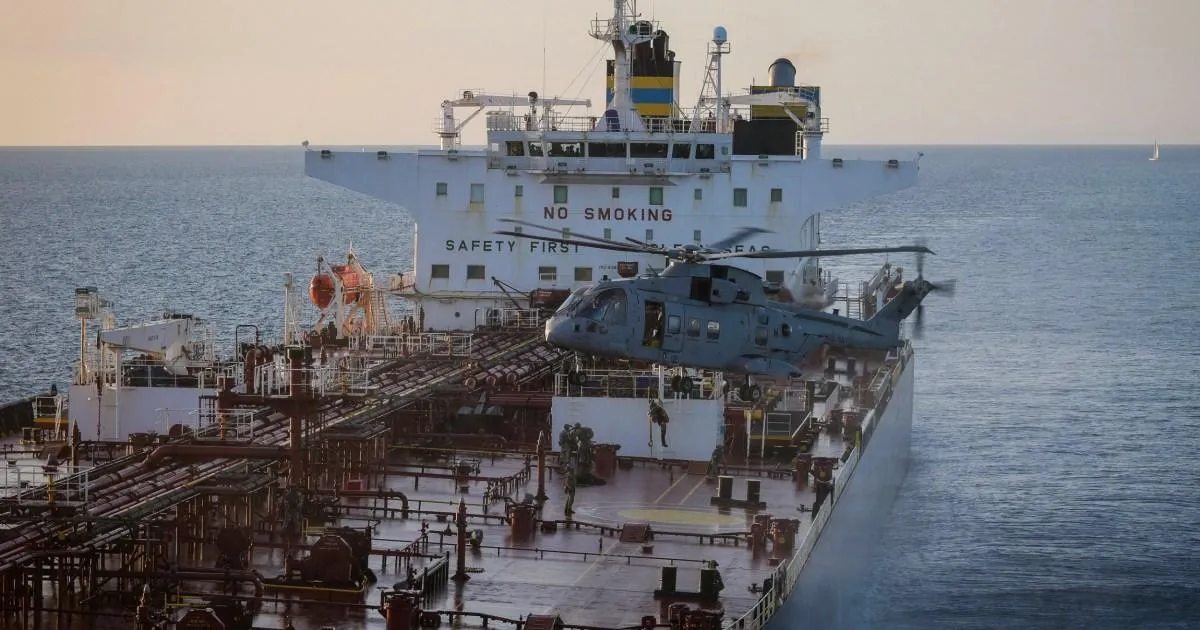
Russia ‘waged war campaign’ against UK and Europe with hundreds of drones
Russia waged war campaign against UK – To view the video, ensure JavaScript is enabled and your browser supports HTML5. Russia’s covert drone operations have been strategically deployed across Britain and Europe, leveraging a shadow fleet to prepare for potential future conflicts.
Shadow Fleet and Unconventional Warfare
According to a recent report by the International Institute of Strategic Studies (IISS), Vladimir Putin’s shadow fleet has been implicated in sending drones across Britain and Europe, with targets including airports, military bases, and nuclear facilities. The study highlights how these vessels may have served as launch or recovery platforms for unmanned aerial vehicles (UAVs), forming part of the Kremlin’s broader unconventional warfare strategy against the continent.
The drones targeted several key installations, such as RAAF Fairford, Feltwell, Lakenheath, and Mildenhall, as well as numerous sites throughout continental Europe. This operation underscores Russia’s ability to conduct long-range surveillance and strategic reconnaissance without direct confrontation, raising concerns about the escalation of tensions.
“We assess it is likely that Russian-linked vessels and the ‘shadow fleet’ were used as launch or recovery platforms for UAVs as part of the Kremlin’s wider unconventional war on Europe,” the IISS warned.
Drone Incursions and Strategic Mapping
Mystery drone sightings have become a persistent issue in European airports, military installations, and civilian zones since 2024. These incursions, attributed to Russia’s growing surveillance capabilities, aim to test the limits of European defenses. The IISS noted that the Kremlin may have used these attacks to map reaction times, identify gaps in coverage, and assess vulnerabilities within integrated air defense systems.
The report also indicated that the drones were employed to gather intelligence on critical infrastructure, with the goal of setting the stage for a potential ‘decisive opening operation’ in a high-intensity conflict scenario. Such actions blur the lines between espionage and outright warfare, as they mimic the tactics of an aggressive military campaign.
“The Kremlin was likely able to map reaction times, coverage gaps and limitations across European integrated air defences,” the IISS added.
Expert Insights on Russian Strategy
Keir Giles, a Chatham House expert on Russian affairs, told Metro that the report’s conclusions align with long-standing concerns. “The shadow fleet has been pinpointed before as the likely source for some of these drones. Russia finds out what is possible, but it also learns the victim country’s willingness to respond,” he explained.
He emphasized that the absence of a robust response from targeted nations may embolden Russia, reinforcing its approach to ongoing warfare. “That’s useful information if they’re pushing the boundaries further or deciding what they could get away with in terms of preparation for an overt attack before they actually launch it,” Giles said.
“Whatever is happening behind the scenes is not making it to the public consciousness, and that will only heighten the impression that Russia is being allowed to carry out these actions, which in so many ways are indistinguishable from acts of war, without suffering any consequences at all,” Giles added.
Escalating Cyber and Drone Threats
For years, UK-based analysts have warned that Russia is already engaged in a state of conflict with the United Kingdom. Cyber threats, drone incursions, and other incidents have been linked to foreign actors, with late 2024 marking a significant escalation. Reports from Recorded Future News revealed a ‘record number of incidents’ affecting the UK’s critical water supply systems during that period, though the details remained confidential.
Between August 2023 and March 2024, over 46,000 flights in regions like the Baltic, Black Sea, and eastern Mediterranean experienced interference issues. These disruptions are believed to stem from Russian activities, highlighting the scale of their influence on European airspace. The National Cyber Security Centre (NCSC) also issued an