
Fourth of July Fireworks Set Brooklyn Bridge Alight in Unintended Display
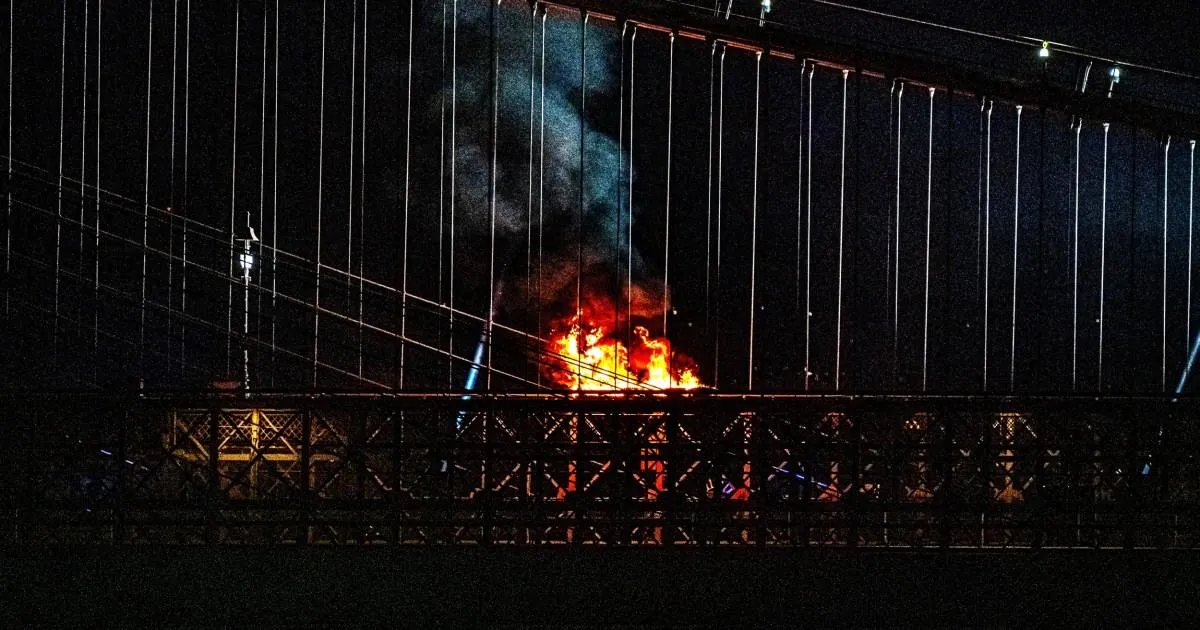
New York landmark catches fire during – Yesterday’s Independence Day celebrations in New York City took a dramatic turn when the iconic Brooklyn Bridge became the unexpected center of a fire incident during the Macy’s 4th of July Fireworks Show. The event, which was meant to commemorate the nation’s 250th anniversary, was disrupted by four simultaneous blazes that erupted on the bridge’s platforms, sparking thick black smoke that filled the night sky.
Smoke and Flames Amidst the Spectacle
Footage from the display captured the bridge’s platforms, where fireworks were launched, glowing with intense flames as the pyrotechnics ignited the surrounding structures. The fire broke out at 9:32 PM, just over 30 minutes into the show, and was swiftly contained by 10:00 PM. Despite the quick response, the bridge remained closed to traffic for an additional 30 minutes, causing delays for commuters and drawing attention to the potential risks of large-scale fireworks events.
A police source confirmed that the blazes were likely caused by the fireworks themselves, not structural issues with the bridge. The platforms, designed to hold the pyrotechnics, were the primary site of the fires, which were described as “minor” by officials. However, the sight of the bridge engulfed in flames left many onlookers in awe, including Nearing Khoula, a visitor from France. “I thought the bridge was made of wood, so I was scared. There were four at the same time,” she said, recounting her initial confusion. She added that the flames seemed to trigger extra fireworks, creating a surreal mix of celebration and chaos.
Global Celebrations and Weather Woes
While the bridge in Brooklyn experienced its own fire, the festivities in Washington, D.C., were also marked by unusual weather. Thousands gathered at the National Mall to watch the U.S. president’s rally, braving sweltering 38°C temperatures and long queues. However, the day’s events took a turn for the worse when lightning strikes and torrential rain forced an evacuation of the crowd.
Evacuation orders were issued as a precaution, but the situation was quickly resolved when the storm subsided two hours later. President Donald Trump addressed the spectators, some of whom were soaked and sunburned, declaring, “After two and a half centuries, this American republic still stands tall and strong, and we love each other,” despite the weather disruptions. His nearly 40-minute speech included references to historical figures, political challenges, and calls to action, culminating in a promise to deliver a “great fireworks display” as the day’s finale.
Fireworks: A Double-Edged Celebration
The blaze on the Brooklyn Bridge was not an isolated incident. According to the National Fire Protection Association, fireworks sparked over 32,000 fires in 2023 alone, with July 4th accounting for twice as many as any other day. The American Red Cross had warned in advance about the dangers, stressing that pyrotechnics can lead to injuries and property damage. This year’s event in Brooklyn Bridge Park, which featured 85,000 fireworks in 30 vibrant colors, was one of the largest in the country.
Freedom 250, the organization responsible for the display, highlighted that the event’s scale was record-setting. Over 850,000 pyrotechnic effects were launched for 35 minutes, surpassing the previous record of 810,904 fireworks set by the Iglesia Ni Cristo during its Countdown to 2016 in the Philippines. The volume of fireworks, combined with the heat and humidity of the summer, created a perfect storm of challenges for event planners and attendees alike.
Reactions and Reflections on a Historic Day
Residents and visitors alike shared their thoughts on the incident, blending confusion with admiration for the spectacle. Mohamed Shaban, a 31-year-old from Egypt, described the scene as “It started as a small fire and got bigger. There was too much black smoke,” capturing the visceral impact of the moment. The combination of flames and fireworks added a unique twist to the holiday’s usual jubilation, turning a planned celebration into a memorable event with both danger and beauty.
Meanwhile, the nation’s focus on the 250th anniversary of the United States brought attention to its founding and enduring legacy. The Brooklyn Bridge, a symbol of American engineering and resilience, became a backdrop for both celebration and surprise. The incident underscored the risks associated with such large events, even as they highlight the country’s ability to unite in festive spirit.
Back in New York, the fire was quickly managed, but the spectacle of the Fourth of July display continued. Despite the unexpected blazes, the crowd remained captivated by the fireworks, which lit up the sky in dazzling hues. The event’s organizers emphasized that the display was a testament to the nation’s 250-year history, with each spark and burst symbolizing the country’s progress and vitality.
As the day came to a close, the dual experiences of the bridge’s fire and the D.C. rally reminded people of the diverse ways Americans celebrate their heritage. The fireworks, which had been a cornerstone of the festivities, now carried an added layer of intrigue, sparking conversations about safety and the enduring allure of pyrotechnics. For many, the event was a reminder that even in times of unexpected challenges, the spirit of celebration remains unbroken.
A Nation’s Flames and Fervor
The incident also raised questions about the coordination and safety measures of major public events. While the Brooklyn Bridge fire was contained, it served as a stark reminder of the potential for pyrotechnics to cause unintended consequences. The National Fire Protection Association’s data on fireworks-related fires highlighted the need for vigilance, especially during the peak of summer.
Even as the fires were extinguished, the event’s organizers celebrated the success of the display, noting its record-breaking scale. The 850,000 pyrotechnic effects launched in Brooklyn Bridge Park were a tribute to the nation’s 250th anniversary, with each explosion adding to the grandeur of the occasion. The contrast between the fiery accident and the colorful spectacle illustrated the dual nature of such events—both thrilling and potentially perilous.
Amidst the chaos, the crowd’s resilience and optimism shone through. Spectators in Brooklyn and Washington, D.C., alike embraced the unpredictability of the day, turning a moment