
30-year US Treasury yield hits highest level in 19 years
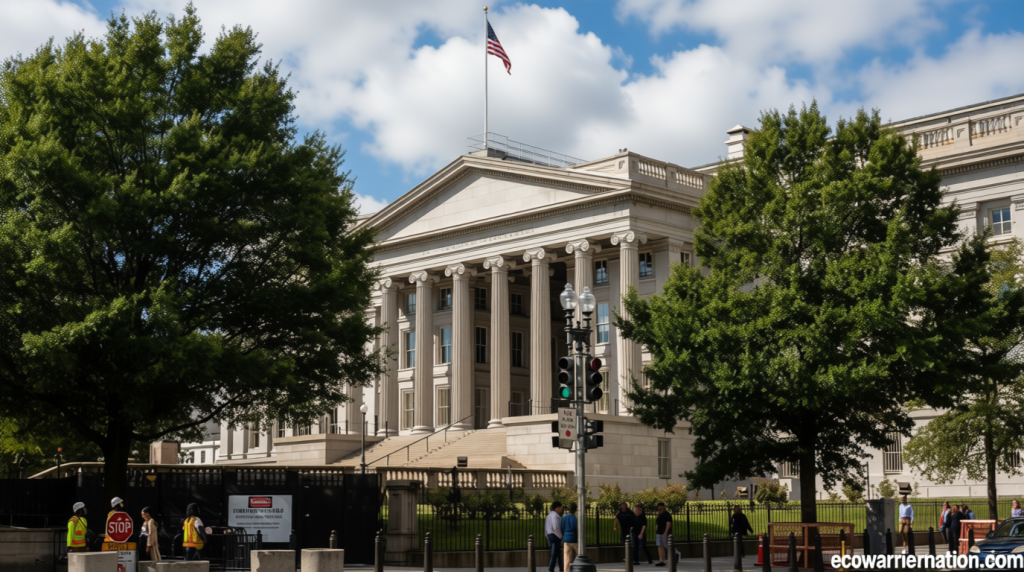
30-Year US Treasury Yield Reaches 19-Year High Amid Inflation Concerns
30 year US Treasury yield hits – The US Treasury market is experiencing a significant shift as concerns over inflation intensify, pushing long-term yields to record levels. The 30-year Treasury yield, which has been a key indicator of investor sentiment, crossed 5.2% for the first time since 2007, marking a notable increase. This surge is attributed to heightened fears of prolonged price increases, exacerbated by the ongoing conflict with Iran. The war has not only disrupted energy markets but also amplified worries about the sustainability of government finances, prompting a wave of selling in Treasury bonds.
As bond prices decline, yields rise, reflecting the growing demand for compensation from investors. The situation has intensified after the Iran war escalated, leading to a global energy crisis. Oil and gas prices have reached their peak in four years, with the crucial Strait of Hormuz remaining closed. This has had ripple effects across the economy, influencing everything from food costs to airline tickets. The pressure on Treasury yields is part of a broader trend where investors are increasingly wary of long-term debt, seeking higher returns to offset inflation risks.
Analysts have noted that the current market dynamics suggest inflation may be more persistent than previously thought. Nigel Green, CEO of deVere Group, highlighted that the bond market is signaling a shift in expectations, stating,
“Bond markets are warning that inflation could prove much stickier than many investors anticipated.”
This sentiment is reinforced by the 10-year Treasury yield, which has risen to 4.67%, its highest level in over a year. This benchmark rate plays a critical role in determining mortgage rates, auto loans, and business financing costs. Higher yields could further strain economic activity, particularly for stocks, as investors adjust their portfolios in response to rising interest rates.
The effects of the yield increase extend beyond the US, with global markets also feeling the pressure. In the UK, the 30-year gilt yield has reached a 25-year high, while Japan’s 30-year bond yield hit its all-time peak. These developments indicate that inflation concerns are not isolated to the US but are part of a wider pattern affecting international debt markets. The rise in yields underscores investor confidence in central banks’ ability to combat inflation, even as they demand higher returns to balance the risks of fiscal instability and geopolitical uncertainty.
US consumer prices have climbed at the fastest annual rate in three years, according to the latest data from the Bureau of Labor Statistics. This spike has further fueled investor anxiety, as the cost of living pressures mount. Ajay Rajadhyaksha, global chairman of research at Barclays, noted that the factors driving the bond sell-off—such as fiscal deficits, defense spending, and central bank hesitancy—are intensifying.
“The forces driving the sell-off – fiscal deterioration, defense spending, sticky inflation, central bank paralysis – are not resolving in the next week. They are getting worse,”
he explained in a recent analysis.
The conflict with Iran, which has now lasted 80 days, has become a catalyst for market volatility. While the stock market initially dipped, it later rebounded to record highs. However, the bond market has not seen a similar recovery. The 10-year yield, which was previously trading just below 4%, has climbed to nearly 4.7%, reflecting the deepening uncertainty. This trend has created challenges for investors, as higher yields increase borrowing costs and reduce the appeal of equities.
For the US economy, the surge in Treasury yields poses a dual challenge. On one hand, it raises the cost of government borrowing, potentially limiting fiscal flexibility. On the other, it pressures corporate financing and consumer spending. The Federal Reserve’s role in managing inflation is under scrutiny, with investors questioning whether rate hikes will be necessary to stabilize the market. Kevin Warsh, Trump’s chosen candidate for Fed chair, is set to take over at the central bank, adding another layer of complexity to the situation.
Thomas Tzitzouris, head of fixed income research at Strategas Research Partners, emphasized that inflation remains the primary driver of the current yield surge.
“Inflation is probably the single-biggest driver,”
he stated. However, he also pointed out that deficits are a growing concern globally, with the US still considered a relatively stable market compared to others. “The second-biggest driver, and this is not unique to the US, in fact, the US is probably still the cleanest dirty shirt, is that deficits are just skyrocketing globally, and they have been for a very long time.”
This suggests that while the US is managing inflation better than some nations, the long-term fiscal outlook remains precarious.
The stock market’s recent performance has been a mixed bag, with the Dow Jones Industrial Average falling 322 points, or 0.65%, on Tuesday. The S&P 500 and Nasdaq also declined, with the latter dropping 0.84%. This marks the third consecutive day of losses for these indices, highlighting the impact of higher Treasury yields on equities. Investors are shifting away from stocks to safer assets, such as bonds, as yields rise. This behavior is further supported by the fact that two-year Treasury yields have also climbed to their highest level in over a year, signaling expectations of future rate increases.
Despite these challenges, the bond market’s volatility is a reflection of broader economic forces. The US is not the only country affected by the rise in yields, as investors worldwide demand higher returns for long-term debt. This has created a global tightening of financial conditions, with implications for both growth and inflation. The situation is also a test for central banks, which must balance the need to control prices with the risk of slowing economic activity.
As the 10-year yield approaches 4.8%, a critical threshold for market stability, the focus remains on whether these trends will continue. The yield’s proximity to this level suggests that investors are increasingly cautious, with the fear of inflation and fiscal challenges driving demand for higher compensation. The bond market’s trajectory underscores the delicate balance between inflation, government spending, and monetary policy, with the US leading the charge in this complex financial landscape.
