
The last word: Portuguese writer António Lobo Antunes remembered by his French translator
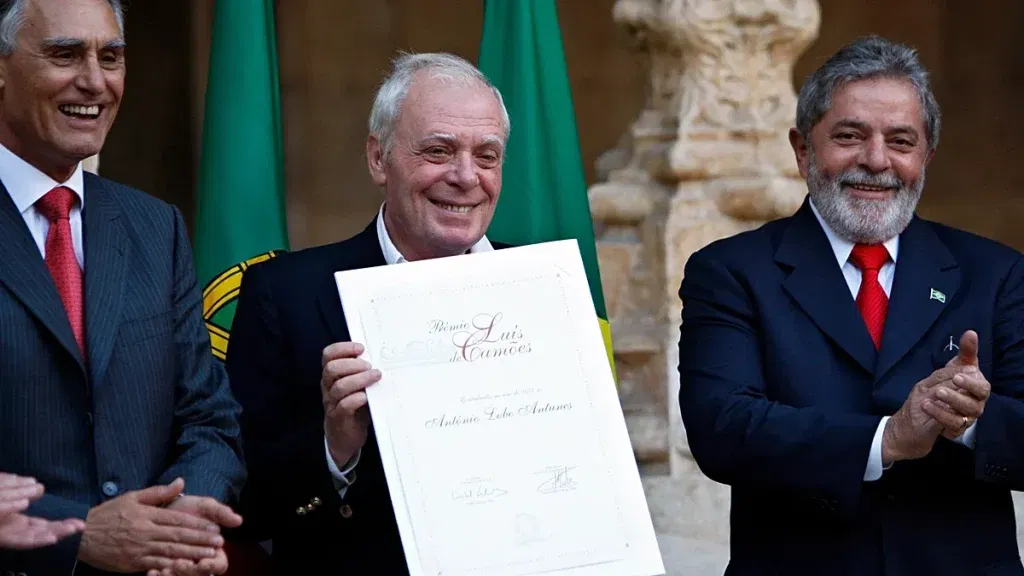
The Last Word: Portuguese Writer António Lobo Antunes Remembered by His French Translator
António Lobo Antunes’ influence on Portuguese literature spans much of the 20th century and the early 21st. His work has inspired countless readers and fellow authors, rivaling only that of José Saramago, the 1998 Nobel Literature Prize winner, who passed away in 2010. Unlike many writers, Antunes’ texts have been consistently translated and analyzed globally, leaving an indelible imprint on literary circles. This legacy is deeply tied to his experiences during the Angolan conflict, where he served as a military doctor from 1970 to 1973.
A French Translator’s Reflections
Among those who have dedicated their careers to his work is a French translator who began his journey in 2011 with the novel *My Name is Legion*. Since then, he has continued translating Antunes’ oeuvre without pause, recently submitting his tenth book, *Dictionary of the Language of Flowers*, to Christian Bourgois. The process, he explains, is both meticulous and challenging.
Translating Antunes’ style demands unwavering focus and patience. I approach each text at a deliberate pace, ensuring the complexities of his narrative flow remain intact for French readers. They should never sense the effort behind the translation, only the vivid energy and layered meaning of his work.
The translator notes that Antunes’ style has evolved significantly over the past 15 years. While his early novels, such as *Memory of an Elephant* and *The Land at the End of the World*, were deeply autobiographical, his newer works reveal a more refined and thematic approach. His latest collection, *As Outras Crónicas*, functions as a fragmented, non-sequential memoir, weaving together recurring life events and universal themes like memory, family, and the psychological toll of war.
Antunes’ impact on the translator’s own development was profound. He was instrumental in helping the translator break into publishing, offering a crucial endorsement that led to his first book, *A Casa do Fim*, being accepted in 1992. This connection began during an interview in 1992 at Miguel Bombarda Hospital, where the translator met him at 18 or 19 years old. Their collaboration deepened when Antunes recommended him to his editor, Manuel Alberto Valente, who later facilitated the publication of the translator’s debut work.
Over two years, the translator conducted over 60 interviews with Antunes for a biographical project, *A Long Journey with António Lobo Antunes*, released in 2009. These discussions took place across multiple countries, including the Netherlands and the United States, as the writer shared insights during his travels. The translator emphasizes that Antunes was a man of pure devotion to writing, often prioritizing his craft over ease or convention.
His books are deceptively complex. Readers may not notice the intricate layers of his prose, but the process of writing itself was arduous. Antunes wrote with precision, yet his output was measured—each word carried weight, and every sentence demanded thought.
Antunes’ unique approach has shaped a generation of writers, including Dulce Maria Cardoso, Rui Cardoso Martins, and Valério Romão. His work continues to resonate, proving that his voice remains as powerful today as it was decades ago. As the translator reflects, “His influence is not just in the words he left behind, but in the way they’ve shaped how others tell their stories.”
