
An Iranian to negotiate with: Who is Mohammad Ghalibaf?
An Iranian to Negotiate With: Who is Mohammad Ghalibaf?
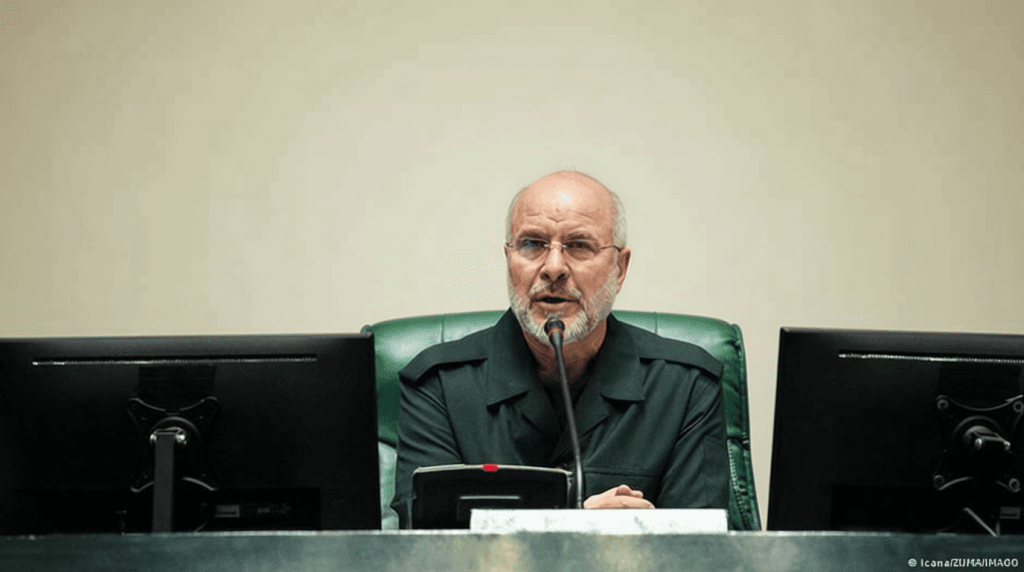
Iran’s political landscape has seen Mohammad Bagher Ghalibaf emerge as a key figure, known for his strong connections to the military and his controversial role in past demonstrations. Amid ongoing tensions, US President Donald Trump recently indicated that diplomatic talks with Iran were progressing, offering a glimmer of hope for a potential resolution to the conflict. However, the Iranian leadership swiftly dismissed these efforts as part of a coordinated strategy to influence financial and oil markets.
According to Axios, Egypt, Pakistan, and Turkey had mediated between the US and Iran on Sunday, attempting to arrange a phone call with Ghalibaf, the speaker of Iran’s parliament, and his team for Monday. Despite these efforts, Tehran’s leaders rejected the idea, labeling the initiative as “fake news.” Meanwhile, the Wall Street Journal reported that thousands of US Marines will be deployed to the Middle East this Friday to secure the strategic Strait of Hormuz.
Background and Career
Mohammad Bagher Ghalibaf, 64, is a former commander of the Islamic Revolutionary Guard Corps (IRGC) and holds a doctorate in political geography. His dissertation examined the interplay between space, power, and security policy. Ghalibaf’s military career began during the Iran-Iraq war (1980–1988), where he rose through the ranks and later became head of the IRGC’s engineering division, Khatam al-Anbiya. This organization, now part of Iran’s economic infrastructure, oversees hundreds of subsidiaries and subcontractors.
Following the war, Ghalibaf was appointed commander of the IRGC air force by Supreme Leader Ayatollah Ali Khamenei in 1997. He played a pivotal role in suppressing student protests in 1999, co-signing a threatening letter to President Mohammad Khatami. The letter urged the government to cease “tolerating” the demonstrations. In subsequent interviews, Ghalibaf claimed to have personally beaten protesters with sticks while riding a motorcycle through the streets.
Corruption Allegations and Political Ambitions
During his tenure as mayor of Tehran from 2005 to 2017, Ghalibaf’s family faced scrutiny over alleged corruption. Iranian journalists noted that government properties were sold at significantly reduced prices, with some sold for just half their actual value. Buyers included officials and members of his own family. Additionally, funds were reportedly funneled from the city treasury to his wife’s foundation, which supports single mothers and working women. However, these claims were not thoroughly investigated due to his close ties with Khamenei, and critics were imprisoned for reporting on the matter.
Ghalibaf’s political ambitions led him to run for president three times. In 2005, he lost to Mahmoud Ahmadinejad, who was then Tehran’s mayor. Later, he contested the 2013 presidential election but fell short against Hassan Rouhani. In 2017, he withdrew his candidacy to back another conservative candidate.
Family Controversies
Recent years have brought attention to Ghalibaf’s family. His son, Eshaq, attempted to secure permanent residency in Canada since 2019, even filing a lawsuit against immigration authorities over delays. This raised questions, given his father’s hardline stance against the West. The application was ultimately denied. Similarly, his daughter and family’s trip to Turkey in 2022 sparked criticism. Local media described the items they brought back as “newborn baby kits,” drawing public ire amid Iran’s economic struggles and high inflation rates.
Ghalibaf remains a powerful influence within the IRGC. His survival of recent US and Israeli attacks has sparked speculation about his ongoing significance in Iran’s future political and military strategies. This article was originally published by DW.
