
Charting the US-Israel war with Iran
Charting the US-Israel War with Iran
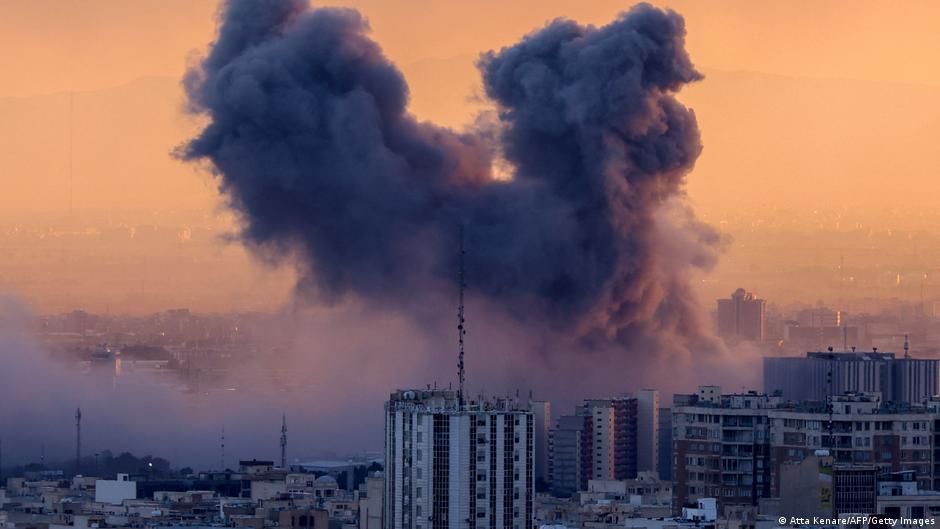
The coordinated strikes by the US and Israel on Iran have intensified regional tensions. These attacks, labeled as Operations “Epic Fury” and “Roaring Lion,” marked a significant escalation in the conflict. Launched on February 28, they aimed to disrupt Iran’s nuclear ambitions and weaken its military capabilities.
Strikes Target Key Iranian Infrastructure
Key sites, including military installations and government facilities, were hit during the operation. Satellite imagery reveals the damage inflicted by the combined strikes. Notably, the residence of Iranian Supreme Leader Ayatollah Ali Khamenei suffered heavy destruction. While Khamenei was among the casualties, the attack also claimed the lives of several other high-ranking officials.
“Most of the people we had in mind are dead,” stated US President Donald Trump during a meeting with German Chancellor Friedrich Merz on March 3. He emphasized that the strikes had eliminated potential Iranian leaders, including those capable of taking over the government.
Tehran responded swiftly, launching retaliatory attacks on Israel and its allies. The conflict has now extended beyond the Gulf, with Lebanon reporting casualties. Despite the assault on Iran’s missile infrastructure, the Israeli military warned that the regime still maintains significant offensive capacity.
Military Strength and Strategic Impact
On March 4, Israeli officials noted that Iran’s missile capabilities remain intact, though targeted strikes have reduced their ability to launch attacks. A facility in Isfahan, critical for ballistic missile storage and production, was hit. The US Defense Secretary, Pete Hegseth, clarified that the operation is not a “regime change war,” emphasizing its focus on neutralizing Iran’s nuclear program.
“We will continue to strike the missile launchers and reduce the firing, but the regime still has significant capacity,” said Brigadier General Effie Defrin during a televised briefing. “Our defense is not impenetrable.”
With Khamenei’s death, Iran’s leadership structure has shifted. The interim council now includes President Masoud Pezeshkian, Chief Justice Gholamhossein Mohseni-Ejei, and Alireza Arafi. The Assembly of Experts, an elected body of 88 clerics, holds the authority to appoint Khamenei’s successor. Currently, the power vacuum is managed by Ali Larijani, the top national security official.
Casualty figures remain uncertain, though Iran estimates between 500 and 800 deaths. Other nations, such as Oman, Iraq, Bahrain, the UAE, and Kuwait, report fewer than 10 fatalities. Lebanon’s toll ranges from 10 to 50, while six US soldiers were killed in a strike on a base in Kuwait. Israel, meanwhile, recorded 11 casualties from the operation.
