
Do Americans support Trump’s Iran war?
Do Americans support Trump’s Iran war?
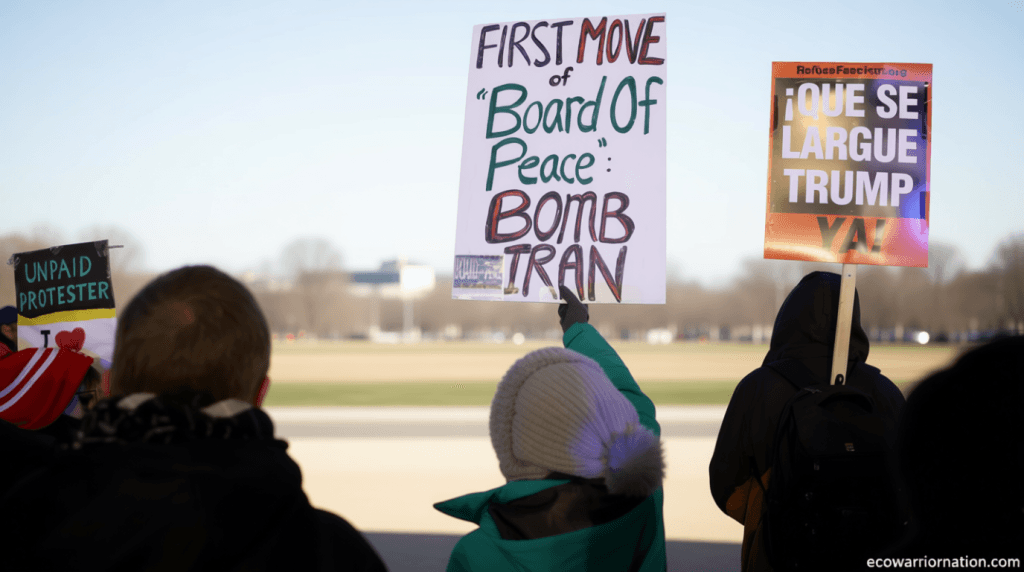
The ongoing US military actions in Iran have contributed to rising oil prices and inflationary pressures. As the conflict escalates, questions arise about the backing of Donald Trump’s base within the MAGA movement for this campaign. Previously, Trump positioned himself as a leader of peace, highlighting his role in resolving global disputes. He even created the Board of Peace and hinted at a potential Nobel Peace Prize.
However, the recent strikes on Iran since February 28 have shifted this narrative. Trump’s aggressive use of force extended to removing Venezuelan leader Nicolas Maduro in January. Despite his earlier pledge to end perpetual wars, he has initiated military operations in multiple countries, including Iran. This contradicts his promise of “no more forever wars,” which once resonated deeply with his supporters.
Public opinion and political tensions
Majority of Americans have expressed opposition to the attacks. A CNN survey revealed 59% of respondents disapproved, while 41% supported the action. Reuters data showed 43% rejected the war, with 27% in favor and 29% uncertain. Though Republicans generally endorsed the campaign, divisions emerged within Trump’s tightly knit MAGA coalition. Former Fox News commentator Tucker Carlson condemned the strikes as “absolutely disgusting and evil,” highlighting internal discord.
“As soon as the economic consequences are felt in the US, criticism will increase,” noted Johannes Thimm, director of the Americas research group at the German Institute for International and Security Affairs (SWP). He emphasized that the war is fueling inflation, directly opposing Trump’s electoral promise to curb rising prices. “The war will also strain the American budget,” he added.
Jonathan Katz, affiliated with the Brookings Institution, observed that the Middle East situation is likely to intensify domestic concerns. “This conflict draws focus to a struggling US economy, including energy costs and inflation,” he said. Meanwhile, the Congress led by Republicans has prioritized issues like Jeffrey Epstein and ICE, yet the war remains a key topic. A War Powers Resolution introduced by Democrats aims to limit presidential authority, though it is seen as symbolic with little chance of success. The Senate already rejected it.
Electoral challenges and implications
With midterm elections approaching in November, the Republicans face a critical choice. Thimm pointed out that the party risks associating with an unpopular war while trying to maintain support for Trump. “They don’t want to withdraw backing, but they also avoid linking to this conflict,” he explained. The outcome of the Iran campaign could significantly impact Trump’s domestic agenda, according to Thomas Warrick of the Atlantic Council. “Unilateral actions may lead to owning the result—success brings modest gains, but failure risks a major setback,” he wrote.
