
The Greens’ Gorton and Denton by-election win was about inclusion — not sectarianism
The Greens’ Gorton and Denton by-election win was about inclusion — not sectarianism
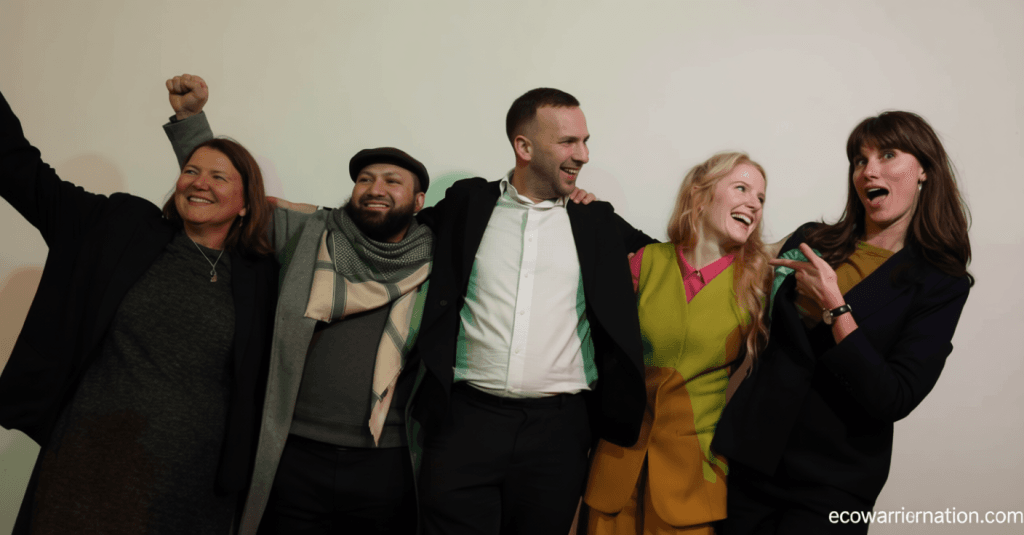
What a night it was. Not only did the Green Party secure its first parliamentary by-election victory in Gorton and Denton, but they also flipped a once-unshakable Labour majority that had stood for over 13,000 votes. For the first time, the North of England saw a Green MP elected, yet this achievement transcends mere milestones.
This win represents a broader shift in political dynamics. It signals the emergence of a new kind of politics—one rooted in optimism rather than division, and focused on unity instead of exclusion. By fostering a sense of belonging, the Greens have shown that hope can be a powerful force in reshaping democratic engagement.
While the strength of policies and the dedication of candidate Hannah Spencer were vital, the campaign’s success hinged on its communication strategy. Traditional politics often speaks to people in a single, rigid tone, using a language that reflects Westminster’s southern England bias. Reform’s defeated candidate, Matt Goodwin from Kent, exemplified this approach, but it failed to connect with the realities of communities like Gorton and Denton.
These areas, where nearly 40% of residents identify as Muslim and many grow up speaking Urdu, Bangla, Arabic, or other languages at home, demand a more inclusive dialogue. The Greens adapted by creating materials in multiple languages, including a widely shared Urdu video. This wasn’t just a clever tactic—it was a genuine effort to bridge gaps and ensure every voice is heard.
“Language should never be a barrier to participation; it should be a bridge.”
Some critics, notably those who lost the election, have labeled this strategy as divisive or ‘sectarian.’ However, this perspective overlooks the campaign’s core aim: to invite people into the political conversation, not push them aside. Multilingual outreach isn’t about splitting communities—it’s about embracing diversity as a strength.
Global examples, such as Zohran Mamdani’s multilingual campaigns in New York, demonstrate how translating messages into local languages can broaden political discourse. His use of Arabic, Spanish, and Urdu in campaign videos helped engage communities often ignored by mainstream politics, leading to a notable victory. This approach resonated with Labour supporters, who now question why it wasn’t adopted more widely in their own campaigns.
The Greens’ message—about rent, bills, the NHS, racism, and peace—resonated across linguistic and cultural divides. It confirmed that people who speak Punjabi, Somali, or any other language are equally invested in shaping the future. By acknowledging these experiences, the campaign asserted that everyone has a place in the political arena.
This win in Gorton and Denton is more than a parliamentary gain. It reflects a growing trust in inclusive politics, where language is respected and participation is valued. With a 26.5% swing toward the Greens, the campaign has proven that diverse communities can be central to the democratic process, not sidelined by it.
This site is protected by reCAPTCHA and the Google Privacy Policy and Terms of Service apply. Your information will be used in line with our Privacy Policy.
