
The Greens’ Gorton and Denton by-election win was about inclusion — not sectarianism
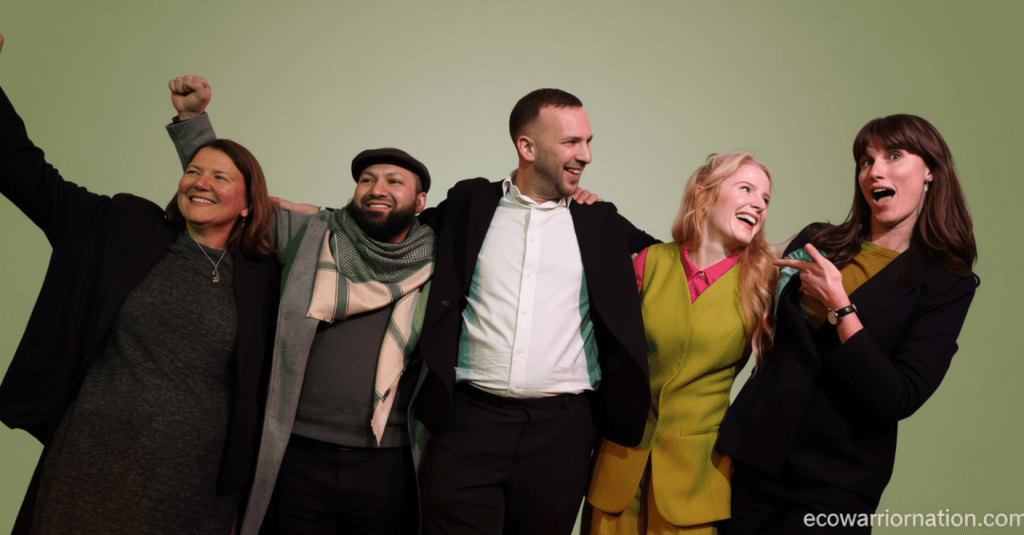
The Greens’ Gorton and Denton by-election win was about inclusion — not sectarianism
The night was unforgettable. Not merely because the Green Party secured its first parliamentary by-election victory in Gorton and Denton, but because it marked a dramatic shift in the political landscape. A once unshakable Labour majority of over 13,000 votes was overturned, signaling a new era of possibilities.
What makes this achievement even more significant is that it represents the first Green MP elected in the North of England. Yet, this is more than a milestone—it’s a turning point. The campaign demonstrated that a politics rooted in hope and unity can resonate deeply with voters.
Hope, not division, became the heartbeat of this election. Despite attempts by Labour and Reform to dismiss the Green campaign as a threat, the message of inclusivity remained steadfast. The victory proved that engaging with people in their own language—whether Urdu, Bangla, Arabic, or Punjabi—can bridge gaps and foster genuine connection.
Breaking Barriers Through Communication
Politics in the UK has long relied on a one-way approach, using a single language—English—to communicate with the public. This method, often shaped by Westminster’s southern-English perspective, failed to reach communities like Gorton and Denton, where nearly 40% of residents are Muslim and many speak languages other than English at home.
Our campaign’s success hinged on adapting to this reality. While opponents used crisp Radio 4 English, the Greens chose to speak in the voices of those they sought to represent. A viral Urdu video, among other materials, became a symbol of this effort. It wasn’t a mere tactic—it was a declaration that everyone’s perspective holds value.
Language, in this context, is not a barrier but a bridge. By embracing multilingual outreach, the Greens ensured that diverse communities saw themselves reflected in the political dialogue. This strategy resonated beyond the election, proving that inclusion can be a unifying force.
Learning From Global Models
Examples from abroad show that speaking to people in their native tongues doesn’t divide—it invites. In New York, Zohran Mamdani’s campaign used Arabic, Spanish, and Urdu to engage underrepresented groups, leading to a significant electoral win. Interestingly, this approach was later praised by Labour members, who now question their own reluctance to adopt similar strategies.
Issues like rent, bills, the NHS, racism, and peace matter universally. Whether a voter speaks English or a different language, their concerns are valid. Multilingual campaigning acknowledges this truth, reinforcing that every voice matters and every community belongs.
Our campaign in Gorton and Denton was clear: we are here to represent all who call this area home. This is the kind of politics the Greens aim to build—reaching out rather than pushing people away, ensuring diversity is not just acknowledged but embraced.
With a 26.5% shift toward the Greens, this victory isn’t just about numbers. It’s about proving that when people feel included, they can become active participants in shaping their future. This election is a testament to the power of respecting lived experiences in a democracy.
To view this video, enable JavaScript and upgrade to a browser that supports HTML5 video.
This site is protected by reCAPTCHA and the Google Privacy Policy and Terms of Service apply. Your information will be used in line with our Privacy Policy.
