
Like ‘driving to San Francisco and back, every week’: In rural America, cancer patients face tall hurdles to get care
Like ‘driving to San Francisco and back, every week’: In rural America, cancer patients face tall hurdles to get care
EDITOR’S NOTE: This story was reported in collaboration with the Global Health Reporting Center, with support from the Pulitzer Center.
The Cost of Distance
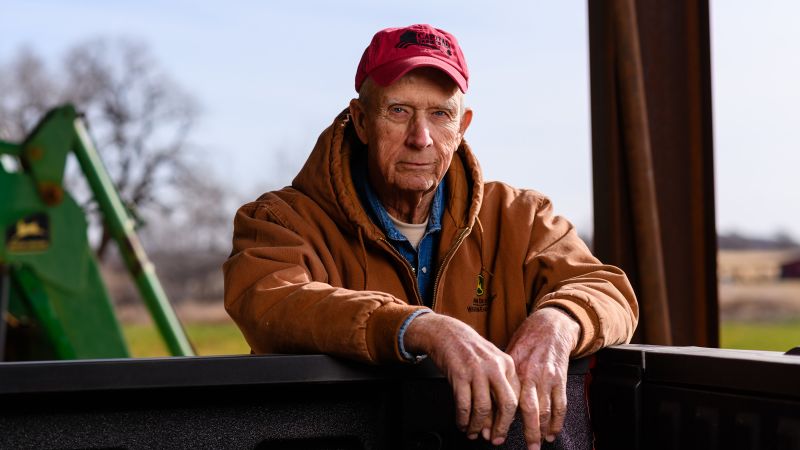
Andy Henard, a 76-year-old former Texas A&M defensive end, has always prided himself on self-sufficiency. Managing a ranch and farm in North Texas requires hauling 50 sacks of wheat seed, each weighing 100 pounds, without assistance. But in late 2023, he found himself struggling to move from his couch to his bedroom, battling stage IV bladder cancer. Just two years prior, he had survived prostate cancer surgery, a condition that claimed his brother’s life. This diagnosis, however, demanded a more complex treatment approach, prompting him to seek care at MD Anderson Medical Center in Houston—a journey of 500 miles and eight hours.
“We see a lot of delayed treatment, because people don’t get diagnosed early enough, because they’re not seeing doctors.”
—Brock Slabach, chief operations officer of the National Rural Health Association
Rural Cancer Outcomes
Rural cancer patients often face worse prognoses than their urban counterparts. Despite similar cancer rates in rural areas, they are 9% more likely to die from the disease, according to a September study by the American Cancer Society. The research highlights that rural patients receive less standardized care, frequently requiring long trips to access treatment. For Henard, the decision to leave his family’s century-old ranch for a year in Houston seemed inevitable—until a breakthrough at Childress Regional Medical Center, just 30 minutes from his home in Wellington.
A Lifeline in the Heartland
Childress Regional Medical Center defied the trend of shrinking rural healthcare services by opening an infusion center in 2013 and expanding its capabilities. The facility now offers 10 treatment spots, three full-time pharmacists, and three oncology nurses. This setup has transformed the lives of patients like Henard, who once thought relocation was necessary. “It’s one drive for me, versus 20 drives for them. That’s a lot of gas,” said Dr. Fred Hardwicke, a key figure in Childress’ success.
“When I got to actually see the patients there, they were so appreciative. It just pumps you up and makes you want to do it.”
—Dr. Fred Hardwicke
The Spark of Change
The infusion center’s growth was partly inspired by a personal loss. Terry Olay, a former outpatient services coordinator at Childress, passed away from cancer in 2009. Her determination to receive treatment locally left an impression on Holly Holcomb, the hospital’s CEO. “There’s no reason Childress can’t do this,” she recalled Olay saying as she drove 100 miles to Amarillo for care.
Staying Rooted in the Community
Henard’s family, who raise wheat, cotton, and peanuts alongside 500 cattle, no longer needed to abandon their land. The infusion center’s ability to provide chemotherapy close to home has eased the burden for others too. As Holcomb noted, some patients were spending “the equivalent of driving to San Francisco and back, every week” on treatment trips. By keeping care local, Childress has become a beacon of hope for rural communities where distance often dictates health outcomes.
A Numbers-Driven Mission
Hardwicke, a mathematics enthusiast who self-published a textbook, calculated the impact of his work. Initially volunteering to visit Childress from Texas Tech, he recognized the need for on-site specialists. His commitment has helped bridge the gap between rural accessibility and advanced treatment, proving that innovation can thrive even in remote areas. For Henard, this meant staying on the ranch while fighting a life-threatening illness—a balance made possible by the center’s growth and dedication.
