
Iran is escalating the war by placing explosive mines along a key oil route. Here are the risks.
Iran is intensifying the conflict by deploying explosive mines along a vital oil passage. Here are the risks.
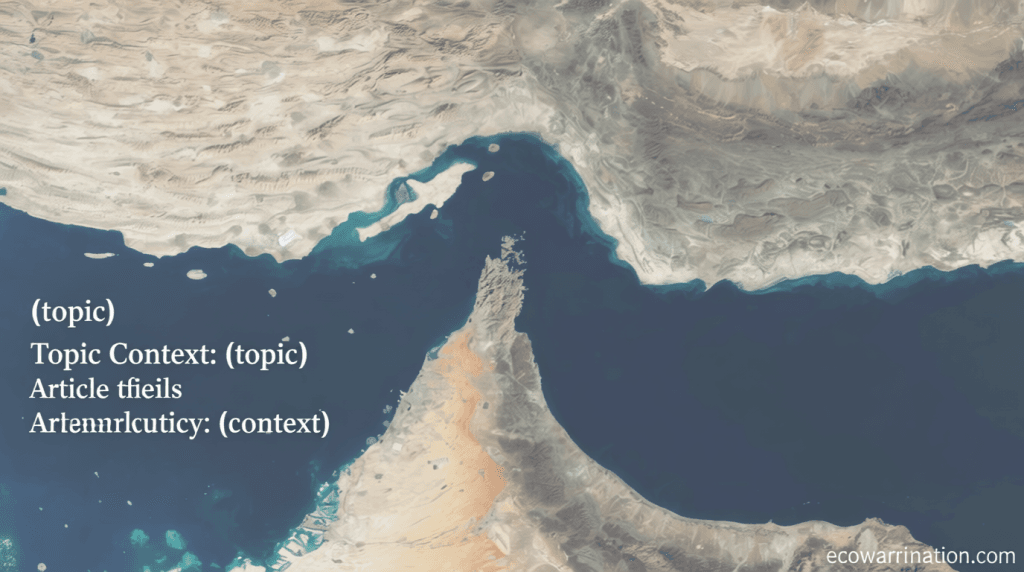
Iran’s strategic position over the Strait of Hormuz remains a key asset despite being outgunned and outspent by the US and Israel. This narrow waterway, through which one-fifth of the world’s oil supply travels, has become a focal point for Tehran’s efforts to disrupt global energy flows. Recent reports indicate Iran has intensified its operations by placing mines in the strait, a move that could further deter ships from navigating the route and signal a new phase in the ongoing conflict.
According to two individuals with access to US intelligence, Iran has deployed a few dozen mines in the strait in recent days. While the scale of this action is not massive, it underscores Iran’s reliance on asymmetric tactics to counter its adversaries. A source revealed that Iran maintains 80% to 90% of its small boats and minelayers, challenging US President Donald Trump’s assertion that Tehran “has no navy.”
“If Iran has put out any mines in the Hormuz Strait, and we have no reports of them doing so, we want them removed, IMMEDIATELY!”
Trump’s remarks on Tuesday sparked debate, as he claimed the US had eliminated “just about all” of Iran’s minelaying ships. However, the UKMTO, a British maritime intelligence body, noted that “there remains no confirmed evidence of mine deployment or detonation” in the strait. The organization’s caution highlights the uncertainty surrounding Iran’s latest maneuvers.
Iran’s arsenal includes approximately 5,000 to 6,000 naval mines, as estimated by a US Congress report. These mines come in various forms: limpet mines, moored mines, and bottom mines. Each type poses unique threats, with moored mines detonating upon contact and bottom mines triggering explosions when detecting nearby vessels. The IRGC, Iran’s military force with its own naval capabilities, has been described as a “gauntlet” of mines, suicide boats, and shore-based missiles, earning the strait the nickname “Death Valley.”
On Tuesday, Iranian forces targeted the Thai-flagged bulk carrier Mayuree Naree, causing an explosion in its engine room. Three of the 23 crew members were unaccounted for, according to Thai officials. Later that morning, the Liberian-flagged Express Rome was also struck by Iranian projectiles. Meanwhile, US Central Command reported destroying 16 minelayers near the strait, though it did not confirm the removal of any mines.
US minesweeping capabilities in the Persian Gulf have weakened. The last of its four specialized minesweepers was decommissioned last September, shifting the responsibility to less dedicated vessels like littoral combat ships. Critics have dubbed these ships “Little Crappy Ships” due to their track record of technical issues.
The longer the Strait of Hormuz remains blocked, the more severe the economic fallout. Analysts estimate that nearly 15 million barrels per day of crude and 4.5 million BPD of refined oil are stranded in the gulf, rapidly filling regional storage facilities. Even during calm periods, navigating the strait’s tight channels and heavy traffic requires precision. The addition of mines now amplifies the danger, complicating efforts to reopen the route.
