
Israel bars church leaders from Palm Sunday Mass ‘for the first time in centuries,’ church says
Israel bars church leaders from Palm Sunday Mass ‘for the first time in centuries,’ church says
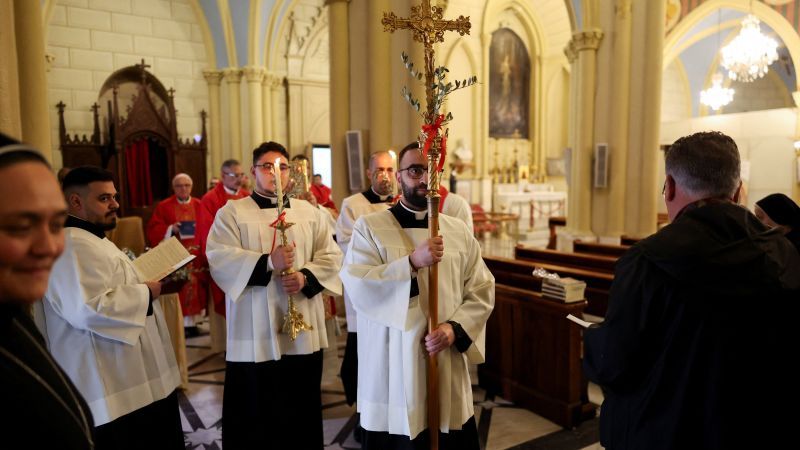
For the first time in centuries, Catholic clergy have been denied entry to Jerusalem’s Church of the Holy Sepulchre to conduct the Palm Sunday liturgy, according to the Latin Patriarchate in the holy city. Israeli police intervened to prevent the church’s senior officials from proceeding to the site, marking a significant disruption to tradition. The Patriarchate emphasized that this was a “grave precedent,” highlighting the impact on global Christian communities who view the city as a spiritual focal point.
Palm Sunday, which inaugurates Holy Week—the most sacred time in the Christian calendar—commemorates Jesus’ entry into Jerusalem. The Church of the Holy Sepulchre is traditionally associated with the events of his burial and resurrection. The decision to restrict access follows broader Israeli measures limiting entry to religious sites in East Jerusalem amid the ongoing war with Iran. These include closures of Al Aqsa Mosque and the Western Wall, with security concerns cited as the rationale.
The Italian government has condemned the ban, planning to call the Israeli ambassador in Rome. Prime Minister Giorgia Meloni expressed solidarity with Cardinal Pierbattista Pizzaballa and other religious figures, calling the exclusion “an insult to believers and all communities valuing religious freedom.” Her foreign minister, Antonio Tajani, stated on X that the restriction was “unacceptable” and instructed the Italian ambassador to formally protest the move.
“This incident constitutes a manifestly unreasonable and grossly disproportionate measure,” the Patriarchate asserted, accusing Israeli authorities of making a “hasty and fundamentally flawed decision” influenced by improper factors.
Israeli Prime Minister Benjamin Netanyahu’s office defended the action, asserting there was “no malicious intent” behind the ban. It noted that security arms are developing a plan to allow church leaders to worship at the site soon. Police explained that all holy sites in the Old City had been closed to worshippers, particularly those without designated protected areas, to ensure public safety. They also mentioned challenges in accommodating large emergency vehicles in the narrow streets of the city.
During the conflict with Iran, which has seen thousands of projectiles launched toward Israel, the Patriarchate had already canceled the traditional Palm Sunday procession. Meanwhile, Muslim access to Al Aqsa Mosque has been completely restricted since late February, including during the holy month of Ramadan. The same period also saw limited Jewish prayer capacity at the Western Wall, capped at 50 individuals per day.
Earlier this month, eight Muslim nations—including Saudi Arabia, Jordan, the UAE, Qatar, Indonesia, Pakistan, Egypt, and Turkey—criticized Israel’s continued closure of the Al-Aqsa Mosque compound. They described the restrictions as a “flagrant violation” of international law, citing discriminatory and arbitrary limitations on worship. The Vatican’s Pope Leo also expressed concern, stating his prayers are “more than ever” with Christians in the Middle East enduring the conflict’s toll on their religious observances.
