
A free Iran is their shared dream. But the diaspora remains torn on the best path forward.
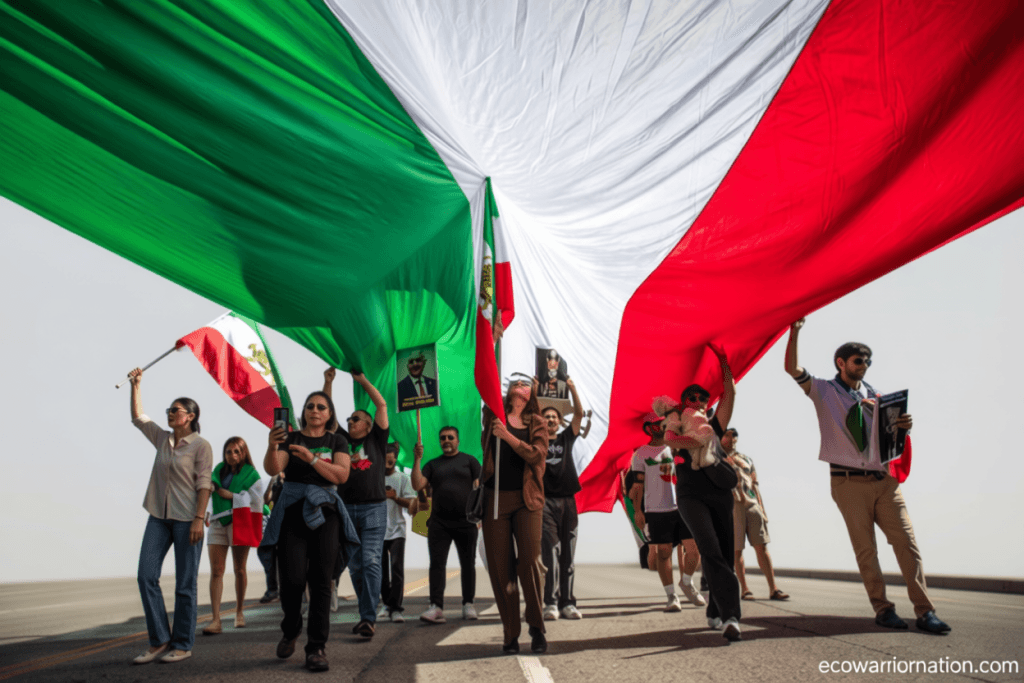
A Free Iran is Their Shared Dream. But the Diaspora Remains Torn on the Best Path Forward
Los Angeles witnessed contrasting scenes of public sentiment last Saturday. In one corner, Iranian Americans gathered near City Hall, voicing opposition to a war that had begun without prior approval. They shouted slogans like “Stop the war in Iran” and “We the people don’t want war.” Just a few miles away, on the Westside of Tehrangeles, the same community celebrated the potential collapse of the theocratic regime. With flags of the U.S., Israel, and Iran waving, they danced to energetic music, heralding the assassination of Ayatollah Ali Khamenei in a U.S.-Israeli strike.
The Iranian diaspora’s emotional landscape has grown more complex as tensions in the Middle East intensify. Families who left after the 1979 Islamic Revolution now face divided loyalties. “Some are so angry at the regime they’d support any action to dismantle it, even if it means sacrificing parts of the country,” explained Abbas Milani, director of Iranian studies at Stanford University. Others, however, advocate for regime change without plunging the nation into conflict.
“The images of destruction and the joyous support for war have created more tension than usual,” Milani noted. “It will get harder before it eases.”
Online discourse has surged since the attack. Supporters of military action are now called “Zionists,” a term that has taken on a negative connotation following Hamas’s October 7, 2023, assault on Israel. Anti-war voices, meanwhile, face accusations of backing the existing regime. The debate over leadership has also intensified. While some rally behind Reza Pahlavi, the son of Iran’s last monarchy, others remain cautious about reinstating ties to the former royal family.
Amid rising casualties and a government-imposed internet blackout, Iranians grapple with uncertainty. The prospect of Mojtaba Khamenei, Ayatollah Ali Khamenei’s son, becoming the next supreme leader has sparked speculation. Analysts suggest the Islamic Revolutionary Guard Corps may consolidate its influence if the current crisis continues.
President Donald Trump has signaled his desire to overhaul Iran’s leadership, offering names for a “good leader.” Yet, a recent NBC News poll reveals 54% of potential voters disapprove of his approach, mirroring the internal divide within the Iranian diaspora. Earlier this year, a survey by the National Iranian American Council (NIAC) and YouGov found 53% of Iranian Americans opposed U.S. military involvement. A new poll is expected next week, potentially updating those figures.
“We are not a monolith,” stated the Iranian Diaspora Collective, an Instagram account with over 81,000 followers. “Millions of people will never share the same ideology or identity, and that diversity is the strength of any free society.” Los Angeles-based pastor Ara Torosian, who fled Iran in 2010, expressed sorrow over the destruction of historic sites and the loss of innocent lives, including children. Yet he viewed the current suffering as a necessary reckoning for decades of repression against dissenters.
