
What we know about the LaGuardia plane and fire truck crash
What we know about the LaGuardia plane and fire truck crash
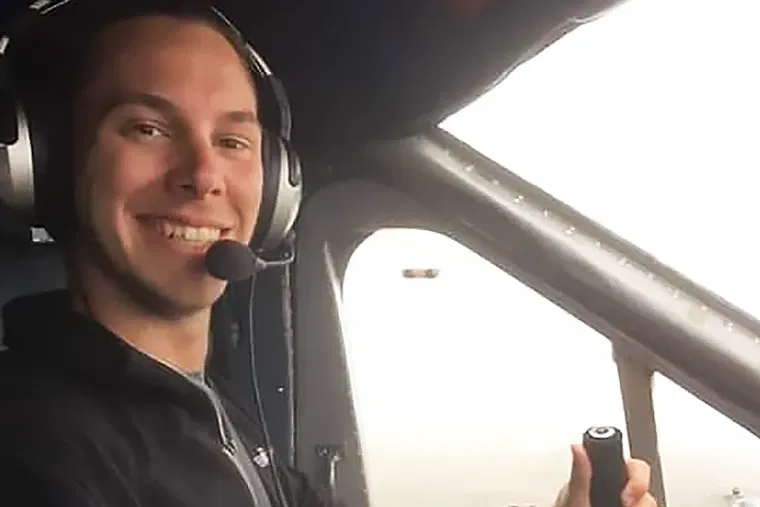
Two pilots who lost their lives in a collision between a passenger aircraft and a Port Authority fire truck at LaGuardia Airport on Sunday night have been named Antoine Forest and Mackenzie Gunther. Authorities have not yet officially announced their identities, though Canadian media and a college attended by one of the pilots have confirmed the details. The Federal Aviation Administration and the National Transportation Safety Board are examining the incident to understand how the fire truck managed to cross the jet’s path shortly after it landed.
Preliminary findings from the cockpit recorder
NTSB officials shared initial data from the final three minutes of the plane’s cockpit voice recorder during a Tuesday afternoon news briefing. The transcript revealed that the fire truck was granted permission to cross Runway 4 just 20 seconds before the crash. At 2 minutes and 22 seconds, the flight crew contacted LaGuardia’s control tower, according to Doug Brazy, NTSB’s senior aviation investigator. Twenty-three seconds earlier, the tower had instructed the plane to land on Runway 4.
“At 1 minute and 3 seconds, an airport vehicle made a radio transmission to the tower, but it was ‘stepped on’ by another radio signal,” Brazy said. He noted this suggests interference with the communication. The tower later confirmed the vehicle’s request to cross Runway 4 at 20 seconds, and the fire truck acknowledged the clearance.
Less than a second before the crash, the tower attempted to halt the fire truck. Brazy described the moment as “a sound consistent with the airplane’s landing gear touching down on the runway” occurring at 8 seconds. The pilot transferred control to the captain at 6 seconds, Homendy explained, indicating the captain took over during the emergency.
Controller roles and conflicting reports
Homendy emphasized that two individuals were present in the tower cabin at the time of the crash: a local controller and the lead controller. The local controller oversees active runways and nearby airspace, while the lead controller manages all safety operations and was also responsible for clearance delivery tasks, which involve communicating departure instructions to pilots.
“We have conflicting information. Some sources say the lead controller handled the duties, while others suggest it was the local controller,” Homendy stated. She added that having two controllers during the midnight shift is standard practice across national airspace systems, though fatigue has been a concern in past investigations. “I do not know, and I have no indication that was a factor here,” she said, “but this shift has been the focus of our previous studies.”
Both controllers were logged in by 10:30 p.m. and 10:45 p.m., respectively. The crash occurred shortly after the plane’s landing, with the pilots credited for swiftly braking to reduce the impact and protect the passengers. Over 40 individuals received medical attention for injuries, most of which were minor. However, several remain hospitalized with severe wounds.
Jack Cabot, a 22-year-old passenger traveling home from a spring break ski trip, shared his account with NBC News. From his seat in the 18th row, he described feeling the pilots’ efforts to slow the plane before the collision. The impact left him with a cheek bruise and a sore neck, but he survived the incident.
