
By allowing Israel to bomb Iran, Trump is pushing Tehran to go nuclear
By allowing Israel to bomb Iran, Trump is pushing Tehran to go nuclear
Donald Trump’s decision to enable Israel’s military strike on Iran marks a significant misstep, comparable to the enduring consequences of George W Bush’s 2003 invasion of Iraq. That conflict, which claimed over 655,000 lives, as estimated by The Lancet, birthed the Islamic State’s extremist militants and nearly dismantled a major power, leaving it still in recovery a decade and a half later.
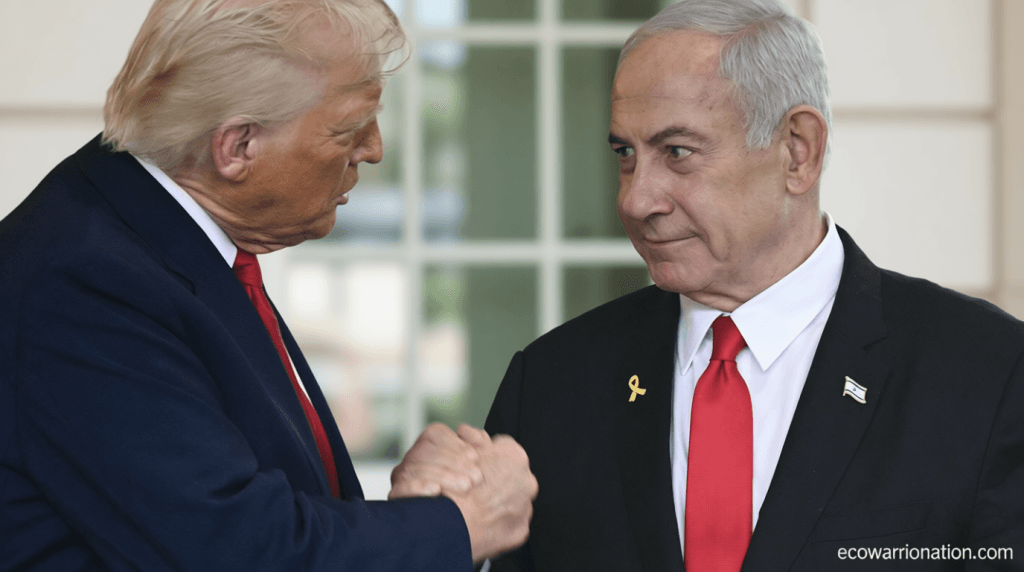
Trump’s current action risks escalating the stakes further. By giving Israeli Prime Minister Benjamin Netanyahu the green light to attack, the U.S. has placed its leadership in a category akin to historical figures like Al Capone or Joaquin “El Chapo” Guzman—those known for deception and undermining trust.
“Iran must make a deal, before there is nothing left, and save what was once known as the Iranian Empire. No more death, no more destruction, JUST DO IT, BEFORE IT IS TOO LATE. God Bless You All!”
Trump’s rhetoric, however, masks a deeper issue: the erosion of America’s global authority. When the U.S. chose to support Israel’s campaign rather than negotiate with Tehran, it signaled a willingness to prioritize military action over diplomacy. This undermines credibility, especially for a nation with a history spanning millennia.
Iran’s nuclear ambitions were forged in the crucible of its eight-year war with Iraq, a conflict that Saddam Hussein ignited when Iran was at its most vulnerable. The U.S. and European allies backed Saddam, supplying him with chemical weapons technology and precursor materials from German firms. This support continued even after the 1988 Halabja massacre, where Kurdish civilians were gassed to death.
Richard Beeston of The Times recounted how British diplomats attempted to downplay the Halabja attacks, claiming minimal impact. Yet, for Iranians, the trauma of those gas assaults remains etched in memory. The war also catalyzed Iran’s development of a vast network of militant groups, shaping its “axis of resistance” as a form of strategic deterrence.
Today, despite claims that Iran’s defense alliances are weakening, the scars of that war endure. The Revolutionary Guards and Hezbollah, once formidable, faced systematic targeting by Israeli drones, which struck adversaries at their most exposed. This was hailed as a tactical triumph in Tel Aviv and Washington, with Secretary of State Marco Rubio praising the “exquisite intel” shared with Israel.
Trump’s actions reflect a pattern of inconsistency. While he criticized Iran’s defiance, his decision to sidestep diplomacy during a critical moment only reinforces the perception of American unreliability. For a nation that has weathered decades of aggression, the U.S. now appears to be complicit in its own undoing.
