
GOP leaders abruptly cancel House vote on Iran war powers, shielding Trump from rebuke
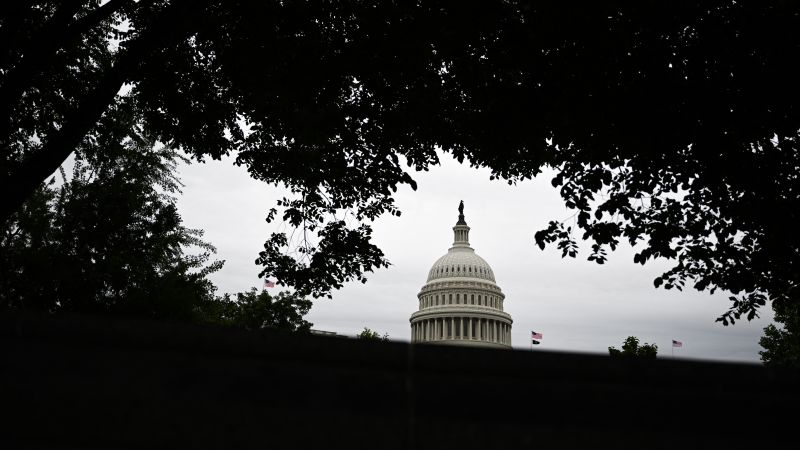
House GOP Leaders Withdraw Iran War Powers Vote, Protecting Trump from Democratic Reprimand
GOP leaders abruptly cancel House vote – On Thursday, House Republican leaders unexpectedly pulled the plug on a planned vote regarding a resolution aimed at curbing President Donald Trump’s military actions in Iran. This decision came as the chamber approached a potential defeat, with many GOP members absent due to scheduling conflicts or political calculations. The move effectively shielded Trump from immediate criticism, allowing him to avoid a rebuke over his approach to the conflict in the Middle East.
The resolution, which sought to limit the executive’s authority to engage in war without congressional approval, had gained traction among some Republicans in recent weeks. However, the cancellation of the vote dashed hopes of a bipartisan outcome. Democrats, who have repeatedly pushed for similar measures in both chambers, expressed frustration with the Republican leadership’s abrupt action. They argued that the decision undermined accountability and reflected a shift in priorities within the GOP.
Democratic Leaders Condemn the Vote Cancellation
House Democratic leaders issued a joint statement condemning the withdrawal of the vote, calling it a betrayal of the legislative process. “The Republican-controlled House continues to act like a direct extension of the Trump administration,” said Hakeem Jeffries, the Democratic leader, along with Whip Katherine Clark and Caucus Chair Pete Aguilar. The trio emphasized that the War Powers Resolution—designed to require the President to end hostilities in Iran—had strong cross-party support and was poised to pass with minimal opposition.
“Republicans cowardly pulled a scheduled vote on a War Powers Resolution—legislation that would have passed with bipartisan support and required the President to end the conflict in the Middle East,” said the Democratic leaders. “This is a political move to avoid responsibility for the war’s ongoing costs.”
The resolution was spearheaded by New York Democrat Gregory Meeks, who serves as the ranking member of the House Foreign Affairs Committee. Meeks had been a vocal advocate for the measure, highlighting its importance in checking presidential power. “We had the necessary votes to pass this resolution, and the Republicans knew it,” he stated in a press conference following the vote’s cancellation. “By delaying it until after the Memorial Day recess, they’re playing a dangerous game with American interests.”
Meeks Accuses GOP Leaders of Delaying Action
Meeks also criticized House Speaker Mike Johnson for what he described as a deliberate slowdown in the legislative process. “A lot of my Republican colleagues are feeling the pressure back home,” he explained. “They’re aware that the war in Iran is driving up food and gas prices, and they’re using that as an excuse to avoid taking a stand.”
“Here we are on the eve of Memorial Day, with prices for gasoline and food rising steadily. We had a vote because of this president’s war of choice that was going to pass, we had the votes without question, and they knew it,” Meeks added. “By canceling it now, they’re delaying the decision until we return from recess, which gives them more time to make their move.”
The canceled vote in the House follows similar efforts in the Senate, where a resolution to limit Trump’s military actions against Iran was approved earlier in the week. This marked a significant step toward congressional oversight, though it did not prevent the House from taking a different path. The Senate’s action highlighted growing bipartisan concern over the war’s impact on domestic issues, such as inflation and economic stability.
President Trump, meanwhile, defended the war as a popular cause among Americans. In a recent White House briefing, he claimed that public opinion favored the conflict, especially when framed as a battle against Iranian nuclear ambitions. “Look, everyone tells me it’s unpopular, but I think it’s very popular when they hear that it’s about nuclear weapons,” he said. “Weapons that could destroy Los Angeles or other major cities in a matter of minutes.”
“It’s having to do with nuclear weapons, weapons that could take out Los Angeles, could take out major cities very quick,” Trump reiterated. “That’s the message that resonates with people, and that’s what they’re focusing on.”
Despite Trump’s assertions, a recent CNN poll revealed that 77% of respondents, including a majority of Republicans, believe his policies have contributed to rising living expenses. The survey highlighted widespread dissatisfaction with the administration’s approach to the economy, even as GOP leaders continued to prioritize military action in Iran. This disconnect between the President’s rhetoric and public sentiment has sparked debate about the long-term consequences of the war.
The decision to cancel the House vote also raised questions about the GOP’s commitment to balancing power. While some Republicans have shown increasing support for the resolution, others appear to have prioritized maintaining party unity over addressing the war’s impact on everyday Americans. With the vote now scheduled for early June after the Memorial Day recess, the debate is far from over. The resolution’s fate will depend on whether the Republican leadership can reconcile its political strategy with the growing pressure from voters and lawmakers alike.
As the House returns from its summer break, the focus will shift to whether the canceled vote can be rescheduled and whether the GOP will face backlash for its earlier decision. The resolution remains a symbol of the broader struggle between executive authority and congressional oversight, with Democrats vowing to push for its passage as a way to hold Trump accountable. For now, the cancellation has allowed the President to avoid immediate criticism, but the long-term implications of the move will likely shape the political landscape in the coming weeks.
The House GOP’s abrupt action underscores a pattern of prioritizing party loyalty and presidential alignment over independent decision-making. While the timing of the vote may have been strategic, it has also drawn sharp criticism from those who see it as a retreat from democratic accountability. As the resolution moves forward, its success will hinge on whether enough Republicans can be convinced that limiting war powers is in the national interest, even as the cost of living continues to rise across the country.
In the wake of the canceled vote, the House is now expected to revisit the issue after its Memorial Day recess. The timing of this rescheduling has raised eyebrows, with some lawmakers suggesting it gives the GOP more time to rally support or deflect criticism. As the debate continues, the question remains: will the resolution ultimately serve as a check on presidential power, or will it become a casualty of political maneuvering?
