
Depression fears drove Orie’s retirement decision
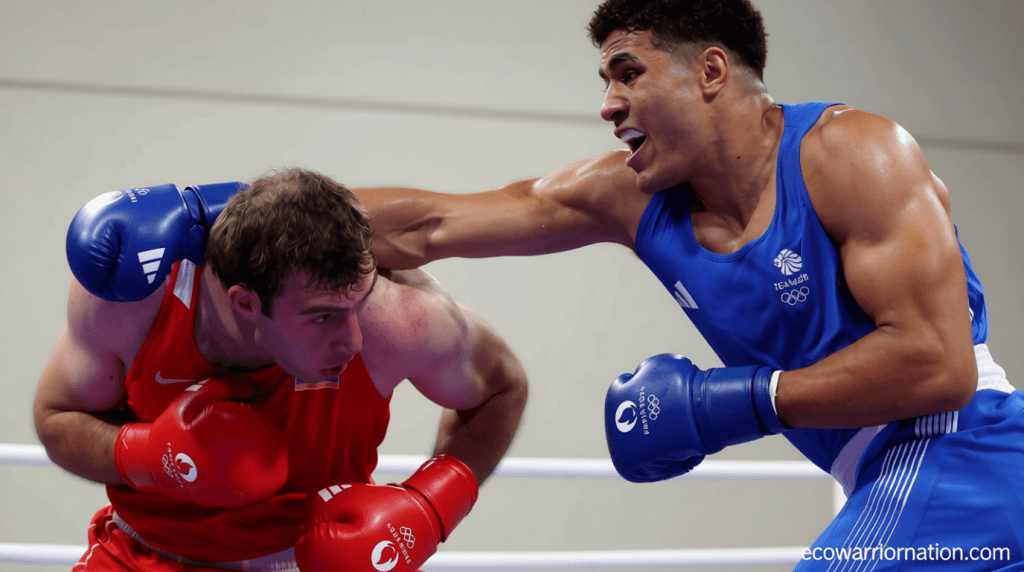
Depression fears drove Orie’s retirement decision
Orie, the 28-year-old boxer, made a surprising move to step away from the sport after his professional debut a year prior. The decision came as a result of his growing concerns about mental health, which he believes could have led to a life of persistent unhappiness despite achieving success.
“I fear that I would have ended up being a world champion but a very depressed, sad and miserable world champion,” Orie reflected in an interview with BBC Sport.
Initially, Orie’s path in boxing seemed promising. He had the world at his feet during his amateur career, even though he started the sport at 18. Originally from Russia, he relocated to the UK with his family as a child. From a young age, he recognized the opportunities available to him in the UK, setting high expectations for himself.
After the Paris Olympics, where he competed in the heavyweight division but failed to secure a medal, there was significant interest in signing him. Frank Warren’s Queensberry promoted him, overcoming competition from Eddie Hearn’s Matchroom and even WWE’s potential involvement. Orie was considered the next big name in heavyweight boxing.
However, a month after the Olympics, he made the unexpected choice to retire. “I wanted to pull out before the boxing exposed me,” he explained. “I turned pro for the money, I needed the money, only to realize that money gives you a little bit of happiness, it really does, but it gives you zero fulfillment. Nothing. You feel nothing.”
His professional debut was meant to be an easy start, but Orie struggled through it without the knockout many had anticipated. He sparred, absorbed hits, and questioned his purpose. “I had to make a choice,” he said. “I either stepped away when it was more or less too late, when in my third or fourth year I get knocked out by some up-and-coming guy who purely just wants it more than me, or I have the power in my hands to step away and walk away from the things that I could have got.”
Alongside financial considerations, Orie was also worried about the impact of his mental state. “You start to find other things that could be destructive instead of constructive,” he noted. “I’ve seen it countless times in boxing, the likes of Tyson Fury and the rest. I’ll be honest, I genuinely feel like that was the road I was going down. So I had to make a decision. I feel like I would have been really stupid to know that and still keep going for the money.”
Orie now works as a financial advisor, using his experience to guide others. He has openly shared his decision to leave boxing in an effort to help young men prioritize fulfillment over financial gain. He regretted not discussing his feelings with those close to him, as they were just as surprised as the public. “Being strong mentally doesn’t necessarily mean completely cutting off your emotions,” he said. “The negative side of mental health comes when it’s been ignored and just put to the side. Then before you know it, it’s too late. I feel like education is key.”
For Orie, the decision to retire was rooted in a desire to inspire future athletes. “I want to be a role model, like Anthony Joshua was to me during the London 2012 Olympics,” he added. “Pushing on any more would just be me seeking validation from others externally and it wouldn’t give me the fulfillment that I needed.”
