
Charges dropped against activists in Chicago immigration crackdown amid grand jury misconduct claims
Chicago Immigration Crackdown Case Unfolds Amid Grand Jury Misconduct Allegations
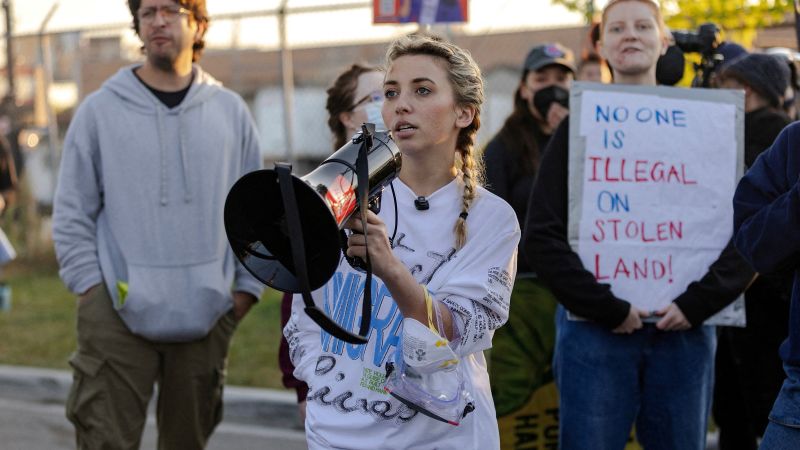
Charges dropped against activists in Chicago – On Thursday, a pivotal decision was made by Chicago’s federal prosecutor, Andrew Boutros, who announced the dismissal of charges against four activists involved in protests during the Trump administration’s immigration enforcement efforts. The move followed a judicial review of claims that the prosecutor’s office had engaged in misconduct during the grand jury proceedings. The case, which was set for trial next week, had drawn significant attention as part of a broader crackdown on immigration activities in the city and its surrounding suburbs last year.
The charges against the activists were reportedly dropped after a judge examined redacted grand jury transcripts. Boutros revealed that he had only recently become aware of the alleged misconduct, which included a prosecutor meeting with a grand juror outside of official proceedings. Additionally, other jurors who disagreed with the case’s progression were reportedly excluded from participating, raising questions about the transparency of the process. Despite these concerns, Boutros acknowledged the actions as troubling and cited them as the reason for the case’s dismissal. “No one acted with the intent to mislead your honor, and I think that they were following your order to give the law,” he stated during the court session.
Boutros, appointed by the Trump administration in 2025, remained silent on further comments after the ruling, relying on a spokesman to provide updates. The dismissal of the charges marked a shift in the legal strategy, as prosecutors had previously pursued felony conspiracy charges against the activists. These charges were initially filed in October, when six individuals were accused of conspiring to obstruct a federal officer. The activists were alleged to have surrounded an immigration agent’s van at a federal facility in Broadview, a suburb of Chicago, during a key moment of the Trump administration’s aggressive immigration campaign.
However, the momentum of the case began to wane as some charges were dropped. Two of the six individuals faced initial charges, but those were later withdrawn. In a recent development, prosecutors also abandoned the felony conspiracy charge entirely, citing inconsistencies in the grand jury transcripts. The latest charging documents did not offer new evidence against the activists, leaving their defense team to argue that the case lacked sufficient grounds for prosecution. Kat Abughazaleh, one of the activists and a former Democratic congressional candidate, was at the center of the controversy, with her defense attorney Josh Herman calling the dismissal a necessary outcome.
“The revelations of the grand jury misconduct that led to the dismissal of the charges is sadly not surprising,” Herman said. “This misguided case should have never been brought against Kat Abughazaleh or any of her co-defendants for exercising their protected First Amendment rights.”
The decision to dismiss the charges came as a surprise to some, given the high-profile nature of the case. The activists were accused of interfering with federal officers during the immigration crackdown, a charge that has been a focal point for the Justice Department in recent months. The case has become emblematic of the challenges prosecutors face when balancing national security concerns with civil liberties. The dismissal with prejudice means the activists cannot be recharged in the future, effectively closing the legal chapter on their involvement.
During the hearing, Judge April Perry took the opportunity to propose a separate proceeding to determine whether the U.S. Attorney’s Office should face sanctions for their conduct. The grand jury proceedings, which are typically confidential, were discussed in court, prompting Perry to limit public access to part of the session. This decision drew criticism from media outlets such as the Chicago Tribune and the Chicago Sun-Times, which argued that the secrecy of the grand jury process should not prevent the public from being informed about its implications.
The remaining defendants in the case included Andre Martin, who worked on Abughazaleh’s campaign; Oak Park village trustee Brian Straw; and Michael Rabbitt, a Democratic committeeperson. Each was charged with a single misdemeanor count of forcibly impeding a federal agent. The charges had been a key element of the broader strategy to target protesters involved in the immigration crackdown. Now, with the dismissal, the focus shifts to the procedural integrity of the grand jury process and its role in shaping legal outcomes.
Procedural scrutiny of the grand jury has not been limited to this case. Earlier in the Trump administration, a federal judge in Virginia raised concerns about the Justice Department’s handling of the indictment against former FBI Director James Comey. The judge described the process as having “a disturbing pattern of profound investigative missteps,” highlighting issues such as “fundamental misstatements of the law” made to the grand jury, the use of potentially privileged communications during the investigation, and unexplained irregularities in the transcript of Comey’s proceedings. These problems ultimately led to the dismissal of Comey’s indictment after a judge determined that the prosecutor had been improperly appointed.
The Chicago case is part of a wider trend in which the Justice Department has faced increasing pressure to justify its legal tactics. Critics argue that the use of grand juries has sometimes been leveraged to secure convictions without fully accounting for the rights of the accused. The seashell incident that led to Comey’s indictment in April exemplifies this pattern, where a social media photo was interpreted as a potential threat, prompting a legal action that was later dismissed.
As the legal landscape continues to evolve, the dismissal of the Chicago case raises questions about the fairness of the grand jury process and its impact on political activism. The activists’ defense team remains hopeful that the unredacted transcripts will provide clarity on the alleged misconduct. For now, the case serves as a reminder of the complex interplay between law enforcement, judicial oversight, and civil liberties in the context of high-stakes political events.
The decision also underscores the challenges faced by prosecutors in maintaining public trust. With the allegations of misconduct casting doubt on the integrity of the proceedings, the case has sparked renewed debates about the role of grand juries in shaping the outcomes of politically sensitive trials. As the Justice Department continues to navigate these controversies, the Chicago case may set a precedent for how similar cases are handled in the future.
In conclusion, the dismissal of charges against the activists in Chicago highlights the ongoing tensions between law enforcement actions and the protection of individual rights. The role of the grand jury in this process has come under scrutiny, revealing potential flaws in how evidence is presented and how jurors are influenced. As the legal community and media continue to analyze these developments, the case remains a focal point for discussions on the balance between national security and due process in the Trump era.
