
Iran launches biggest salvo of missiles in three weeks at Israel, military officials say
Iran launches biggest salvo of missiles in three weeks at Israel, military officials say
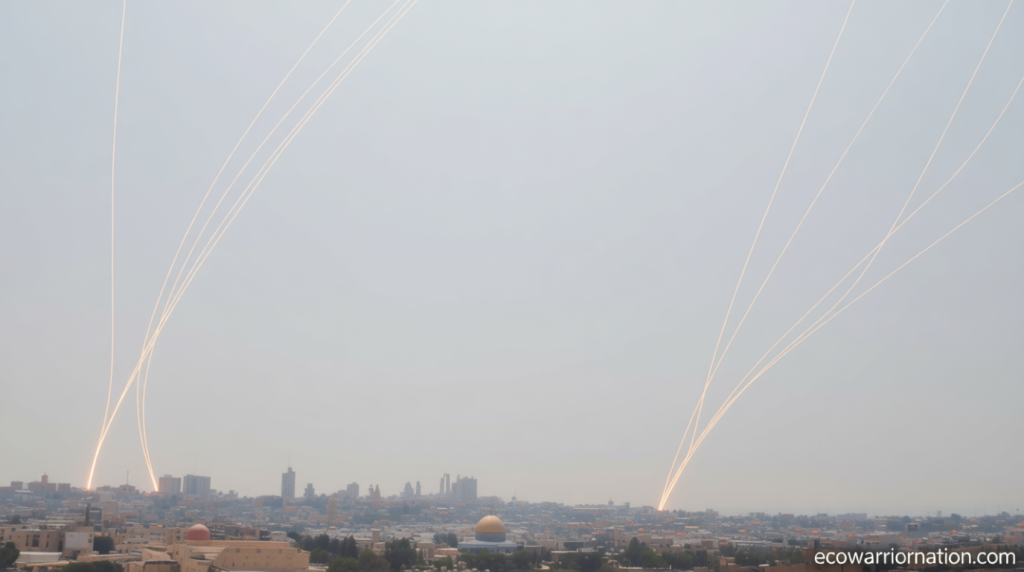
Central Israel experienced repeated siren alerts Wednesday night as Iran launched a significant missile barrage targeting the nation during the opening of Passover. Israeli military sources reported that around 10 ballistic missiles were deployed, marking the highest Iranian strike since the war’s onset. Shortly afterward, the IDF confirmed a sixth missile launch of the day, with additional strikes detected in quick succession.
Most of the projectiles involved were cluster munitions, according to Israeli Army Radio. These weapons release smaller explosive components that may not detonate immediately, creating lingering threats for civilians. Iranian missile activity had previously decreased to 10-15 launches daily, a stark contrast to the early war’s rate of nearly 90 attacks per day.
“We will consider when Hormuz Strait is open, free, and clear. Until then, we are blasting Iran into oblivion or, as they say, back to the Stone Ages!!!”
US President Donald Trump claimed on Wednesday that Iran’s leader had requested a ceasefire, though he stopped short of endorsing a truce until the Strait of Hormuz was secured for vital energy transport. This statement was swiftly dismissed by Iran’s foreign ministry, with spokesman Esmaeil Baqaei calling it “false and baseless.”
Tehran maintains there are no current talks with Washington to end the conflict, instead escalating strikes against Israel and US-backed Gulf states. The Iranian Revolutionary Guards further emphasized their stance, stating that Hormuz would remain closed to their enemies. They also confirmed hitting an Israeli-owned oil tanker in the Gulf, which was reportedly damaged off Qatar with no reported injuries.
Despite Trump’s remarks about a potential two-week resolution, global energy markets remained volatile. Iran’s control over the strategic strait led to soaring fuel prices, while European inflation rose sharply. In response, governments worldwide introduced economic support initiatives. Britain announced plans to convene a summit with approximately 35 nations to address the reopening of Hormuz, aiming to stabilize the region’s critical maritime passage.
