
‘This is far worse’: When conflict 2,000 miles away compounds civil war at home
‘This is far worse’: When conflict 2,000 miles away compounds civil war at home
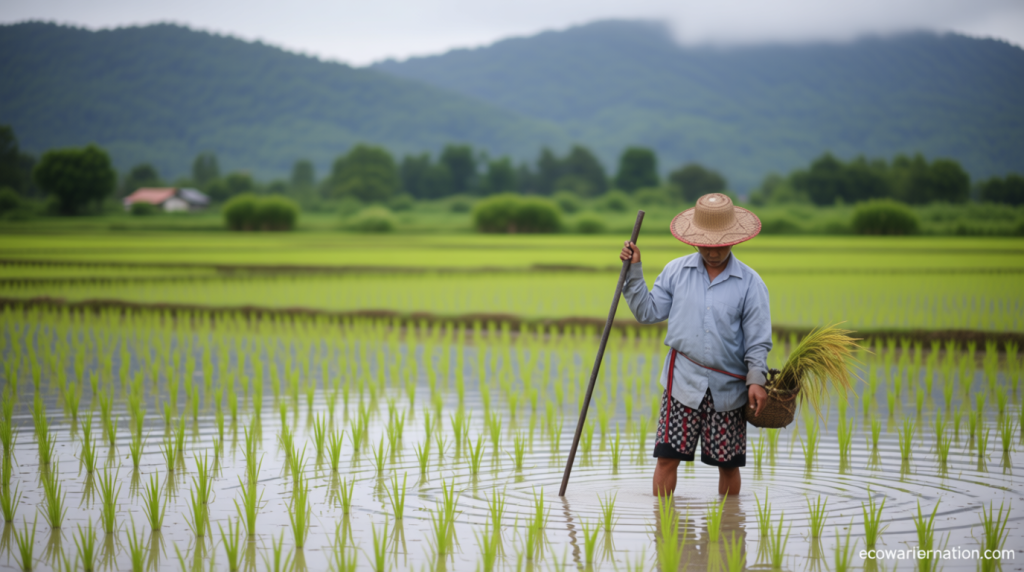
This is far worse – As the planting season looms, Maung Nu Sein, a 72-year-old farmer in western Myanmar, finds himself in a dire predicament. His fields require fuel for plowing and fertilizer to ensure a bountiful harvest, yet the vessels carrying these essentials are now stuck 2,000 miles away, caught in the crossfire of Iran’s control over the Strait of Hormuz. The waterway, a critical artery for global trade, has become a bottleneck for his survival. “Many farmers are abandoning their land because they’ve been fighting to keep up,” he explained to CNN from his home, highlighting the growing desperation among rural communities.
A Civil War’s Long Shadow
The conflict in Myanmar, ignited by a military coup in 2021, has already stretched into its fifth year. It has fractured the nation, forcing millions from their homes and severing access to key resources. The country’s economy, healthcare system, and agricultural sector have all been severely strained. For Maung Nu Sein, the struggle is compounded by the military’s blockade of the coastal region, which has raised the cost of basic necessities. “We’re not just dealing with the war at home—we’re also bearing the brunt of distant battles,” he said, emphasizing the interconnectedness of global crises.
Myanmar’s agriculture, a cornerstone of its economy, depends heavily on imports. Over 90% of its fuel and nearly all of its fertilizer come from China, the Middle East, and other regional suppliers. But the war in the Middle East has disrupted these supply chains, creating a domino effect on domestic production. Fuel shortages have escalated transportation costs, making it harder for farmers to move goods to market. “The price of fuel alone has skyrocketed,” said Maung Nu Sein, describing how a single field’s plowing cost has surged from $24 to $476 in a year’s time.
Strait of Hormuz: A Global Bottleneck
According to United Nations data, a third of all seaborne fertilizer shipments pass through the Strait of Hormuz, a strategic chokepoint that has now been impacted by the Middle East conflict. The waterway, which connects the Persian Gulf to the open ocean, is vital for delivering essential nutrients to Asian farms. Without reliable access, crop yields are expected to decline, exacerbating food shortages. “The timing is devastating,” noted Samir Wanmali, regional director for the World Food Programme (WFP), explaining how the closure of the strait coincides with the peak demand for fertilizer and the critical growing season.
Rice, the primary food source for much of Myanmar’s population, is under threat. While the majority of rice production is for local consumption, exports remain a significant revenue stream, contributing $861 million last year. Yet, even as the country relies on these exports to sustain its economy, farmers are struggling to break even. “The rice we sell doesn’t even cover the cost of fuel, let alone the labor,” Maung Nu Sein lamented, illustrating the precarious balance between survival and economic viability.
A Growing Crisis
With the Strait of Hormuz closed, the ripple effects are spreading. Transport and fuel prices have climbed sharply, making it difficult for farmers to afford the next season’s planting. “We’re seeing fewer fields being cultivated,” said Ye Min Aung, chairman of the Myanmar Rice Federation, pointing to the broader impact on the agricultural sector. The WFP has warned that 45 million additional people worldwide could face acute food insecurity if the Middle East conflict persists through mid-2026. In Myanmar alone, 12.5 million people are already suffering from hunger, many living in remote areas or displaced by the ongoing war.
Maung Nu Sein’s situation is emblematic of the challenges faced by rural communities. His farm, once a source of stability, is now a battleground for survival. “If we give up entirely, the whole community will collapse,” he said, underscoring the critical role of rice in sustaining local life. The rising costs have forced him to reduce his farmland by half, leaving his family to ration food. “We’re eating half a meal a day just to make it through,” he added, reflecting the grim reality for many.
Global Interconnectedness
The crisis in Myanmar is a stark reminder of how global events can intertwine with local struggles. The closure of the Strait of Hormuz, a move by Iran to assert control over vital shipping routes, has inadvertently hit farmers in Rakhine state hard. “The consequences of this war are hitting us harder than the civil war itself,” Maung Nu Sein said, a sentiment echoed by others in his community. The cost of fuel and fertilizer, which were already high due to the military’s blockade, has now risen to unsustainable levels.
For Maung Nu Sein, the impact is personal. His seven-member family is barely fed, and he fears having to borrow money or sell his property to survive. “This war is choking us,” he said, “and we’re left with no choice but to endure.” The situation is particularly dire for those who rely on rice as their sole sustenance. “Without enough crops, there’s no food,” he warned, highlighting the urgent need for relief.
Experts warn that the combined pressure of the civil war and the Middle East conflict could lead to a deeper economic crisis. The WFP’s regional director emphasized that the current moment is “the worst possible time for the people of Myanmar” to face such challenges. With fertilizer prices at their highest and fuel costs soaring, the agricultural sector is on the brink of collapse. “Every drop of water, every grain of rice, is now a matter of life and death,” Wanmali said, stressing the urgency of addressing the supply chain disruptions.
Meanwhile, displaced populations are growing. Streets in western Myanmar are lined with people begging for food, their lives upended by both the civil war and the global economic strain. Maung Nu Sein, though struggling, says he’s not the only one affected. “Others are worse off,” he said, pointing to the widespread suffering. The situation is a stark contrast to the past, when farmers could rely on stable markets and predictable costs.
As the conflict in the Middle East continues, the effects on Myanmar are becoming more pronounced. The combination of war, fuel shortages, and fertilizer scarcity is pushing the agricultural sector to its limits. “This is far worse than we ever imagined,” Maung Nu Sein said, capturing the despair of those who are now facing an uncertain future. With the planting season approaching, the question remains: can farmers in Myanmar withstand the additional pressure, or will the crisis spiral beyond control?
The interconnectedness of global conflicts has created a perfect storm for Myanmar’s economy. The Strait of Hormuz, a lifeline for fuel and fertilizer, is now a symbol of the country’s vulnerability. As the war in the Middle East disrupts trade, the ripple effects are felt in Rakhine state and beyond. For farmers like Maung Nu Sein, the stakes are high. “We’re fighting not just for our livelihoods, but for our very existence,” he said, a statement that underscores the gravity of the situation.
With the world’s attention on distant conflicts, the plight of Myanmar’s farmers is often overlooked. Yet their struggles are a microcosm of the broader crisis. The combination of civil war and the Middle East war has created a dual burden on the agricultural sector, leaving it in a fragile state. “We need the world to recognize how interconnected we all are,” Maung Nu Sein urged, “because what happens in one part of the globe can destroy lives in another.” As the planting season begins, the challenge is clear: can Myanmar’s farmers adapt, or will the crisis bring irreversible damage to their way of life?
