
‘We were lucky’: Stephen Colbert’s ‘Late Show’ bids farewell in final broadcast on CBS
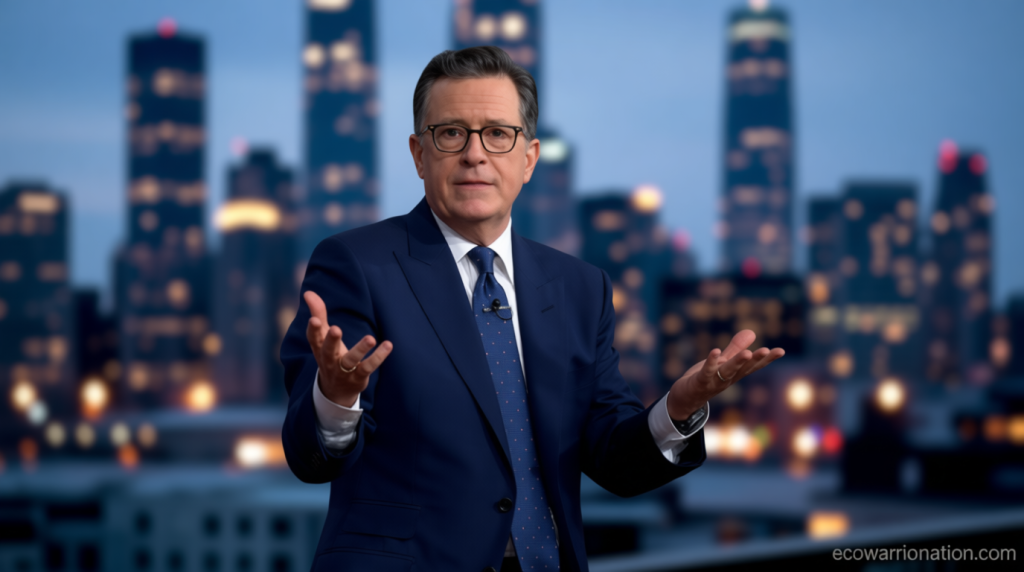
‘We were lucky’: Stephen Colbert’s ‘Late Show’ bids farewell in final broadcast on CBS
We were lucky – The long-running talk show “The Late Show” concluded its run on CBS Thursday night, marking the end of an era for late-night television. Stephen Colbert, the host who has led the program since 2015, took the stage at the Ed Sullivan Theater for the last time, delivering a heartfelt send-off to his team, fans, and the audience that filled the studio. The night was filled with both nostalgia and the bittersweet realization that the show, which had become a cornerstone of American comedy, was now a memory.
A farewell to the stage and the show’s legacy
Colbert’s final monologue was a blend of gratitude and reflection, as he acknowledged the shared journey with his crew and the viewers who had become part of the show’s fabric. “If you’re just tuning into ‘The Late Show,’ you missed a lot,” he quipped, a nod to the broader cultural shifts that led to the show’s cancellation. The host’s words were met with a mix of applause and murmurs from the crowd, a subtle reminder of the show’s political undercurrents and the uncertainty that surrounded its end.
“No, no, we were lucky enough to be here for the last 11 years. You can’t take this for granted.”
Colbert’s gratitude was clear as he emphasized the value of the show’s run. “This has been a remarkable chapter,” he said, highlighting the unique role the program played in shaping public discourse and entertainment. The Ed Sullivan Theater, a historic venue that had hosted “The Late Show” for over two decades, became the backdrop for a moment that encapsulated the show’s impact on both the industry and the audience. Despite the uncertainty of what would come next, Colbert’s tone was one of pride, underscoring the deep connection he had built with the show’s loyal followers.
The final guest and a night of humor
The final episode was not just a moment of closure but also a celebration of the show’s creative spirit. Before the monologue, the studio was abuzz with excitement as celebrity friends vied for the spotlight. Among them were Bryan Cranston, Paul Rudd, and Tim Meadows, each eager to share their final conversation with Colbert. Ultimately, the decision fell to Paul McCartney, the legendary musician who joined the host for a candid and in-depth interview, reflecting on the legacy of his work and the charm of the late-night format.
Colbert, ever the wit, used the opportunity to inject humor into the farewell. “A lot of people have been asking me what I plan to do after tonight, and the answer is drugs,” he joked, capturing the surreal nature of the occasion. Yet, beneath the laughter, there was a genuine appreciation for the role the show had played in his career and in the lives of its viewers. “We were here to feel the news with you,” he said, a subtle contrast to his earlier persona as a blowhard on Comedy Central’s “Colbert Report” in 2005.
“Anyone can read the news to you. I promise to feel the news ‘at’ you.”
Colbert’s evolution from a satirical host to a thoughtful commentator on current events was a defining aspect of his tenure. “When I first introduced myself on Comedy Central, I was all about exaggeration and parody,” he reflected. “But on CBS, we were here to feel the news with you. And I don’t know about you, but I sure have felt it.” His words resonated with the audience, who had followed his journey from the “Colbert Report” to the “Late Show,” witnessing both his comedic brilliance and his growing influence on national conversations.
Behind the scenes and a new chapter
After the final taping, Colbert and his team gathered for a star-studded wrap party, a fitting tribute to the decade of work that had defined their careers. The event featured a mix of laughter, tears, and camaraderie, as colleagues and friends celebrated the end of an era. Yet, the focus remained on what lay ahead. “I haven’t had much time to think about what’s next,” Colbert admitted to People magazine. “It takes almost the entirety of my brain to do this show, so we’ll land this plane and check out the view from there.”
The transition from “The Late Show” to another program was inevitable, as CBS handed over the 11:35 p.m. time slot to Byron Allen’s “Comics Unleashed.” Allen’s show, which features a rotating cast of comedians, is designed for rewatchability and leans into evergreen content rather than the political satire that had characterized Colbert’s era. While this shift signals a new direction for late-night television, it also highlights the enduring value of Colbert’s work, which will be preserved in the Museum of Broadcast Communications in Chicago.
Reflections on the show’s impact
Colbert’s farewell was not just a personal milestone but also a moment for the broader public to reflect on the show’s role in American culture. From its inception, “The Late Show” had served as a platform for comedy, commentary, and connection, bridging the gap between entertainment and current events. For many, it had been more than a nightly ritual—it was a space where voices were amplified, ideas were challenged, and humor became a tool for resilience, especially during turbulent times like the Trump resistance movement.
As the Ed Sullivan Theater prepared for its next chapter, Colbert expressed a mix of nostalgia and hope. “The fact that nothing’s gonna come in here breaks my heart,” he told Architectural Digest in a video tour of the iconic venue. “But someone will figure it out, and I wish them all the luck in the world—because they’re gonna love it.” His words hinted at the theater’s potential to find new life, even as it symbolized the end of an old chapter. The building, a 100-year-old landmark, had hosted countless moments of laughter and debate, and now it would stand as a testament to the show that had once defined its presence.
The closure of “The Late Show” marked a shift in the late-night landscape, but its legacy remains firmly rooted in the memories of those who followed it. Colbert’s ability to balance humor with insight, to entertain while challenging, and to connect with his audience has left an indelible mark on the genre. As the new era begins with “Comics Unleashed,” the question remains: will the spirit of Colbert’s show live on, or will it be a chapter that fades into history?
This story has been updated with additional information.
