
Goodbye Graaff-Reinet: South African town’s name change stirs racial tensions
Goodbye Graaff-Reinet: Town’s Name Change Sparks Racial Debate
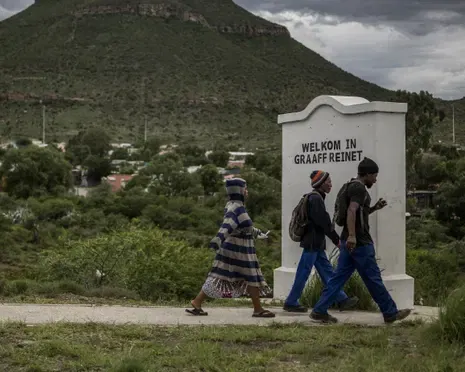
A decision to rename a South African town from Graaff-Reinet to Robert Sobukwe has ignited a heated dispute, reflecting broader racial divisions in the country. The name change, approved on 6 February by the sports, arts and culture minister Gayton McKenzie, has drawn protests and petitions from residents who feel the town’s colonial heritage is being erased.
Historical Roots and Emotional Attachments
Many locals remain deeply connected to Graaff-Reinet, a name that traces its origins to Cornelis Jacob van de Graaff, the Dutch governor of the Cape Colony, and his spouse, Hester Cornelia Reynet. While some acknowledge the town’s colonial past, others argue the name represents a shared cultural identity. The debate has underscored the complexity of reconciling historical legacy with modern political narratives.
Rationale for the New Name
Proponents of the name change see it as a vital step toward dismantling the colonial and apartheid-era naming conventions. They emphasize that Robert Sobukwe, a prominent anti-apartheid figure born and buried in the town, symbolizes the fight for equality. Sobukwe’s departure from the African National Congress (ANC) in 1959 to establish the Pan Africanist Congress highlighted tensions over race and inclusion within the liberation movement.
In 1960, Sobukwe led demonstrations against laws mandating passbooks for Black South Africans. These protests culminated in the Sharpeville massacre, where police gunfire killed 69 people. The incident remains a pivotal moment in the nation’s struggle against racial oppression.
Geographical Name Changes Across South Africa
Since 2000, over 1,500 locations have undergone name changes, including 400 post offices, 144 rivers, and seven airports. The city of Port Elizabeth, for instance, was renamed Gqeberha in 2021. The Department of Sports, Arts and Culture stated that these changes aim to correct historical injustices and promote restorative justice through a new naming system.
Public Opposition and Identity Concerns
A December 2023 survey revealed that 83.6% of residents opposed the name change. Among the respondents, 92.9% of Coloured people, 98.5% of white residents, and 55% of Black people expressed resistance. A third of Black residents supported the shift. “Changing the name would erase part of our identity as ‘Graaff-Reinetters,’” remarked Ronnie Donaldson, a Stellenbosch University geography professor, highlighting the emotional weight of the decision.
“We are not emotional about the Dutch. Out of the grief of the past, the name Graaff-Reinet became a benefit for the people and for the economy of the town,” said Laughton Hoffman, a local non-profit leader wearing a “Hands Off Graaff-Reinet” T-shirt. Hoffman, who identifies as Coloured and Khoi-San, noted that his community had faced marginalization since the ANC took power, despite being granted slightly better housing and employment opportunities under apartheid.
Hoffman argued that the name change could harm tourism, which thrives on the town’s historic Cape Dutch architecture. He described the town’s center as a place of cultural pride, with its whitewashed buildings and colonial-era charm. Meanwhile, Derek Light, a white lawyer who challenged the decision, criticized the consultation process as legally flawed. “It was a faux process,” he claimed, lamenting the racial tensions the renaming has sparked.
Black members of the Robert Sobukwe Steering Committee, however, defended the change. “We have always had racial problems,” said Athe Singeni, a committee representative. “It was very subtle.” Her mother, Nomandla, added that the community would continue advocating for the new name, even after Sobukwe’s grave was vandalized recently. “We as Black people have a history that has been erased,” she said, stressing the importance of reclaiming symbolic spaces.
