
Houthi forces enter Iran conflict with missile attacks on Israeli military sites
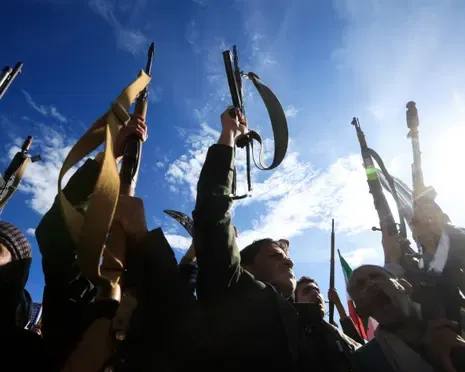
Houthi Forces Enter Iran Conflict with Missile Attacks on Israeli Military Sites
The ongoing war between the US and Iran has broadened significantly as Houthi rebels in Yemen have joined the fray, launching ballistic missile strikes against Israeli military installations. This escalation threatens to disrupt global economic stability, with the conflict now extending beyond its original scope. Pakistan has taken the initiative to convene a gathering of Middle Eastern leaders on Monday, aiming to foster a unified strategy to resolve the crisis. However, the meeting, attended by foreign ministers from Saudi Arabia, Turkey, and Egypt, excluded the actual combatants, raising questions about the credibility of US assertions regarding diplomatic advancements.
Regional Escalation and Strategic Impacts
Houthi officials, aligned with Iran, announced on Saturday that they had struck “critical Israeli military sites” and vowed to continue their operations until all fronts saw an end to “hostile actions.” Israel reported intercepting one missile from Yemen, but the broader threat remains. Intelligence sources, as cited by Reuters, indicated that Washington had only confirmed the destruction of a portion of Iran’s missile and drone stockpile, not the full arsenal claimed by US media. In a separate incident, a drone strike on Kuwait International Airport caused notable damage to its radar systems, while US troops at Prince Sultan Airbase in Saudi Arabia were injured in another attack.
The Houthis’ control of Yemen’s densely populated regions has placed them in a strategic position to threaten the Bab al-Mandab Strait, a vital maritime passage near the southern tip of the Red Sea. This strait serves as a crucial link for energy and trade flows in the Middle East. With Iran already restricting the flow of goods through the Strait of Hormuz, a blockade of Bab al-Mandab could intensify economic consequences. The potential for renewed conflict between Saudi Arabia and Yemen, which previously caused severe humanitarian crises, has also resurfaced.
Global Partnerships and Weaponry Escalation
Following the US-Israeli assault on Iran on 28 February, Saudi Arabia has redirected some of its oil exports via the Red Sea. Should this route face further threats, Riyadh might directly engage in the conflict, according to local analysts. Farea Al-Muslimi, a Chatham House research fellow, remarked: “The Houthis’ decision to participate in the larger Middle East conflict signifies a significant and worrying escalation. The effect on essential maritime trade routes, particularly in the Red Sea and Bab al-Mandab, is profound.”
Iran’s military command revealed it had targeted a Ukrainian anti-drone system facility in Dubai, alleging the country was aiding US operations. Dubai authorities have yet to confirm this strike. Since the war began, Ukraine has supplied anti-drone technology to Gulf nations, leveraging its experience with Russian attacks using Iranian drones. Meanwhile, President Volodymyr Zelenskyy announced cooperation with the UAE and visited Qatar, efforts to expand Ukraine’s international alliances.
Reports of escalating weaponry have emerged, including the use of cluster munitions by the US. Analysts from Bellingcat identified mines near a missile base in Shiraz as Gator anti-tank mines, a type of cluster bomb banned by over 100 countries for its indiscriminate effect. Despite Tehran’s use of cluster warheads in attacks on Israel, the US remains the sole wielder of the full cluster munition arsenal. Adm Brad Cooper, head of US Central Command, criticized the strikes on March 16, calling cluster bombs “inherently indiscriminate.”
