
WHO warns of health crisis ‘unfolding in real time’ across Middle East
WHO warns of health crisis ‘unfolding in real time’ across Middle East
The World Health Organization’s regional director, Dr Hanan Balkhy, has stressed that a complete halt to hostilities in the Middle East is essential to prevent a “health crisis unfolding in real time.” She highlighted the urgent need to protect healthcare facilities, calling them “safe havens” amid escalating conflicts. Balkhy emphasized that the situation has worsened significantly, with the region’s 22 countries and territories—ranging from Iran and Gulf states to Gaza, Sudan, and Afghanistan—facing unprecedented challenges.
According to official reports, the US-Israel conflict with Iran has resulted in over 1,000 deaths in Lebanon, more than 1,500 in Iran, and 16 in Israel. Additional casualties have been recorded in the West Bank and Gulf Arab states, with reports of more than a dozen fatalities. Balkhy noted that the disruption of medical care extends beyond immediate casualties, as hospital closures and mass displacement have severely impacted access to treatment for patients with chronic illnesses.
“The situation has been quite difficult for some time, but what we’re seeing today is just an actual regional health crisis unfolding in real time in multiple parts of this region,” Balkhy told the Guardian. “It’s not just about lives being lost. It’s about a collapse of access [to healthcare] in many, many dimensions way above and beyond what we would have imagined.”
She warned that targeting water desalination plants could lead to a major disaster, potentially leaving millions without clean water. The threat to nuclear sites, whether intentional or accidental, also poses significant risks, with contamination of water sources adding to the crisis. Balkhy mentioned that the Bushehr nuclear power plant in Iran was hit by a projectile on Tuesday night, following an earlier attack on 17 March.
Healthcare workers and facilities are under constant threat, according to Balkhy. “In the past, people in countries at war would go and hide in the hospitals because they were sure it would not be bombed. That’s not the case any more,” she said. “We need to focus on restoring compliance with international humanitarian law to ensure healthcare remains protected.”
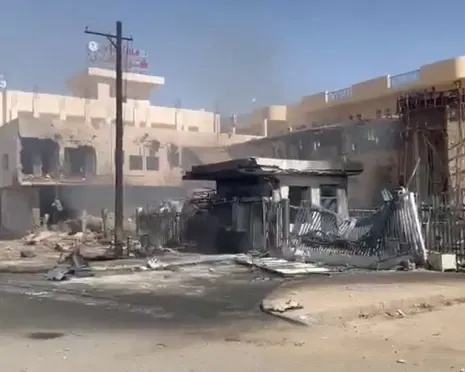
The WHO has documented dozens of attacks on medical facilities in Lebanon, Iran, and Israel since the conflict began. A recent incident in Sudan, where an attack on El-Daein teaching hospital in East Darfur killed at least 70 people—including 13 children, two nurses, and a doctor—left the facility nonfunctional. Balkhy expressed concern over the long-term effects of the war on maternal mortality, children’s education, and mental health, stressing that the consequences will persist even after hostilities cease.
“My worry is driving me to prepare and have my teams prepare. And that’s what we’re doing,” she added. “We are seeing this unfolding in a very dangerous way, and the only solution at this moment is for a significant de-escalation or a pause—hopefully a permanent one—in this war’s escalation.”
Balkhy also raised alarm over the neglect of crises in Gaza, Sudan, and Yemen as global focus shifts to the US-Iran conflict. “It is very distressing because behind that neglect, there’s a lot of hardship and death and sickness and displacement that is going unrecognised,” she said. The WHO is collaborating with other UN agencies to develop strategies to mitigate potential catastrophes, including those linked to oil and nuclear site attacks that could contaminate water supplies.
