

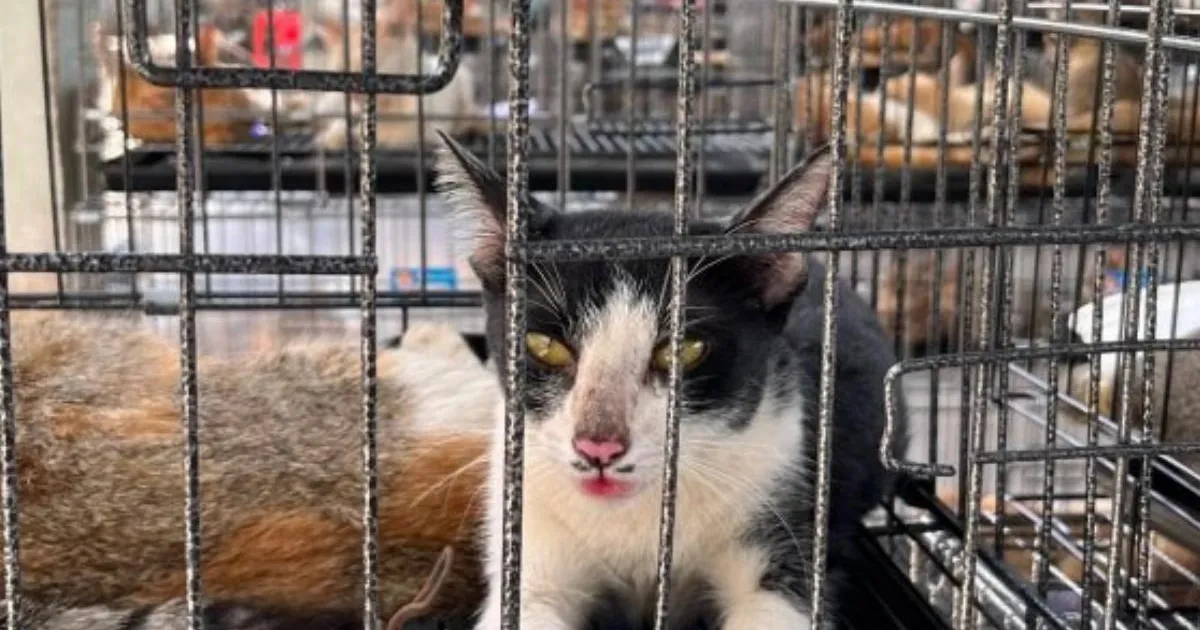
400+ Cats Rescued in Vietnam Meat Cage Raid
More than 400 cats saved – Over 400 cats were saved from slaughter following a surprise operation in Ho Chi Minh City, where authorities raided a network of meat suppliers. The discovery of 45 cages holding live cats and four foam containers packed with dead animals has ignited debate about the treatment of pets in Vietnam. This incident not only rescued the cats but also exposed the scale of a longstanding trade that has operated across southern regions for years.
The Hidden Trade of Cat Meat
Law enforcement and animal welfare advocates joined forces to dismantle the operation, revealing the grim conditions in which cats are kept for consumption. According to police, live cats were confined in tight spaces, while the deceased were stored in ice-filled containers to maintain their quality. The estimated value of the meat, priced at around 70,000 Vietnamese dong per kilogram, underscores the economic motivations behind the practice.
Several of the rescued cats were found to be pregnant, leading to the birth of kittens in police custody. Phuong Pham, director of the Humane World for Animals in Vietnam, called the operation “shocking,” noting that it reflects a well-organized system of trapping, caging, and slaughtering cats across the region over the past three years.
Voices from the Frontlines
“Thousands of cats are stolen, trafficked, and slaughtered each month for meat in Vietnam,” stated Phuong Pham, country director of the Humane World for Animals.
Pham highlighted the emotional impact on cat owners, many of whom had lost hope of recovering their pets. Chris Gindelhumer, a representative from VietnamCat Welfare, shared the human side of the story. “We saw a lot of tears in the last few days,” he remarked, reflecting on the families searching for their missing companions.
“It’s beautiful to see so many families coming to find their cats,” Gindelhumer added. “But it’s heartbreaking that many didn’t find them.”
The raid has mobilized communities, with families rushing to reclaim their lost pets. Volunteers and veterinarians are working to rehabilitate the rescued cats, some of whom were in critical condition. Gindelhumer stressed the urgency of the situation, noting that a few cats had already died due to the harsh treatment they endured before being found.
Legal and Ethical Considerations
Cat meat is legally allowed in Vietnam, but the trade operates under specific regulations. Vendors must secure permits to trace the animals’ origins, yet the raid has raised concerns about how effectively these rules are enforced. The incident mirrors South Korea’s 2024 ban on dog meat, prompting Vietnamese officials to consider strengthening protections for pets and their owners.
Pham emphasized the raid as a turning point for public awareness. “This event surprised many and has sparked conversations about the cultural role of cat meat in Vietnamese cuisine,” she said. The growing demand for cheaper alternatives has made the trade more profitable, but the rescue has prompted a reevaluation of its ethical implications.
Rebuilding Hope for Rescued Cats
Despite the cruelty documented in the raid, the rescue has shown a shift in public perception. Volunteers are now working tirelessly to treat and care for the surviving cats, providing them with shelter and medical attention. The operation also revealed a larger network, with suspects admitting to trapping cats in various parts of the country.
Animal welfare organizations have launched campaigns to educate the public about the trade’s cruelty. These initiatives aim to reduce demand and encourage pet owners to support stricter protections. The recovery of live cats from a separate location further demonstrates the widespread nature of the issue, with authorities stressing the need for better oversight of the supply chain.
Looking Ahead: A Call for Change
The incident has highlighted the need for systemic reforms in Vietnam’s pet industry. While laws exist, inconsistent enforcement has allowed the trade to persist. Pham believes this event could catalyze stronger policies, especially as global awareness of animal welfare grows. Local officials are now considering measures to ensure the trade is monitored more closely and that cats are treated with greater compassion.