
Police Clash With Protesters As Controversy Surrounds Tommy Robinson’s Oxford Union Debate
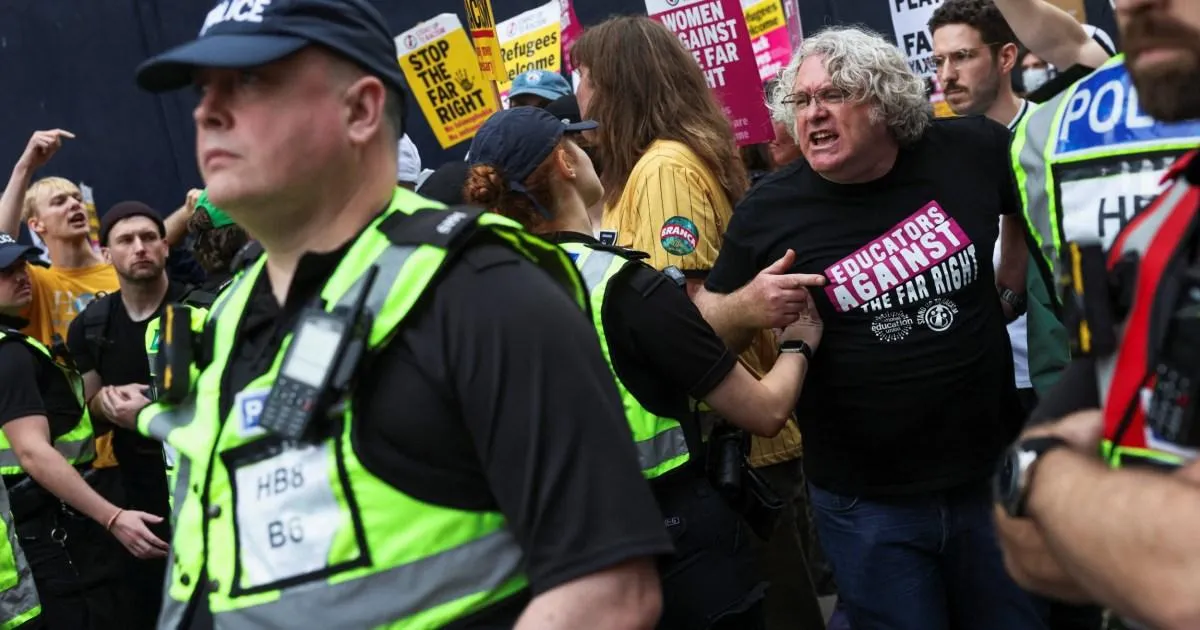
Police clash with protesters stopping students – Tommy Robinson, the far-right activist known for his controversial views on Islam, faced heated resistance from demonstrators as he prepared to speak at the Oxford Union. The event, which had been delayed due to growing unrest, sparked significant debate and disruption, with police and protesters locked in a tense standoff outside the venue. Despite the chaos, the debate eventually took place, albeit with reduced attendance and heightened security measures.
The Oxford Union’s Controversial Debate
The Oxford Union, a historic institution where notable figures such as Winston Churchill, Bill Clinton, and OJ Simpson have once addressed crowds, became the focal point of a divisive discussion. Robinson’s appearance, alongside comedian Laurence Fox, centered on the theme of whether the West is justified in being “right to be suspicious of Islam.” This topic, which has ignited debates across political and cultural spheres, drew both supporters and opponents to the event, creating a polarized atmosphere.
Before the debate, parts of Oxford were placed under lockdown as tensions escalated. Local authorities reported that security barriers were erected around the Union building to manage the crowd, while police intervened to prevent protesters from blocking entry. A statement from the Thames Valley Police clarified that the decision to restrict access was made by the event organizers, not the police themselves, emphasizing that law and order was not compromised during the process.
Protesters and the Outcry Over Free Speech
Anti-Robinson demonstrators, some of whom had traveled from as far as Cardiff, gathered outside the venue, waving signs that read “No Islamophobia, no antisemitism” and “Stop the far-right.” Their efforts to prevent the debate led to violent clashes, with reports of a protester being kicked in the head and another punched in the face as attendees attempted to push through the security cordon. One participant, Tammy Samuels, 23, described the incident with vivid frustration: “He’s vile. I cannot believe such a prestigious organisation as this has allowed him here. I saw that poor bloke have his head kicked.”
The debate, which commenced at 8:30pm, was attended by a smaller audience than expected. Inside the Union chamber, attendees reportedly found the space “half empty,” suggesting that the controversy surrounding the speaker’s views had deterred many from attending. Meanwhile, supporters of Robinson, adorned with Union Jacks and St George’s flags, stood in opposition to the protesters, separated by police and private security. The two groups engaged in shouting matches, with insults like “never trust a lefty with your kids” echoing through the streets.
Public Figures and Community Voices
Politicians and activists voiced their concerns about the event. Former Conservative MP Jacob Rees-Mogg, who opposed Robinson, took to social media minutes before the debate began, urging police to allow entry: “Please could the Thames Valley Police allow people into the Oxford Union. Protesters are blocking the entrances while law and order is not being upheld.” This sentiment was echoed by activist Abdullah al Andalusi and podcaster Michael Doward, who joined Rees-Mogg in criticizing the invitation as a platform for far-right ideology.
On the other side, some attendees defended the debate, arguing that it was essential for open discourse. Alex Hernandez, a second-year law student, expressed his hope for a “genuinely engaging conversation” at the event, stating, “Ultimately the conversation should be had and should be listened to. It starts to get a bit dangerous when people start getting no-platformed.” His remarks highlighted the ongoing debate about balancing free speech with the need to protect marginalized groups from hostile rhetoric.
Reactions from the local community were mixed. Anneliese Dodds, the MP for Oxford East, criticized the Union for giving a “loudspeaker” to the far-right by hosting Stephen Yaxley-Lennon under his alias. The city council, meanwhile, insisted that the organization should cover the costs of the security operation, which included extensive police resources and road closures. Leader of Oxford City Council, Susan Brown, emphasized the importance of maintaining a welcoming environment: “Oxford is a proudly diverse, multicultural city. While we are committed to free speech and open debate, that must be balanced against ensuring all our residents can live free from hatred, intimidation, and harm.”
Earlier, a march organized by groups such as Stand Up To Racism had drawn large crowds to the streets, with participants carrying signs that condemned Islamophobia and antisemitism. The event marked a significant moment in the city’s ongoing efforts to address far-right influence, with anti-racist advocates chanting slogans like “Oxford is anti-fascist” and “racist scum off our streets.” These demonstrations underscored the deep divisions in public opinion, as some viewed Robinson as a necessary voice in the debate over Western attitudes toward Islam, while others saw him as a threat to social harmony.
The Oxford Union’s decision to host Robinson has sparked broader conversations about the role of institutions in shaping public discourse. While the venue has a tradition of hosting diverse speakers, the controversy over this particular event has raised questions about its commitment to inclusivity. As the debate unfolded, the tension between supporters and opponents remained palpable, with the physical confrontation outside symbolizing the intensity of the ideological clash.
Amid the uproar, one unnamed attendee shared their perspective, revealing how the event had caught them off guard: “It’s really disappointing. As I’m not from the UK, I actually only found out who Tommy Robinson was yesterday.” This anecdote highlights the extent to which the debate has sparked international interest and the unexpected impact it has had on those unfamiliar with the far-right figure’s influence.
As the debate concluded, the incident left lingering questions about the role of protest in public events and the balance between free speech and community safety. The Oxford Union’s choice to invite Robinson, paired with the security measures taken to manage the situation, has become a symbol of the complex tensions surrounding far-right discourse in a multicultural society. Whether the event will be remembered as a triumph for open dialogue or a setback for inclusivity remains a topic of discussion among students, activists, and political leaders alike.