

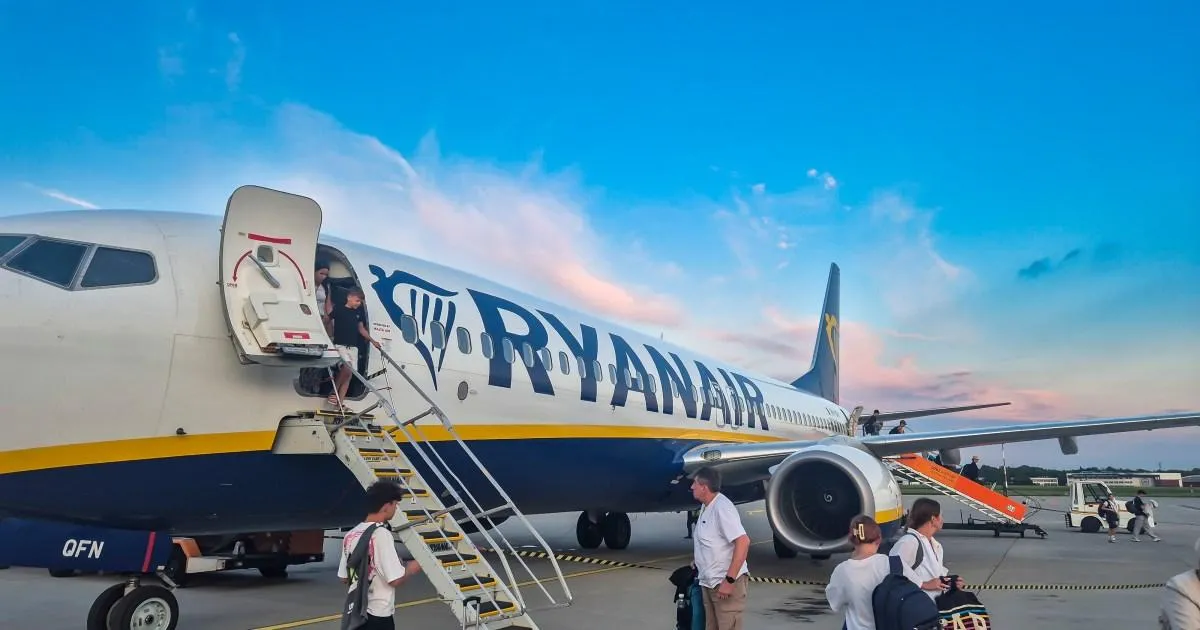
Ryanair Faces Allegations Over Flight Delay Reason Change to Avoid Compensation
Ryanair accused of changing reason for flight – Passengers embroiled in a recent controversy have accused Ryanair of altering the cause of their flight delay to sidestep compensation claims. The incident, which has sparked debate over airline transparency, involves a traveler who initially received a notification citing technical issues as the reason for a two-hour delay but later found the airline reclassified the problem as adverse weather conditions. This shift has raised questions about whether Ryanair is leveraging “extraordinary circumstances” to minimize its financial obligations under UK passenger rights laws.
The Compensation Framework and UK Travel Trends
Flight delays are a common frustration for travelers, often resulting in missed connections or extended wait times. However, under UK regulations, passengers may be entitled to compensation when delays exceed three hours. In 2024, over 145 million passengers departed from UK airports, with one-third encountering delays or cancellations. Of these, approximately 3.4 million were British travelers, who could claim up to £520 each for delays lasting more than three hours. Yet, the eligibility criteria hinge on the airline’s ability to prove that the delay was not due to its own operational failures.
A Case of Shifting Blame
The dispute centers around a passenger who boarded a Ryanair flight from Barcelona to London Stansted. Initially, she was informed of a two-hour delay attributed to “technical difficulties” with the aircraft. However, upon landing, the airline retracted this explanation, stating the delay was instead caused by adverse weather conditions affecting the plane’s earlier sectors. This change left the traveler confused, as the Irish carrier had previously acknowledged the technical issue as the primary cause.
“If your flight is delayed, and UK261 applies to it, your airline must look after you while you are delayed. This includes providing food and drink based on the length of the delay and accommodation if you are delayed overnight,” the Civil Aviation Authority (CAA) explains. The authority also notes that compensation is available if the delay results in passengers arriving more than three hours late, with a five-hour delay allowing the option to cancel the trip and receive a refund.
Despite the CAA’s guidelines, airlines can claim compensation exemptions if they assert that the delay was due to “extraordinary circumstances.” These conditions, while not technically defined, are often interpreted to include events beyond the airline’s control, such as severe weather. However, legal experts argue that technical problems, unless classified as truly exceptional, typically fall under the airline’s responsibility.
The Legal Battle Over Delay Causation
Allana Wilckens, a legal consultant specializing in passenger rights at Flightright UK, highlights the importance of accurately identifying the cause of delays. She states that if an airline can demonstrate that the delay was caused by genuine extraordinary circumstances, such as adverse weather, and that the airline took all reasonable measures to mitigate it, compensation may be waived. However, in this case, the passenger’s delay stretched to three hours and 20 minutes, making her claim for €250 (£217) compensation legally valid.
“Airlines do not have to pay compensation if they consider the delay to be caused by ‘extraordinary circumstances,’” Wilckens explains. She adds that the initial claim of technical difficulties is crucial, as ordinary technical problems are generally not deemed extraordinary. If multiple factors contributed to the delay, the airline should clarify how each played a role rather than attributing the entire issue to weather.
The case also underscores the challenges of proving an airline’s claim. The traveler, who shared her experience on Reddit, admits she was unaware of the original reason for the delay because she forgot to capture a screenshot of the initial notification. This oversight has left her in a precarious position, unable to definitively prove the delay was caused by technical issues rather than weather.
Industry Perspectives on Compensation and Disputes
Tim Riley, Managing Director of True Traveller and Chairman of the UK Travel Industry Association, emphasizes the role of Alternative Dispute Resolution (ADR) in resolving such conflicts. He notes that passengers can challenge the airline’s decision through the ADR process, which is designed to mediate disputes efficiently. However, he also points out that insurance coverage for delays often follows different rules than statutory compensation.
“If passengers believe their flight delay was caused by a technical issue over adverse weather, they can challenge the airline’s decision through the appropriate ADR process,” Riley says. He adds that while the UK law entitles passengers to compensation for delays exceeding three hours, most travel insurance policies only trigger payouts after significantly longer disruptions, often 12 hours or more.
This discrepancy between legal entitlements and insurance policies has left some travelers in a tricky situation. Even if the delay meets the criteria for compensation under UK law, their insurance may not cover it, depending on the policy terms. This highlights the need for passengers to understand both the regulatory framework and their insurance coverage when planning trips.
The Role of Documentation in Passenger Rights Claims
Documentation plays a pivotal role in determining compensation eligibility. In this instance, the absence of a screenshot from the original delay notification has complicated the passenger’s case. While the airline claims the delay was due to weather, the traveler argues that the initial information contradicts this, suggesting a possible attempt to reframe the situation.
Wilckens acknowledges the importance of evidence in such disputes. She notes that airlines often rely on real-time updates to justify changes in delay causes, but passengers must be proactive in recording these details. “If an airline changes its explanation after the fact, passengers need to have proof of the original reason to support their claim,” she says.
Multiple Causes and the Complexity of Delay Attribution
Complicating the issue is the possibility of multiple contributing factors. For example, a flight may experience a delay on an earlier sector due to weather, followed by a technical problem in subsequent legs. In such cases, Wilckens argues that airlines should provide a breakdown of how each factor affected the overall delay. “If that is the case, Ryanair should explain how much of the delay was caused by each issue rather than attributing the entire delay to weather,” she explains.
This nuance is critical in determining whether the airline’s explanation is legitimate. If a technical problem occurred on an earlier sector and weather conditions impacted the later portion of the journey, the airline must demonstrate that it could not have avoided either issue through reasonable measures. Failing to do so may leave them liable for compensation despite their initial claim.
Implications for Travelers and Airlines
The controversy surrounding this delay highlights broader tensions between airlines and passengers. While airlines have the right to adjust their explanations for delays, they must do so transparently. Travelers, on the other hand, need to be vigilant in documenting all communication related to their flight’s status. This incident also serves as a reminder of the importance of understanding the specific rules governing compensation, as they can vary depending on the cause and duration of the delay.
As the debate continues, regulatory bodies like the CAA may need to clarify how “extraordinary circumstances” are defined and how airlines can justify shifting blame. For now, the case remains a cautionary tale about the value of timely documentation and the need for transparency in the airline industry.
Additional Offers for Travelers
While the delay dispute takes center stage, travelers can still explore savings on their next trips through Metro Deals. These promotions include exclusive discounts on spa days, hotel stays, and holiday packages. For instance, a spa day for two with treatments, lunch, and prosecco is available at up to 57% off, while a hotel stay with return flights starts from as low as £92 per person. A 4* beach holiday in Lanzarote also offers flights at up to 58% savings.
Such deals provide an opportunity for travelers to offset the inconvenience of delays, but they also underscore the importance of being informed about both the financial and legal aspects of their journeys. As Ryanair faces scrutiny over its delay explanations, passengers may find comfort in the availability of cost-effective travel options to ease the stress of unexpected disruptions.