
Iran’s strikes on Gulf energy sites rattle markets and raise recession fears
Iran’s Strikes on Gulf Energy Sites Rattle Markets and Raise Recession Fears
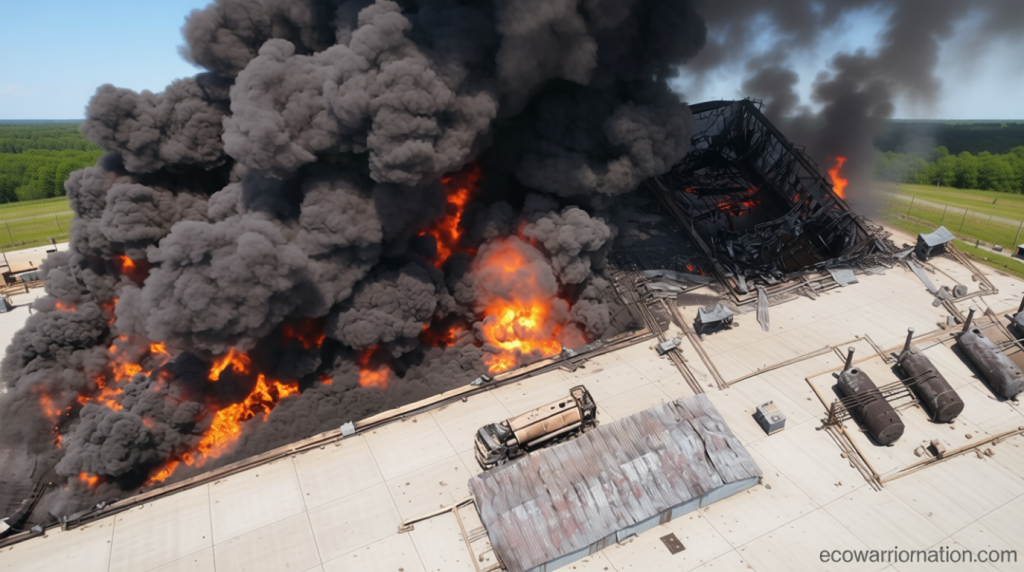
One week after the conflict began, Iran’s relentless attacks on key energy infrastructure have sent shockwaves through global markets. The strikes, part of a broader campaign against regional targets, have escalated tensions and raised concerns about economic repercussions. As the war unfolded, Tehran’s aerial assaults expanded, hitting not only Gulf nations but also extending to Azerbaijan, marking a new phase in the conflict.
The disruption has been particularly severe in Qatar, where Iranian drones targeted critical facilities in Mesaieed and Ras Laffan Industrial City. This led to a halt in the country’s liquefied natural gas (LNG) production at its largest plant, a vital contributor to 20% of the world’s supply. The blow has affected energy balances in both Asian and European markets, causing immediate price spikes and uncertainty.
“If this war continues for a few weeks, GDP growth around the world will be impacted. Everybody’s energy price is going to go higher. There will be shortages of some products and there will be a chain reaction of factories that cannot supply,”
— said Qatar’s Energy Minister Saad al-Kaabi in an interview with the Financial Times, warning that the conflict could destabilize global economies.
Meanwhile, Saudi Arabia’s largest oil refinery was forced to close following another wave of Iranian strikes, while Iraqi oil output and Israeli gas fields also faced disruptions. Dubai’s ports, among the world’s most significant, reportedly suffered damage, further complicating trade logistics. The UK Foreign Office noted that although attacks have eased in frequency, the focus on economic and energy infrastructure has intensified.
Dr. Yousef Alshammari, president of the London College of Energy Economics, emphasized that a prolonged blockade of the Strait of Hormuz—where 20% of global oil transits—could push the world into recession. “As we move toward summer, the risk of a global downturn may grow,” he stated. “China, a major buyer of Iranian oil, could apply political pressure if the situation worsens,” Alshammari added, highlighting the potential for a supply chain crisis.
Despite rising gas prices, Europe saw a less dramatic surge than anticipated, attributed to weak demand and robust oil market supplies. However, the attacks on Azerbaijan have puzzled analysts. Former US ambassador Matthew Bryza questioned the logic behind targeting the region, noting that Azerbaijan’s President Ilham Aliyev had previously shown support for Iran by visiting its embassy after the war started. “It makes no sense,” Bryza remarked, citing the timing of Iran’s strike following Aliyev’s gesture of solidarity.
