
Why Arsenal Were Not Awarded a Penalty in PSG Champions League Final
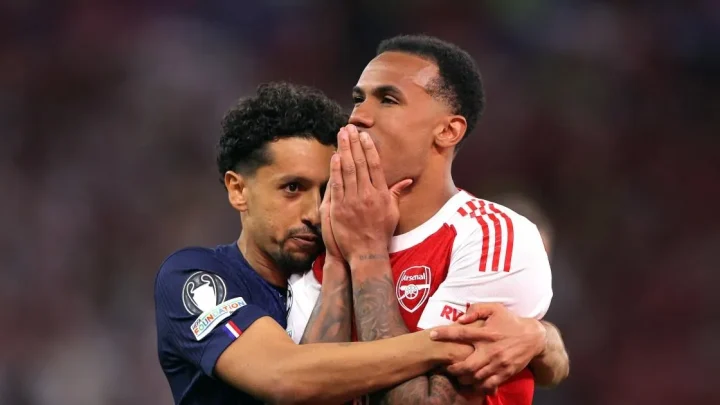
Why Arsenal were not awarded a penalty – Arsenal’s penalty appeal was dismissed by the referee during their heart-wrenching Champions League final loss to Paris Saint-Germain (PSG). The Gunners, who had secured the Premier League title just weeks prior, entered the match in Budapest with a strong start, highlighted by Kai Havertz’s breathtaking goal. Yet, PSG’s resilience reshaped the game, as Ousmane Dembele equalized following Cristhian Mosquera’s challenge on Khvicha Kvaratskhelia. This pivotal moment led to extra time, where Arsenal’s hopes of a dramatic turnaround were dashed when the referee rejected their penalty call. The decision sparked immediate debate, with fans and analysts questioning whether the right call was made.
The Missed Opportunity in Extra Time
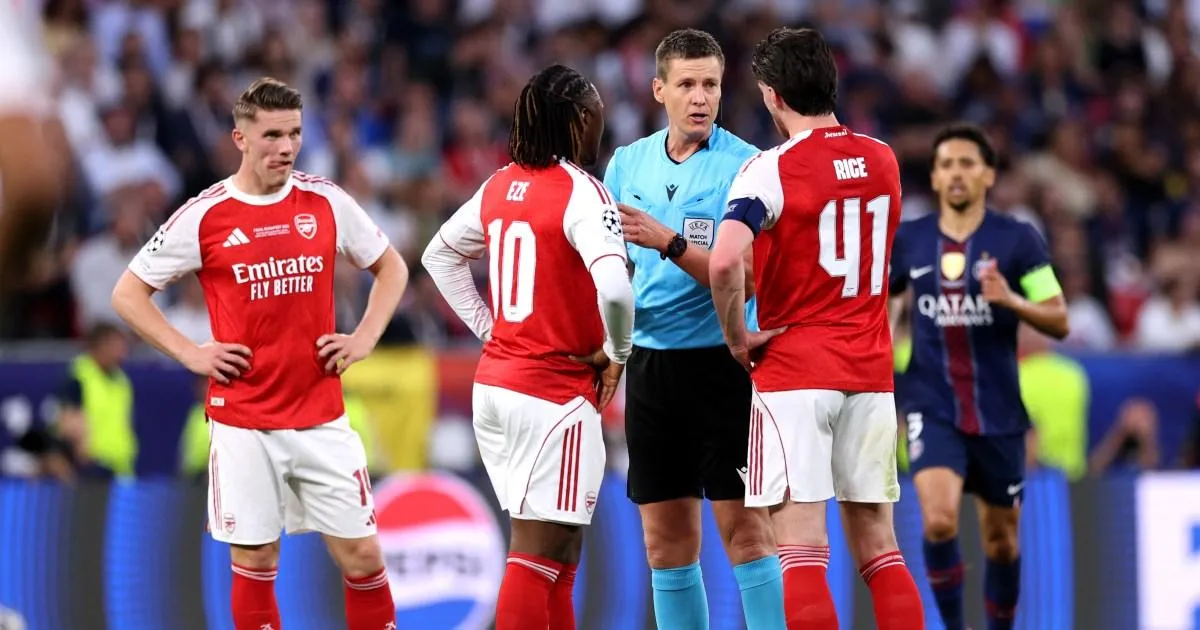
As extra time commenced, Arsenal’s players and coaching team were vocal in their belief that a penalty should have been awarded. The incident in question involved substitute Noni Madueke colliding with PSG full-back Nuno Mendes, with Madueke falling to the ground after the contact. Despite the Arsenal bench’s visible frustration, the Video Assistant Referee (VAR) confirmed the decision, leaving the Gunners without a crucial chance to reclaim the lead. The missed penalty became a focal point of the match, as critics questioned the consistency of decisions in high-pressure moments.
Declan Rice, who led the appeal, was later booked for his passionate reactions to the call. The Arsenal captain expressed his belief that the referee missed a key moment, stating in his post-match interview: “I was certain we deserved the penalty. I’ve not seen it back yet, but on the pitch, I thought he was ahead of Mendes. We had a similar situation against Bayer Leverkusen, and the referee took action. Maybe it wasn’t clear enough for him to make the call, but our players and bench believed it was.” Rice’s disappointment underscored the broader frustration within the team over the missed chance.
Analysts Weigh In on the Decision
Following the incident, pundits and former officials dissected the referee’s call. Graham Scott, a retired Premier League referee, supported the decision, noting: “There will be plenty of comments questioning the call, but I doubt a VAR would have seen enough to overturn it. Ultimately, I prefer the referee staying out of the situation rather than giving in to pressure.”
“That was definitely a penalty for PSG, and they had a strong case for a second yellow card to be shown to Cristhian Mosquera,” Scott added. “However, it was missed in the first place, and the VAR did not intervene. The consistency of decisions in high-stakes matches is always under scrutiny, but this one left Arsenal with lingering questions.”
Ally McCoist, commenting on TNT Sports, argued the incident was not a clear error but a common occurrence. “I’m not sure it’s a clear and obvious mistake, but I’ve seen them given before,” he said. Steven Gerrard echoed similar thoughts, emphasizing the challenge by Mendes. “Noni Madueke does great, he gets there first. I think it’s very, very clumsy from Mendes. Arsenal can feel very hard done by,” Gerrard added. Their insights highlight the subjective nature of penalty decisions, even with VAR assistance.
The Penalty Dispute and Its Aftermath
While Arsenal’s appeal was denied, PSG’s defender Cristhian Mosquera avoided a second yellow card after his tackle on Kvaratskhelia. Mosquera had already received a booking for time-wasting earlier in the game, but many fans questioned why he wasn’t shown a red card for the equalizer. Dale Johnson, BBC’s Football Issues correspondent, explained the distinction: “Mosquera could not receive a second yellow card because it would be deemed stopping a promising attack. A penalty is awarded when a foul occurs inside the box, while a second yellow is for time-wasting or delaying the game. Both are distinct sanctions, and the rules were applied correctly.”
The debate over Mosquera’s actions and the missed penalty deepened as the match progressed. Analysts split on whether the challenge was deliberate or fair, with some defending the referee’s call. Meanwhile, the lack of a penalty for Arsenal raised concerns about the consistency of decisions in critical moments. The outcome of the final, decided in a penalty shootout, further highlighted the impact of the referee’s call on the team’s fate.