

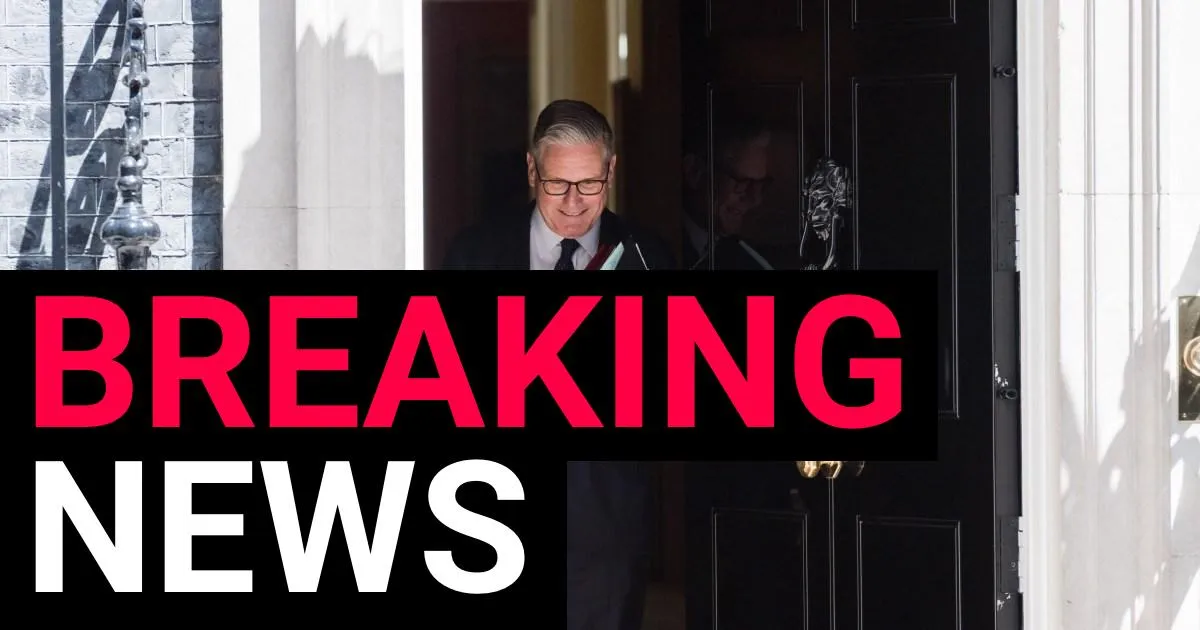
Keir Starmer to Remain as MP After Resigning as Prime Minister
Keir Starmer to stay on as MP – Following a period of uncertainty, Keir Starmer’s decision to step down as Prime Minister has been clarified by his spokesperson, who confirmed that the Labour leader will retain his parliamentary seat. The announcement comes as questions arose about whether Starmer would continue representing his constituents or if his successor—expected to be Andy Burnham—would be thrust into a by-election. This development highlights the political maneuvering that will unfold in the wake of his departure.
“He’s going to remain as an MP,” stated Starmer’s official representative, addressing concerns about his future in the House of Commons. The remark underscores the PM’s intent to maintain a presence in the political arena beyond his tenure as head of government.
Starmer’s resignation from the role of Prime Minister does not necessarily mean he will relinquish his parliamentary seat. The Holborn and St Pancras constituency in north London, which he has represented for years, could become a focal point for the Green Party, led by Zack Polanski, as they seek to capitalize on the vacancy. However, Starmer’s commitment to his role as an MP suggests he may continue to influence policy and politics from the backbenches.
During a recent Cabinet meeting, Starmer expressed his vision for the future, stating: “This is the end of my journey, but this is not the end of yours.” The quote, delivered with a sense of resolve, indicates his confidence in the incoming leadership while acknowledging the challenges ahead. His words have been interpreted as a signal that he will remain an active figure in the party’s strategy, even as he transitions out of the executive role.
The political landscape is shifting rapidly, with Burnham poised to take over as Prime Minister. Yet, the question of whether Starmer’s departure will lead to a by-election in his constituency remains a point of debate. Such a contest would not only test the Labour Party’s cohesion but also provide an opportunity for the Greens to gain ground in a traditionally safe seat. The implications of this move could ripple through the next parliamentary term, influencing the balance of power in key legislative areas.
Political Tensions During Prime Minister’s Questions
The confirmation of Starmer’s exit was preceded by a heated session of Prime Minister’s Questions, where tensions were palpable. Notably, Andy Burnham was absent, leaving the spotlight on Starmer as the final leader of the coalition. The session, however, became a platform for Tory leader Kemi Badenoch to target her potential future opponent, delivering a sharp critique of Starmer’s leadership style.
“A pair of eyelashes and a black T-shirt,” Badenoch quipped, mocking Starmer’s appearance and demeanor. The remark, though lighthearted, reflects the personal attacks that often accompany political transitions. Her comments were met with mixed reactions, with some in the Labour Party viewing them as a strategic move to undermine Starmer’s legacy.
Badenoch’s barb was not without precedent. Earlier in the session, she had been reprimanded by Speaker Lindsay Hoyle for directing her criticism toward Education Secretary Bridget Phillipson. Hoyle’s intervention emphasized the need for respectful discourse during parliamentary proceedings, even as the Tory leader continued to challenge her Labour counterparts.
The fallout from Badenoch’s remarks was further highlighted when Chancellor Rachel Reeves turned to Phillipson in astonishment after the Tory leader labeled her a “spiteful class warrior.” This exchange underscored the ideological divides within the government and the personal stakes involved in the political battle. Phillipson, who grew up in poverty, faced accusations of undermining education funding, a charge that has become a recurring theme in the campaign against Labour’s policies.
“If she knew so much about poor children, she would not have given them fewer teachers,” Badenoch added, framing her critique as a call for accountability. The statement has been interpreted as a direct attack on Phillipson’s record, even as it raises questions about the fairness of the political discourse.
Speaker Lindsay Hoyle’s response to Badenoch’s remarks carried a warning about the language used in parliamentary debates. “Can I just say, think about the language we’re using, because when we leave this chamber don’t be surprised when constituents feel they can use the same language against each other,” Hoyle cautioned. His words serve as a reminder of the power of rhetoric in shaping public perception and the potential consequences for party unity.
The broader implications of Starmer’s exit extend beyond his immediate constituency. As the Labour Party prepares to navigate the transition, the leadership vacuum could test the party’s ability to maintain its momentum. Burnham, who has been a consistent voice in the government, now faces the challenge of leading with Starmer’s legacy as a reference point. Meanwhile, the Greens, with their focus on environmental and social policies, may position themselves as a viable alternative in the upcoming by-election.
Starmer’s decision to remain an MP also signals a strategic shift in his career. By retaining his seat, he ensures a continued platform for his ideas, potentially influencing the next generation of Labour policies. This move may allow him to advocate for specific causes, such as education reform or economic stability, without the constraints of executive office.
Engaging with the Public: Metro’s Politics Newsletter
To stay informed about the evolving political landscape, readers are encouraged to subscribe to Metro’s politics newsletter. The publication, which delivers breaking news and analysis directly to subscribers, offers insights into how Westminster’s chaos impacts everyday life. Whether it’s changes in healthcare policy or shifts in economic strategy, the newsletter provides a clear lens through which to understand the broader implications of political decisions.
For those eager to participate in the conversation, Metro also invites contributions through its digital platform. Readers can email webnews@metro.co.uk to share stories or submit videos and pictures that capture the pulse of current events. This engagement reflects the media’s role in connecting political figures with the public, ensuring that the electorate remains informed and involved.
As the transition period unfolds, the political community will watch closely for developments in both the Commons and the wider electorate. Starmer’s continued presence as an MP, combined with the challenges facing Burnham and the Greens, sets the stage for a dynamic and unpredictable political season. The upcoming by-election and the shifting alliances in Parliament will determine the next chapter in the UK’s political narrative.
With the reCAPTCHA system safeguarding the site, users can access the latest updates without concern for online fraud. The combination of rigorous verification and timely news ensures that the political discourse remains accessible and relevant to all. As Starmer steps down from the prime ministerial role, the stage is set for a new era of leadership and debate in the House of Commons.
For further reading, explore related articles such as Jesy Nelson’s critique of the health minister’s response to her daughter’s campaign, or the impact of Raneem’s Law on survivors of abuse. These pieces provide additional context to the ongoing political shifts and their real-world effects on public policy and society.