
Why Jude Bellingham Avoided Red Card at World Cup
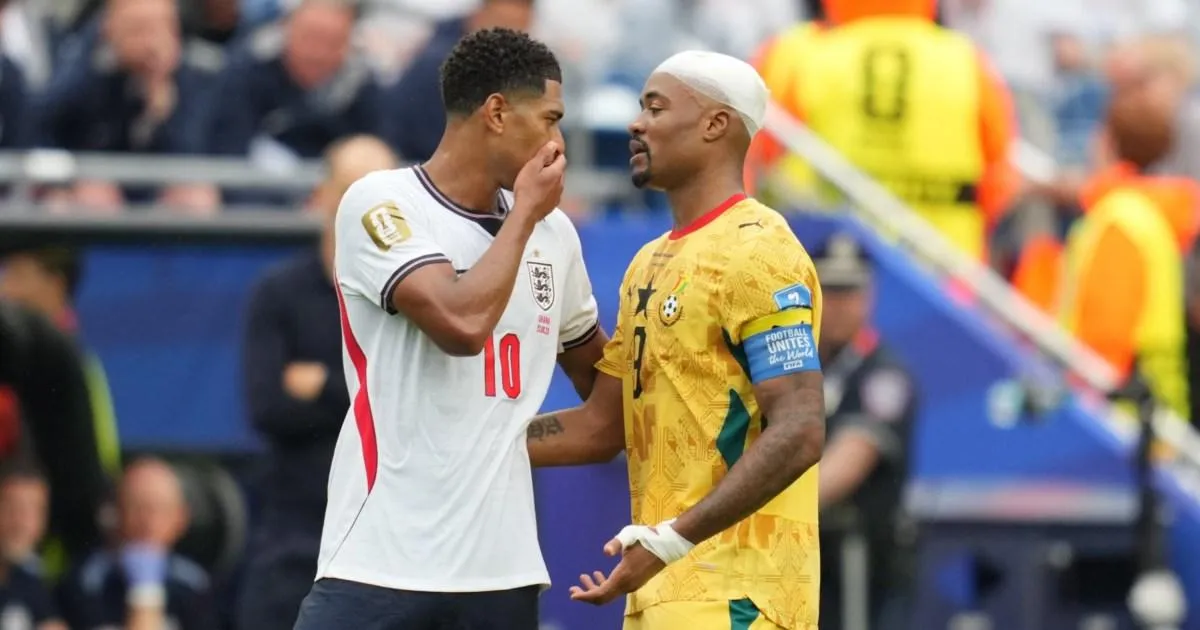
Why Jude Bellingham avoided red card – Jude Bellingham narrowly escaped a red card during England’s 0-0 draw with Ghana at the World Cup, sparking widespread debate over the new rule’s interpretation. The midfielder’s actions during a post-half-time exchange with Ghana’s Jordan Ayew became a focal point for fans and analysts, questioning whether the controversial regulation was applied fairly. While the match itself was uneventful, Bellingham’s behavior highlighted the complexities of enforcing this rule, which aims to penalize players for obscuring their mouths during confrontations. The decision to spare him raised eyebrows, as it contrasted with earlier incidents under the same guideline.
The Controversial New World Cup Rule
The rule, introduced by FIFA, requires players to be sent off if they cover their mouths during verbal exchanges with opponents. This change was implemented following a high-profile case involving Paraguay’s Miguel Almiron, who received a red card after a heated argument with Turkey’s player during the tournament’s opening stages. Almiron’s dismissal set a precedent, but the inconsistency in applying the rule to Bellingham’s similar conduct has since ignited discussions. Critics argue that the regulation is too subjective, while supporters claim it addresses verbal aggression effectively.
Bellingham’s Escalation and Referee’s Call
During the England vs. Ghana match, Bellingham was seen with his hand over his mouth in a tense interaction with Ayew. The moment, captured on video, initially appeared to fit the rule’s criteria, leading to speculation about his fate. However, the referee opted not to issue a red card, citing the context of the exchange. This decision has been scrutinized, as it underscores how officials weigh the intent and tone behind a player’s actions. Bellingham’s ability to avoid punishment despite the appearance of a repeat offense has drawn attention to the rule’s interpretive challenges.
Ghana’s coach, Carlos Queiroz, later criticized Bellingham’s behavior, suggesting foul language was involved. Yet, the footage revealed a more nuanced scenario, showing the midfielder engaging in a calm conversation with Ayew. The contrast between Queiroz’s accusation and the referee’s leniency highlights the importance of visual context in officiating. This has led to calls for clearer guidelines to reduce ambiguity in enforcing the new rule.
England’s ‘Second-Game Fever’ and Team Dynamics
The draw with Ghana marked England’s fourth consecutive stalemate in the second game of a major tournament, a pattern reminiscent of Euro 2020. Bellingham, a key player in the squad, referred to this trend as “second-game fever,” emphasizing the psychological hurdles teams face after their opening matches. Despite the lack of goals, the players and fans maintained composure, which stood in stark contrast to the heated moments in previous games. This calmness suggests that the team is adapting to the pressure, even as individual actions remain under the microscope.
FIFA’s Intent and Officiating Consistency
FIFA introduced the mouth-covering rule to curb verbal abuse, aiming to promote respect and sportsmanship in high-stakes encounters. However, its application has been inconsistent, as seen in the divergent outcomes of Almiron’s and Bellingham’s incidents. While Almiron’s case was seen as a clear violation, Bellingham’s similar conduct was interpreted differently. This disparity has led to questions about whether the rule is being applied uniformly or if it’s being used selectively to target specific players. Analysts stress the need for referees to maintain a consistent approach to ensure fairness.
As the World Cup progresses, the rule’s effectiveness will depend on how consistently it is enforced. Bellingham’s avoidance of a red card may serve as a case study for future matches, illustrating the balance between accountability and context. Fans remain divided, with some applauding the referee’s judgment and others calling for stricter adherence to the regulation. The incident underscores the evolving nature of football’s disciplinary framework and the role of officiating in shaping its outcomes.