
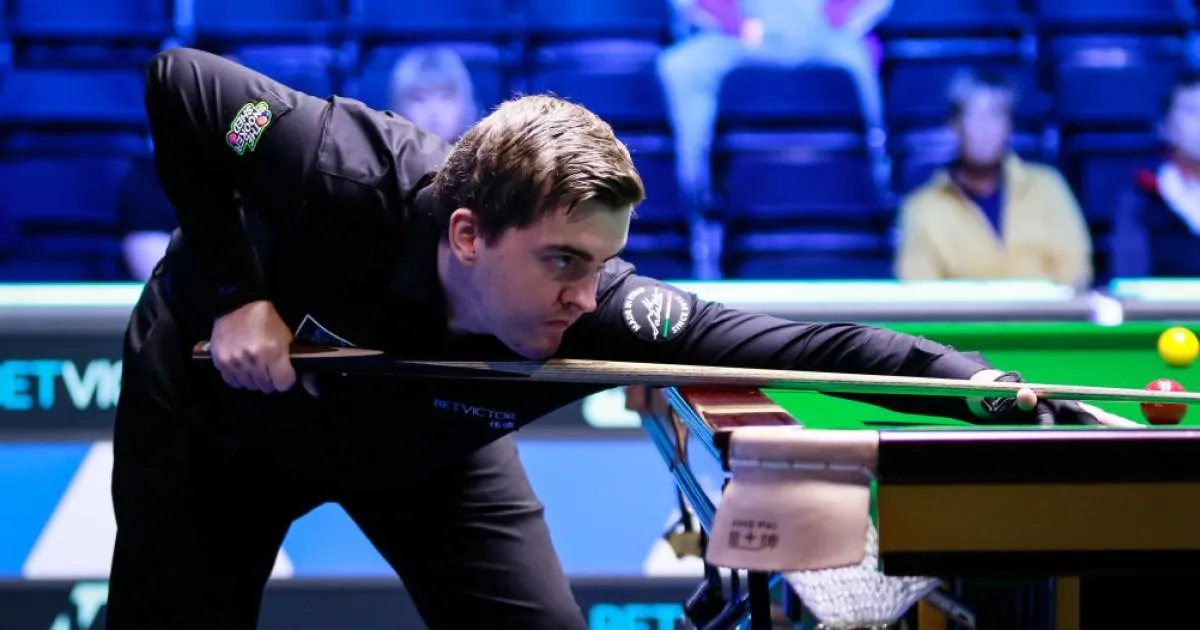
Ross Muir Channels Personal Loss into Snooker Comeback
Ross Muir using tragedy as driving – Ross Muir, a 30-year-old snooker player, has faced significant challenges throughout his career, yet he’s finding strength in personal adversity to push himself toward greater success. His journey, once marked by uncertainty and setbacks, now seems to be taking a turn for the positive as he refocuses on his craft following a profound loss in his life.
Early Career and a Struggle for Consistency
Muir’s professional debut came in 2013, when he earned a place on the snooker tour after a successful run through Q School at the age of 17. While his early years in the sport showed promise, recent performances have left him feeling like he’s been “definitely not showing anything at all,” as he puts it. His best result in ranking events, a last-16 run, feels like a distant memory compared to the potential he believes still lies ahead.
“I’ve definitely not shown anything at all,” Muir admitted in a recent interview. “The last year has been tough, and a lot of the challenges I’ve dealt with have distracted me from playing at my best.” This period of fluctuation has been a test of his resilience, but he’s determined to move past it and reclaim his form.
Loss of a Mother: A Catalyst for Change
The emotional weight of his mother’s passing has been a pivotal moment in Muir’s life. After her diagnosis with heart failure over a year prior, she spent several months in hospital before her death in February. During this time, snooker took a backseat as he devoted himself to caring for her, often prioritizing her well-being over his own performance.
“Her death has left a massive gap in my life,” Muir reflected. “She was my best friend and always supported me through snooker. We used to chat after every match, and she loved watching my games. It’s still surreal to think about how much she meant to me.”
Despite the pain of his loss, Muir credits his mother with giving him the motivation to return to the sport. “She had a good talk with us,” he shared. “She wanted me to look forward and focus on being a snooker player again. Even though we spent a lot of time together, she still believed in my ability to succeed.”
Rebuilding Momentum: A New Approach
After a period of emotional and physical withdrawal, Muir has re-entered his training with renewed intensity. “I took a step back from practice last year,” he said. “I was just going tournament to tournament, and every moment I had was spent trying to help my mum.” Now, he’s fully committed to refining his game, addressing technical flaws, and regaining the confidence that once defined his play.
“After the World Championship qualifiers, I shook Robbie Williams’ hand, got in the car, and came home. That was when I switched back into work mode,” Muir explained. “The next day, I was on the practice table, and I’ve been working harder than I ever have before. I’m tackling all the issues in my game, and I’m really pleased with how things are shaping up.”
Muir acknowledges that tragedy can either break a person or become a source of motivation. “I know there are two ways a tragic event can affect someone: either you’re crushed by it, or you use it as fuel,” he said. “I’ve tried to channel this loss into a driving force, and I think it’s working.”
Health Struggles: A Major Setback
One of the most destabilizing periods in Muir’s career came in 2019, when he was plagued by severe ocular migraines. These episodes, which caused nearly 90% vision loss daily, forced him to step away from the professional tour for a time. “I was pretty much not seeing anything,” he recalled. “It was like being in a room filled with smoke, and it happened every single day, sometimes multiple times a day.”
“The migraines were pressure-driven,” Muir added. “The more intense the match, the worse it would get. I thought I might have to retire in my twenties, but I’ve come back stronger because of it.”
These health issues, combined with the emotional toll of his mother’s illness, created a perfect storm of challenges. Yet, Muir sees this as a turning point. “I’ve been a bit turbulent with various things over the years,” he said. “But I’m trying to be more consistent and stable now. I don’t want to just grind my way to the top 64 and then fall back down. That’s not the kind of player I want to be.”
Training and Future Goals
Currently based in Musselburgh, Muir practices alongside seasoned professionals like John Higgins, Anthony McGill, and Scott Donaldson. His training environment, housed in an old church building, has become a symbol of his dedication to the sport. “This is where my table has been for years,” he said. “It’s a place that has seen me grow, and now it’s helping me rebuild.”
As a world number 109, Muir knows he must demonstrate improvement this season to secure his place on the tour. His focus is on consistency, and he’s aiming to showcase the progress he’s made. “I’ve got the game and the determination,” he said. “I know I’m capable of pushing further, and that’s what I want to do.”
“Last 16 runs have been my best so far, but that’s definitely not my limitation,” Muir emphasized. “I’m starting to play proper snooker again. I don’t need to rely on grinding my way through matches anymore—I’m ready to compete at a higher level.”
Muir’s journey reflects a blend of personal and professional growth. While he’s faced moments of despair, he’s now embracing the lessons learned from his struggles. “I’ve realized that tragedy can be a powerful motivator,” he said. “It’s cruel, but it also pushes you to find strength in the most unexpected places.”
With his sights set on the future, Muir is determined to turn his recent challenges into a foundation for success. Whether it’s through the support of his coaches, the memories of his mother, or the resilience built during his health battles, he’s ready to make his mark on the snooker world once more. The path ahead may still be uncertain, but his mindset has shifted from doubt to purpose, and that’s the most crucial step in any comeback story.