
Caleb hits upon a risky new plan in Emmerdale and sets Kerry to task
Caleb hits upon a risky new plan – In a bold move to reclaim his former cunning, Caleb Miligan (William Ash) embarks on a scheme to reignite his criminal instincts within the fictional village of Emmerdale. What begins as a calculated attempt to assert his authority unexpectedly unveils a perilous twist that could shake the foundations of his recent ventures.
The businessman’s confidence was recently shaken after falling prey to a meticulously crafted scam orchestrated by Jai Sharma’s (Chris Bisson) son, Archie. This incident left Caleb’s pride in tatters, prompting him to seek a way to reclaim his reputation as a shrewd and resourceful figure. His solution? A fresh endeavor in the world of counterfeit goods—specifically, selling imitation shoes. This decision not only marks a return to his roots but also positions him as a contender in the cutthroat world of Emmerdale’s local markets.
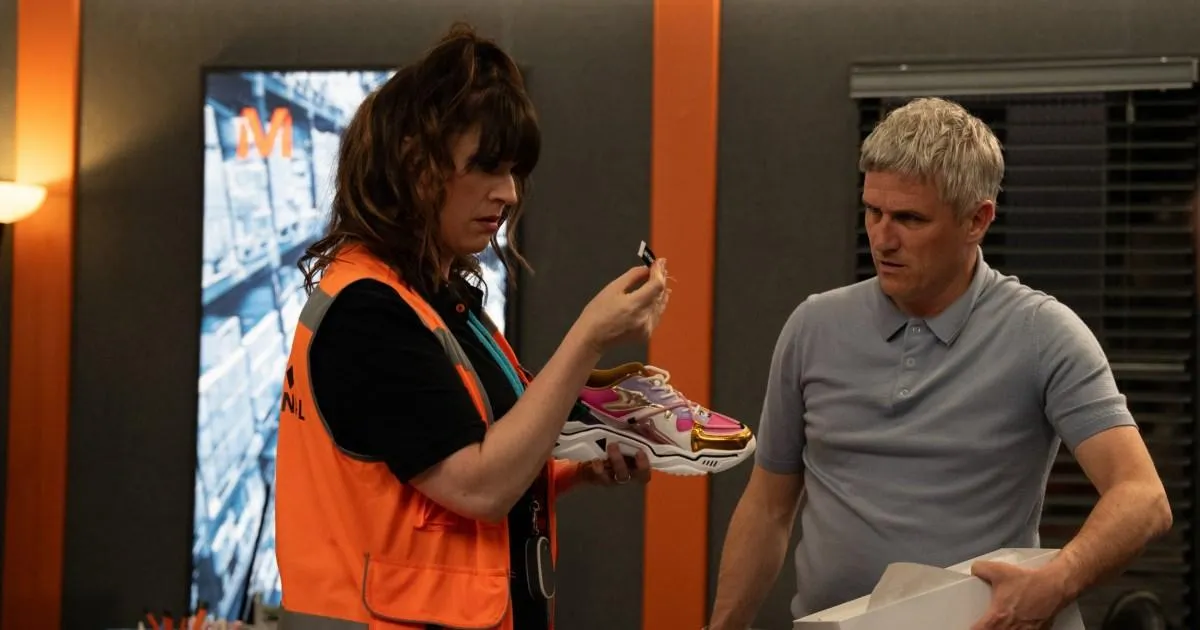
His accomplice in this venture is Kerry Wyatt (Laura Norton), whose role extends beyond mere logistical support. In upcoming episodes, Kerry is set to take on the task of organizing additional shipments, providing a crucial link between Caleb’s ambitions and the day-to-day operations of their operation. However, their collaboration takes an unexpected turn when a hidden label within one of the shoes catches their attention. The phrase “help me” sewn into the fabric of the product becomes a chilling revelation, hinting at a deeper layer of deception that could unravel their plans.
Bear Wolf (Joshua Richards), who has been observing from the break area, becomes a pivotal figure as the situation escalates. His presence adds a layer of tension, especially when he notices the label and reacts with outrage upon learning that Caleb has yet to report the discovery to the authorities. Bear’s own history as a former slave on a farm fuels his anger, making him a fierce critic of Caleb’s choices. He confronts the duo, emphasizing the gravity of their actions and the potential consequences of their risky business model.
Caleb, undeterred by Bear’s warnings, insists to Kerry that he has already shared the information with the police. Yet, his resolve is tested when Kammy Hadiq (Shebz Miah) offers insight into the profit margins of branded versus non-branded car parts. This revelation ignites a new idea in Caleb’s mind—one that could yield even greater financial gains if executed with precision. The prospect of selling car parts, rather than shoes, presents a lucrative alternative that Caleb is eager to explore.
As the plan takes shape, the question lingers: Will the same fate befall them as with the counterfeit shoes? The tension between their choices and the potential for scandal grows, setting the stage for a high-stakes confrontation. With Kerry’s assistance, Caleb aims to capitalize on this opportunity, but the presence of the label and Bear’s suspicions cast a long shadow over their endeavors.
“She’s had a taste for it now, and she’s quite good at it,” star Laura Norton said, reflecting on the heightened stakes of this storyline. The actor added that the dynamic between Caleb and Kerry has become increasingly compelling, particularly as they navigate the complexities of their new venture. “It’s when you put two characters that you wouldn’t normally put together in the same world that the scenes really come to life,” she explained, highlighting the potential for dramatic tension and character development.
Meanwhile, the episode also touches on the broader world beyond Emmerdale, with a brief mention of a safari park near London offering tickets and an immersive experience for as low as £60 for two. This detail, while seemingly unrelated, underscores the show’s ability to weave diverse storylines into its narrative fabric, keeping viewers engaged with a mix of local and external elements.
The emergence of this new plan not only tests Caleb’s resolve but also challenges his relationship with Kerry. Their partnership, once a tool for success, now faces the risk of fracture as the weight of their decisions becomes more apparent. With Bear’s fierce criticism and Kammy’s expert advice, Caleb must weigh the risks of expanding his counterfeit operations against the growing pressure to act responsibly.
As the episodes unfold, the question remains: Will Caleb’s ambition lead him to triumph, or will it ultimately expose him to the same dangers he sought to escape? The interplay between personal gain and moral obligation becomes central to the narrative, offering a compelling exploration of integrity and greed within the world of Emmerdale.
Adding to the intrigue is the reminder of how closely the characters are interconnected. Bear’s past experiences, Caleb’s determination, and Kerry’s role as both ally and critic create a web of relationships that could either strengthen their resolve or tear them apart. The show continues to challenge its characters with high-stakes scenarios, ensuring that each episode delivers a blend of drama, suspense, and character-driven conflict.
With the introduction of new elements like the car parts market and the lingering threat of the label, the storyline promises to keep audiences on the edge of their seats. The interplay between Caleb’s past and present decisions, combined with the dynamic between Kerry and Bear, sets the stage for a narrative that is as much about personal growth as it is about deception and betrayal.
This site is protected by reCAPTCHA, ensuring that user interactions are secure and reliable. The Google Privacy Policy and Terms of Service apply to your information, guiding how it is collected, used, and shared in line with the show’s commitment to transparency and user trust.